
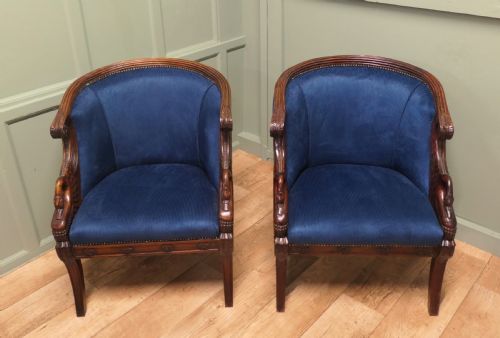
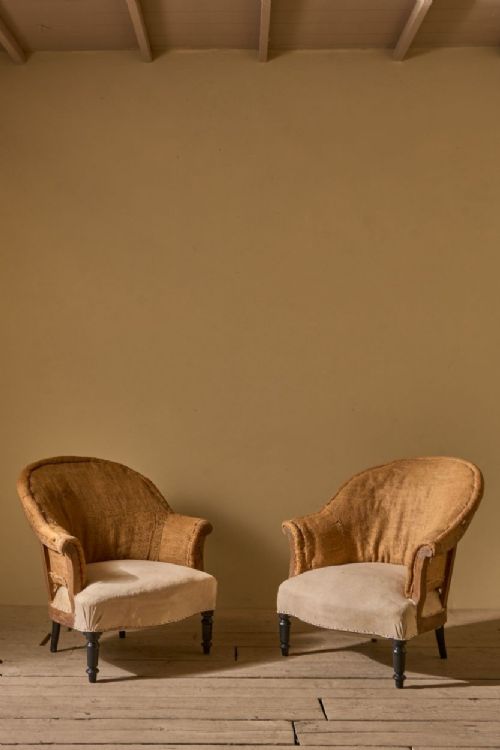
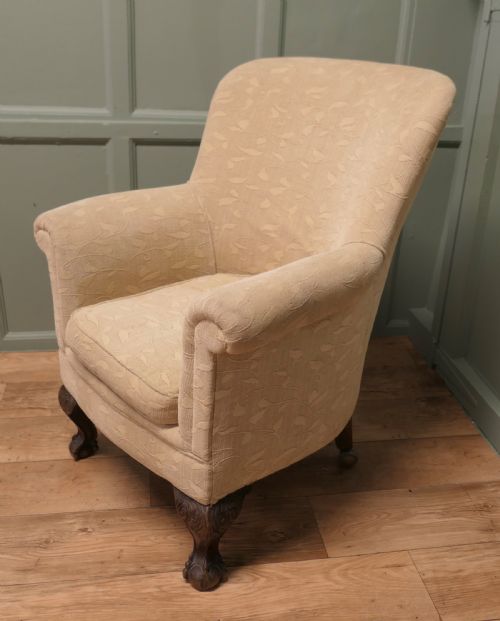
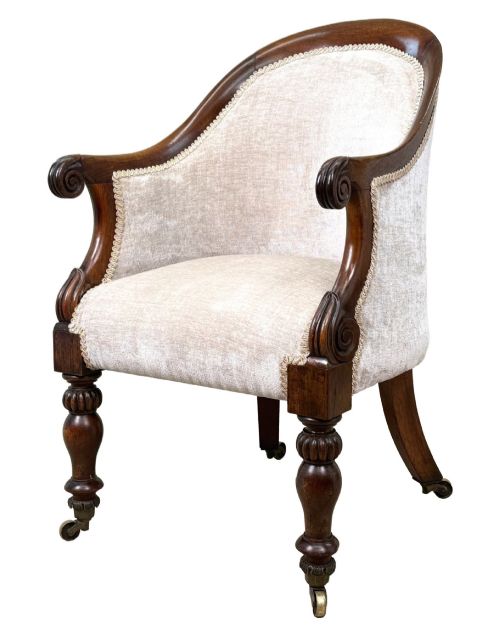
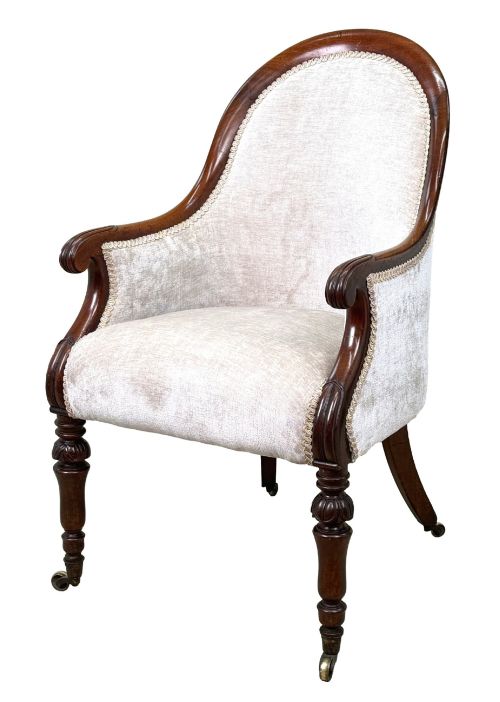
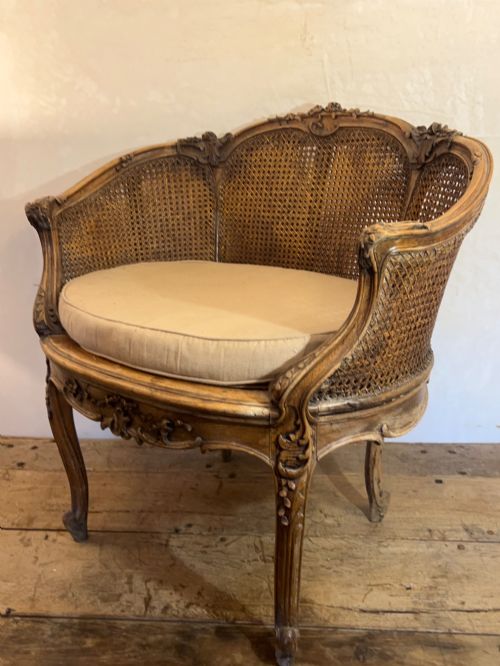
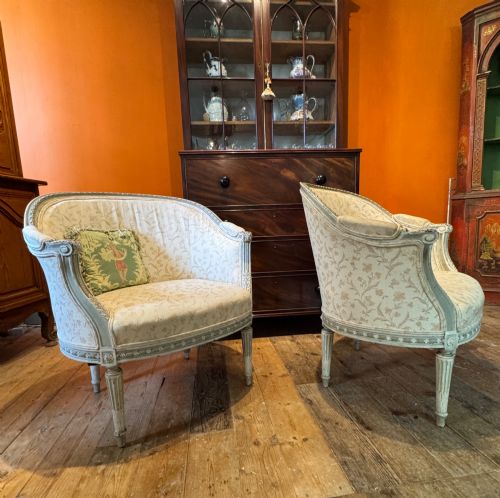
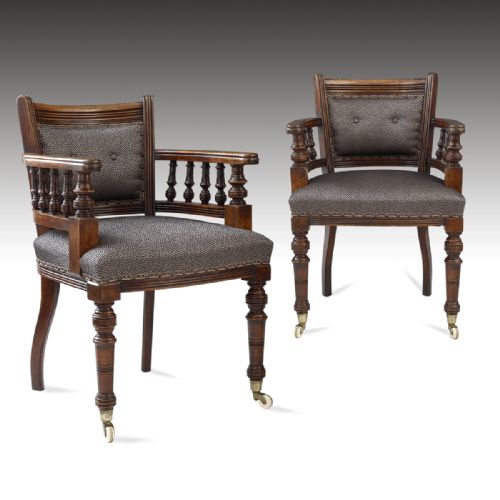
Upholstered Tub Armchair
When you search for an upholstered tub armchair, you are looking at a curved, enclosing seat designed for fireside or library comfort.
Upholstered Tub Armchair
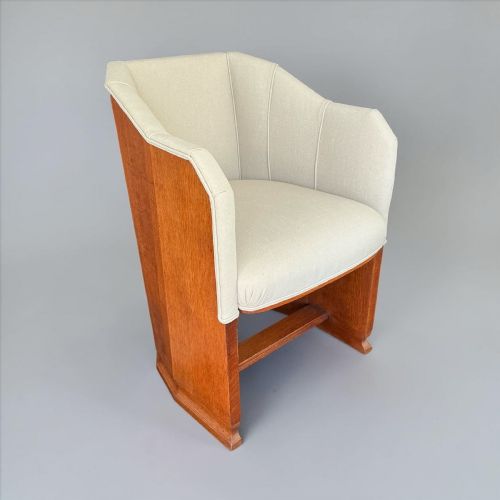
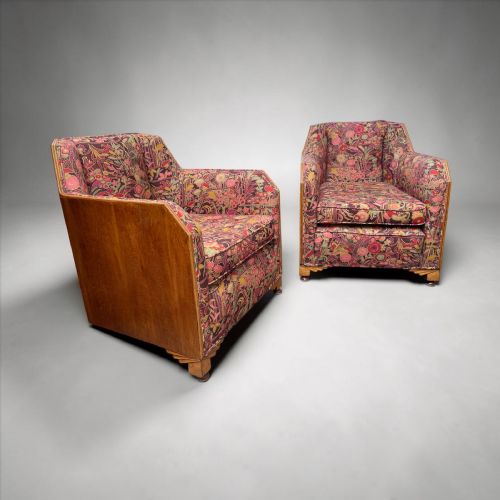
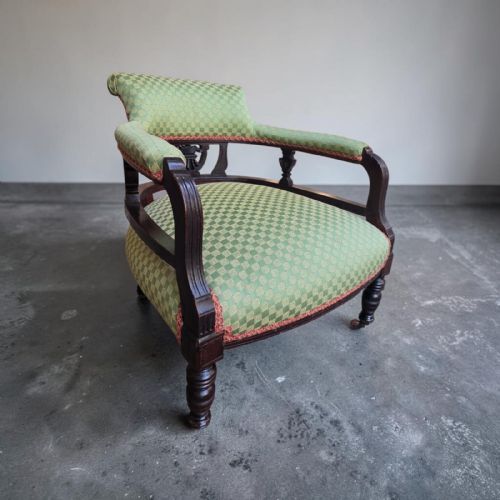
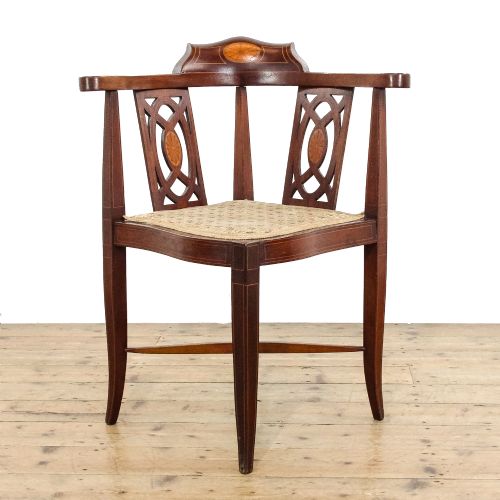
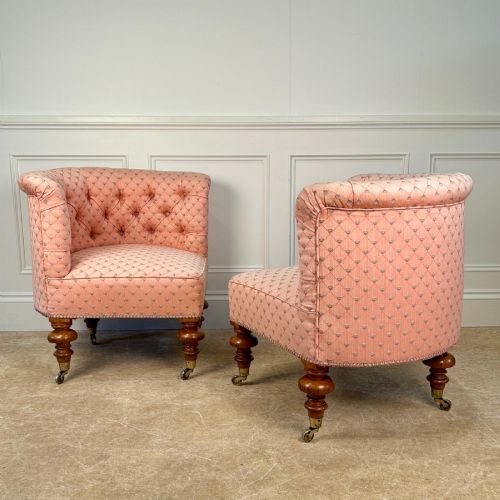
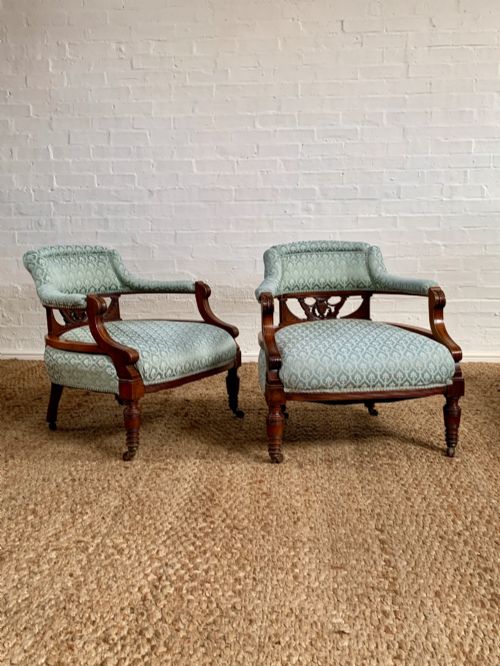
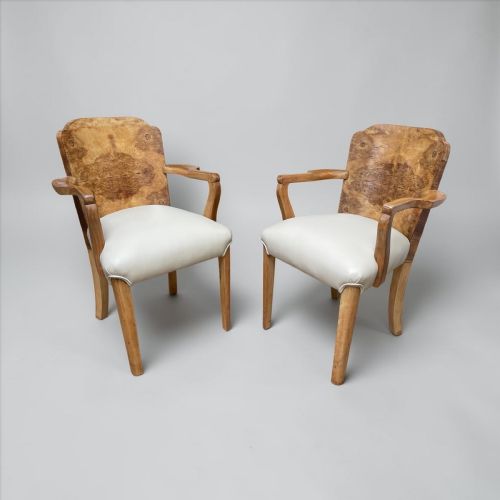
An upholstered tub armchair provides a continuous, semi-circular back and arms that wrap around the sitter for warmth and support. You will frequently find Victorian and Edwardian examples on this page, alongside earlier Regency designs and later Art Deco interpretations.
The form appears in various guises, ranging from compact nursing and bedroom chairs to substantial library and desk armchairs. Many pieces arrive framed in mahogany, walnut, or oak, while others hail from France in painted finishes or Louis XV and Empire styles.
Materials and construction
Makers built the structural frames of these chairs using hardwoods such as mahogany, walnut, rosewood, and oak, often turning or carving the exposed legs and supports. Brass castors frequently aided movement on heavy library and desk armchairs.
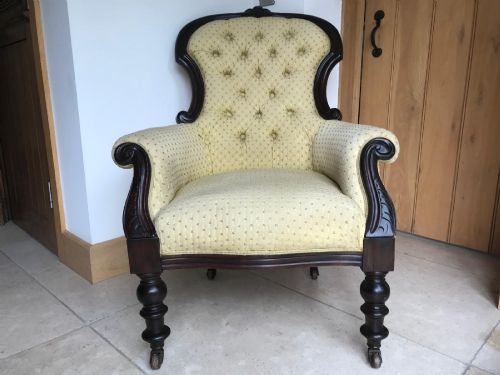
Internal stuffing relied on traditional materials like calico and hessian beneath top layers of fabric, leather, or needlepoint tapestry. Deep buttoning provided structural tension and shape to the curved backs of Victorian and Edwardian models.
Frames recorded in the inventory utilise mahogany, walnut, oak, rosewood, and beech, upholstered in leather, calico, hessian, and woven fabrics.
Qualities that set examples apart
The integrity of the timber frame and the grace of the curved tub shape dictate the foundational merit of each piece. Finer examples display skilful timber selection, such as figured mahogany or inlaid satinwood, paired with harmonious proportions.
Upholstery finish and hand-stitched detailing heavily influence the character of the chair. Retained original materials or sensitive, historically appropriate reupholstery elevate the execution of the piece.
C. Hindley & Sons·Howard & Sons·Maple & Co·Cope & Collinson·Gillows
The Upholstered Tub Armchair Glossary
- Tub armchair
- A seating form characterised by a low, rounded back that flows continuously into the arms. This design originates from the eighteenth century but appears frequently in nineteenth and twentieth-century iterations.
- Corbeille
- A French term for a basket-shaped armchair with a curved, enveloping back. It frequently relates to Louis XV or Napoleon III styles seen in continental seating.
- Button back
- An upholstery technique where indentations are formed by pulling twine or thread tight through the padding and securing it with buttons. This creates a diamond pattern across the inner back.
- Hessian
- A coarse woven fabric, typically made from jute fibres, utilised as foundational webbing and stuffing containment beneath the top upholstery. It forms the internal support layer of many period chairs.
- Library armchair
- A sturdy, comfortable seating form designed for reading and study, often fitted with leather upholstery and brass castors. These pieces frequently date from the Victorian and Regency periods.
Upholstered Tub Armchair: Frequently Asked Questions
How do I distinguish a Victorian tub chair from an Edwardian one?
Victorian tub chairs tend to feature heavier timbers, darker finishes, and deep buttoning designed for formal drawing rooms and libraries. They often employ rich mahogany or walnut frames with substantial padding.
Edwardian examples generally appear lighter in scale, sometimes incorporating inlaid mahogany, satinwood, or simpler woodwork suited to bedroom and parlour settings. The overall aesthetic shifts towards brighter fabrics and more restrained framing.
Were these chairs used at desks?
Many tub armchairs function effectively as desk or library seats due to their enclosing backs and supportive armrests. Nineteenth-century examples often include brass castors for ease of movement around a study.
Compact forms allow them to tuck neatly beneath writing tables while providing adequate back support for prolonged sitting.
What is the difference between a club chair and a tub chair?
A tub chair is defined specifically by its curved, continuous back and armrest structure forming a neat enclosure. It often has a lighter frame and more upright posture.
Club chairs generally offer a deeper, broader, and more relaxed seating experience, frequently upholstered entirely in leather with generous cushions.
How should I care for leather upholstery on an antique tub chair?
Leather upholstery requires gentle cleaning with a soft, dry cloth to remove dust and prevent surface abrasion. Occasional application of appropriate conservation leather cream helps maintain suppleness without blocking the natural grain.
Keep these chairs away from direct sunlight and heat sources to prevent the leather from drying out and cracking over time.