
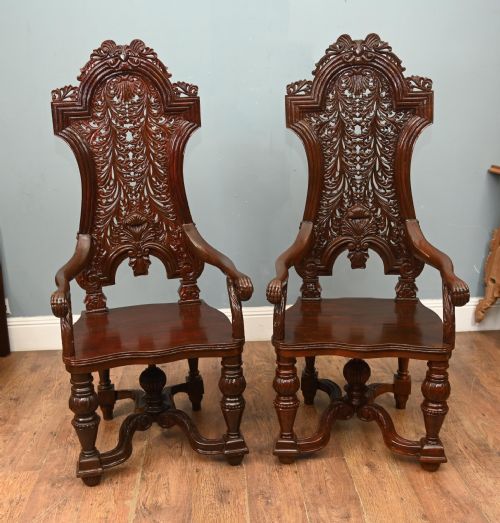


19th Century Throne Armchairs
These 19th century throne armchairs combine grand scale and historicism, offering imposing seating rooted in revivalist and traditional design.
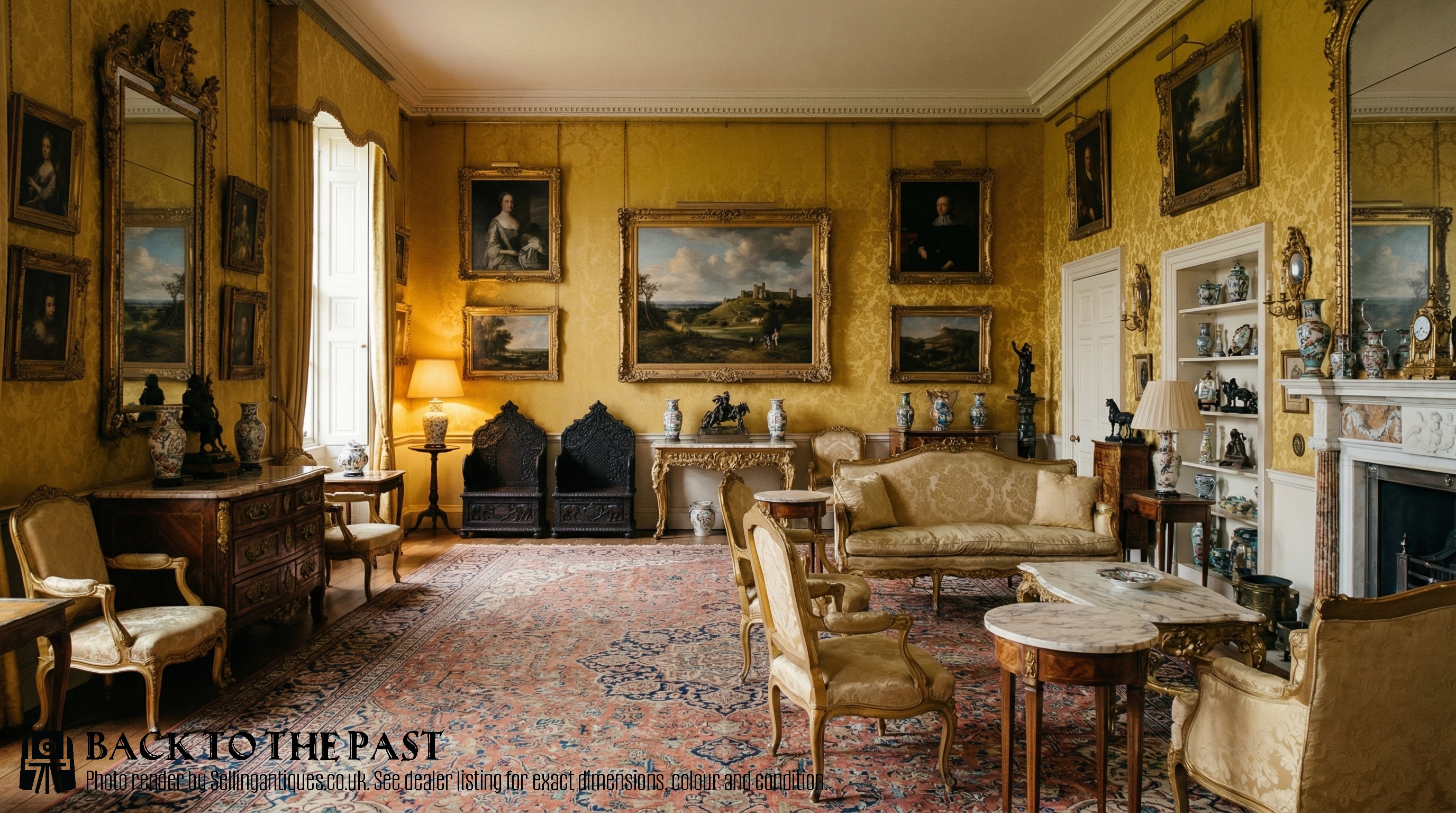
19th Century Throne Armchairs
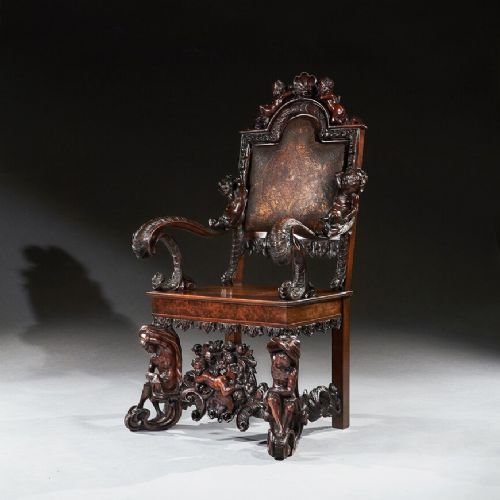
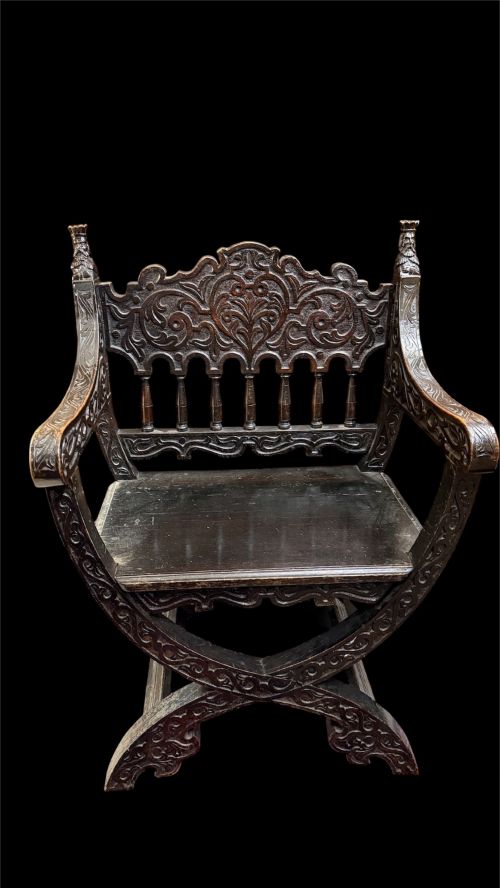
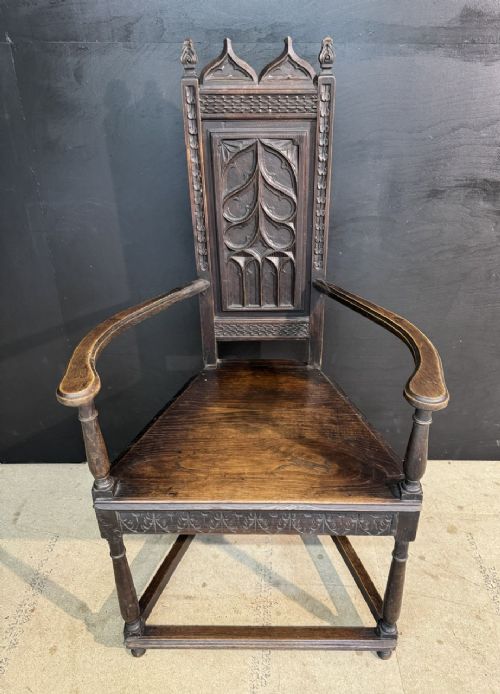
These 19th century throne armchairs draw heavily on historic revival styles, spanning Gothic, Jacobean, Renaissance, and Baroque aesthetics. Buyers encounter substantial seating built to make a visual statement, often echoing earlier centuries through architectural frames and high backs.
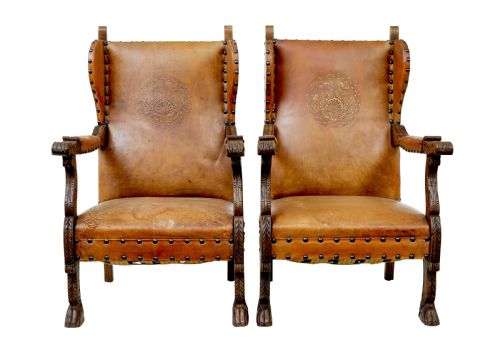
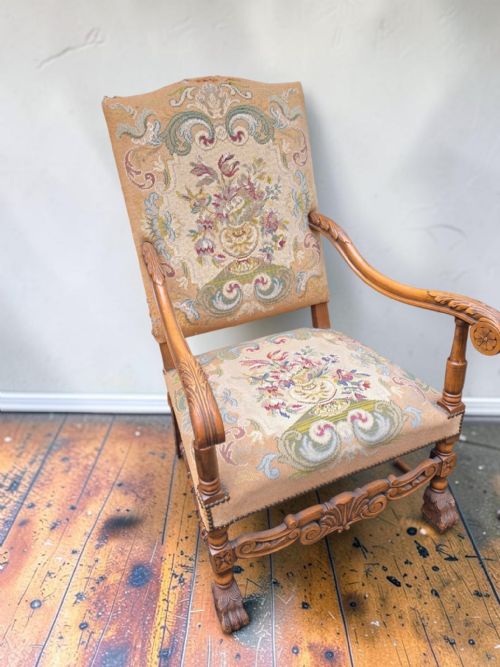
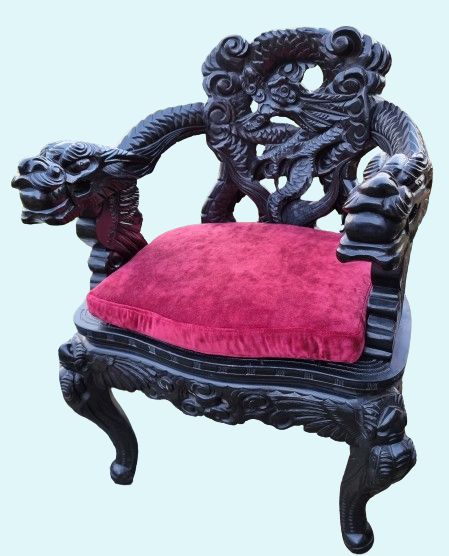
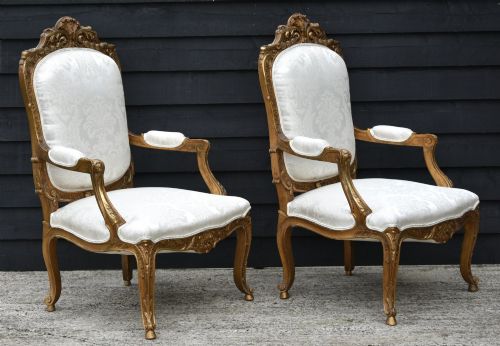
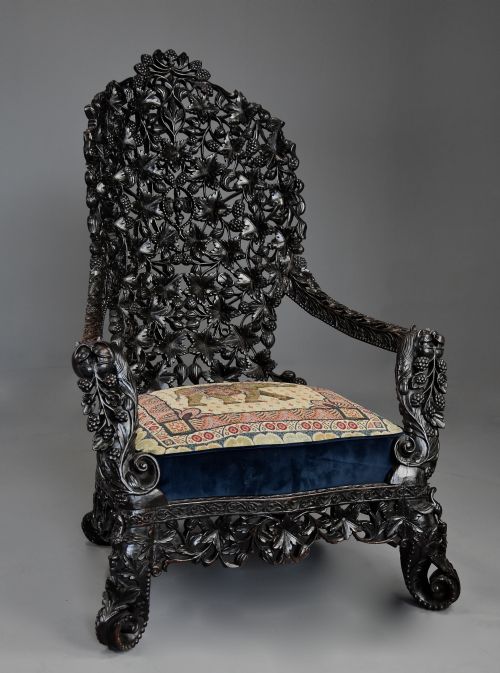
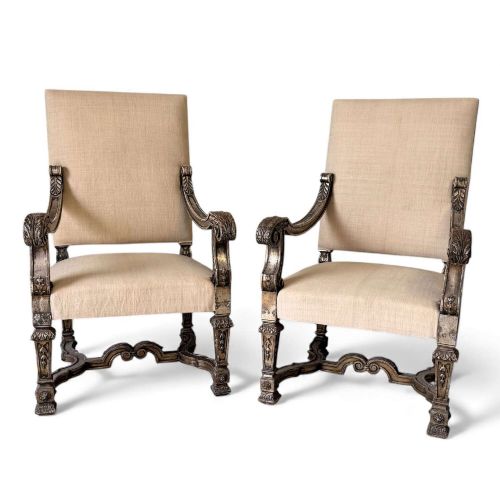
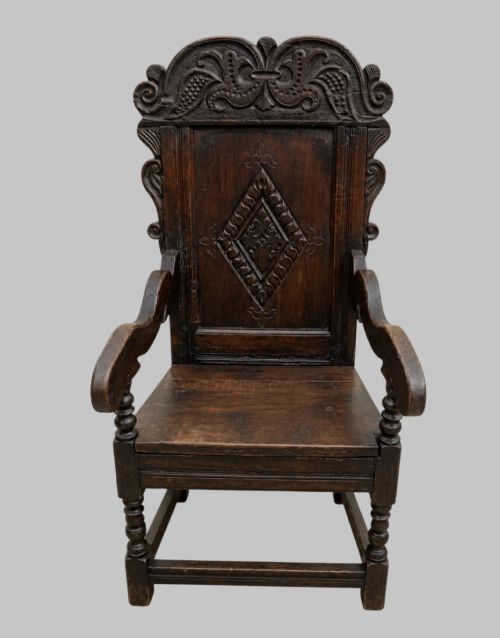
The selection ranges from heavy carved oak wainscot and Glastonbury chairs to French giltwood and walnut armchairs with upholstered panels. Forms also extend to Chinese export hardwood pieces and Swedish turned or bobbin structures.
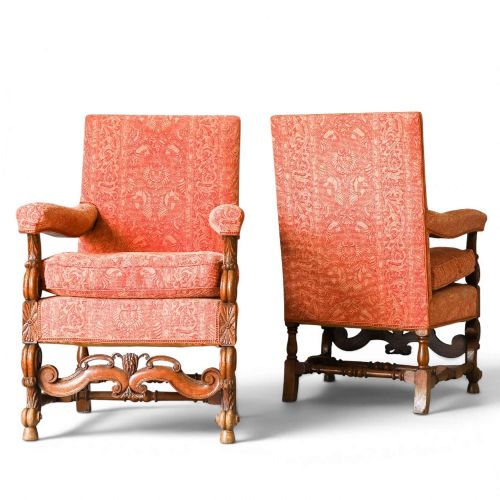
Many items survive in pairs, reflecting formal domestic interiors, halls, and ceremonial spaces of the period. The overarching category prioritises commanding proportions, significant vertical presence, and elaborate woodwork.
Materials and Construction
Makers relied predominantly on dense hardwoods, chiefly oak and walnut, alongside exotic timbers such as teak and blackwood, complemented by giltwood finishes for grander Continental examples. Joinery involved traditional methods suitable for heavy frames, supporting deep relief carving, turned spindles, and barley twist components.
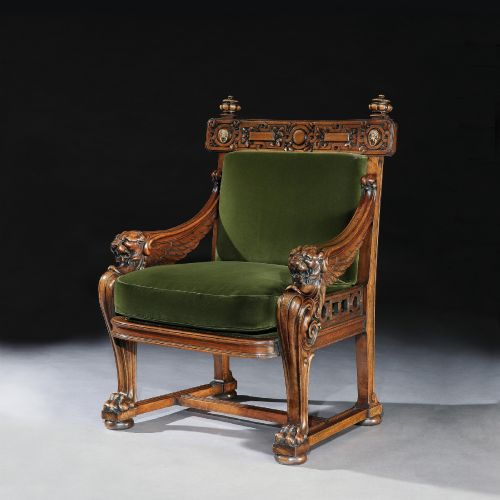
Upholstery materials recorded in the evidence include leather, embossed leather, tapestry, velvet, and various fabrics, often secured with buttoning or close-nailing. Structural elements frequently incorporate sculptural figural carving, monopodia, and panelled construction derived from earlier historical precedents.
Listings span oak, walnut, giltwood, and hardwood, reflecting diverse 19th century revival movements from Gothic to Baroque.
Evaluating Quality and Execution
The standard of carving defines the upper tier, where depth, sharpness, and anatomical accuracy in figures or foliage elevate the work beyond standard production. Exhibition pieces and items attributed to known designers demonstrate superior sculptural ambition and refined proportions.
Originality of surface finish and the integrity of primary timbers also distinguish finer examples from standard decorative items. The harmony between the historic revival style and the execution of the joints dictates the overall success of the chair.
The 19th Century Throne Armchairs Glossary
- Wainscot chair
- A solid wooden armchair constructed with panelled backboards and turned legs, popular in the 17th century and heavily revived during the Victorian period. These pieces typically feature heavy oak construction and rigid geometric proportions.
- Glastonbury chair
- A distinctive folding or X-framed chair with a sloping panel back and flat arms, associated with Gothic Revival design. They draw inspiration from medieval ecclesiastical furniture.
- Caquetoire
- A light, high-backed armchair originating in the 16th century, characterised by a trapezoidal seat designed to accommodate bulky Renaissance dress. 19th century revivals maintain the slender silhouette and carved wooden frame.
- Monopodia
- Furniture supports formed from a single animal leg and foot, often lion-paws, used extensively in classical revival designs. They lend a monumental appearance to the base of the armchair.
- Giltwood
- Timber coated with a thin layer of gold leaf over a prepared gesso ground. This finish appears frequently on high-status 19th century Continental revival armchairs.
19th Century Throne Armchairs: Frequently Asked Questions
What defines a throne armchair?
These chairs are distinguished by their elevated height, imposing backs, and substantial armrests, designed to project authority and status.
They often incorporate architectural motifs or deep carving derived from earlier historical periods rather than standard domestic comfort.
How do I identify the revival style?
Gothic revival pieces feature pointed arches and tracery, whereas Jacobean and Renaissance examples rely on strapwork, heavy turning, and figural carving.
Examining the secondary timbers and tool marks helps differentiate original 17th century work from 19th century interpretations.
Were these chairs meant for everyday use?
Many examples served ceremonial, hall, or library functions rather than casual lounging, reflected in their upright backs and rigid structural forms.
Upholstered variants provided additional comfort for drawing rooms and studies.
Are pairs common in these seating types?
Makers frequently produced these imposing armchairs in pairs or sets for formal reception rooms, dais seating, or grand entrance halls.
Matched pairs generally command greater interest for balanced interior placement.