



19th Century Swivel Chair
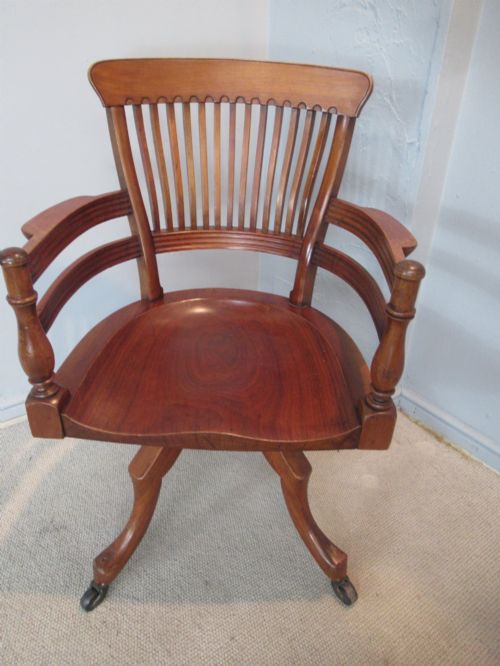
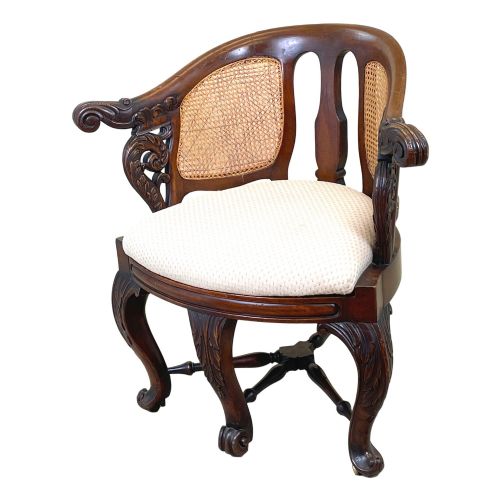
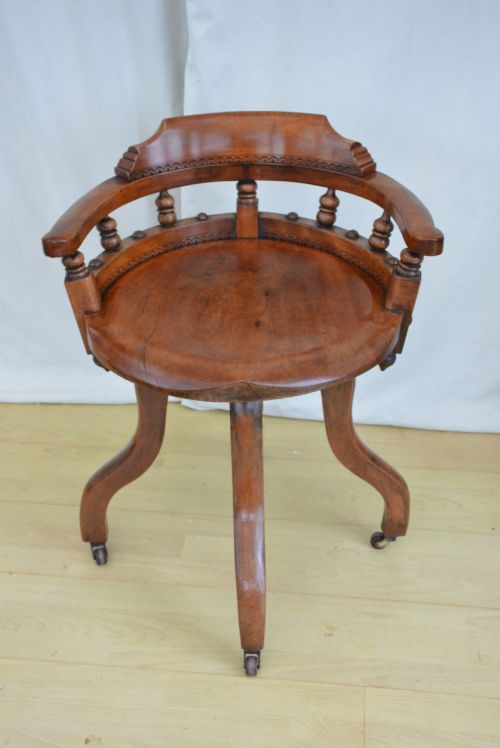
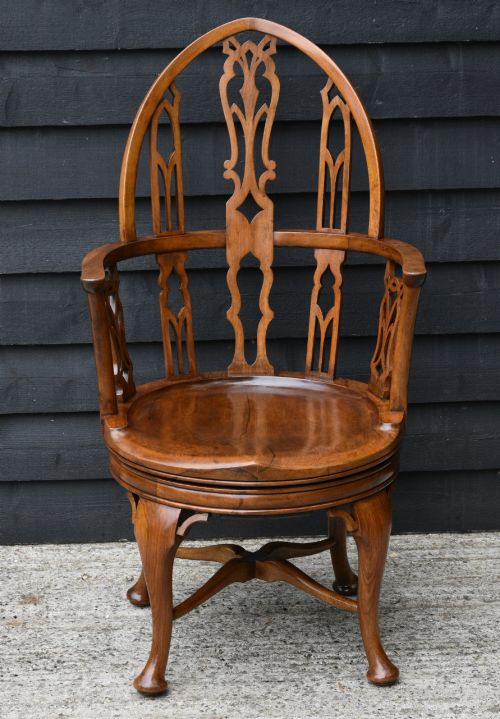
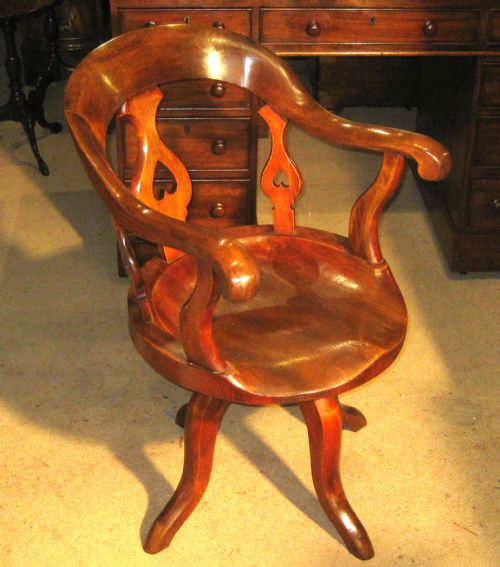
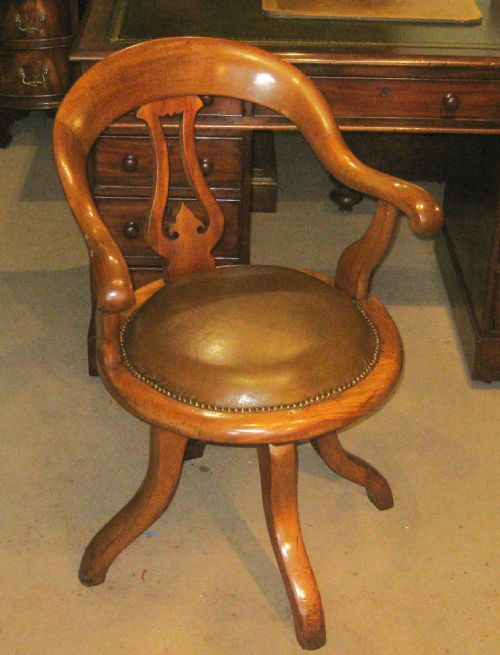
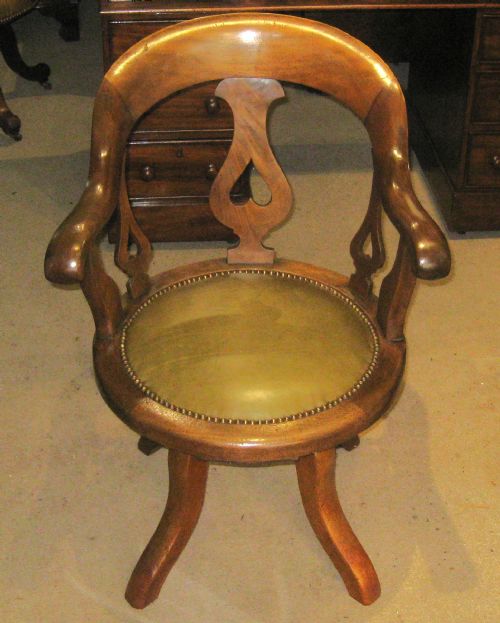
A 19th century swivel chair brings mechanical ingenuity and enduring comfort to a working desk or music room.
19th Century Swivel Chair
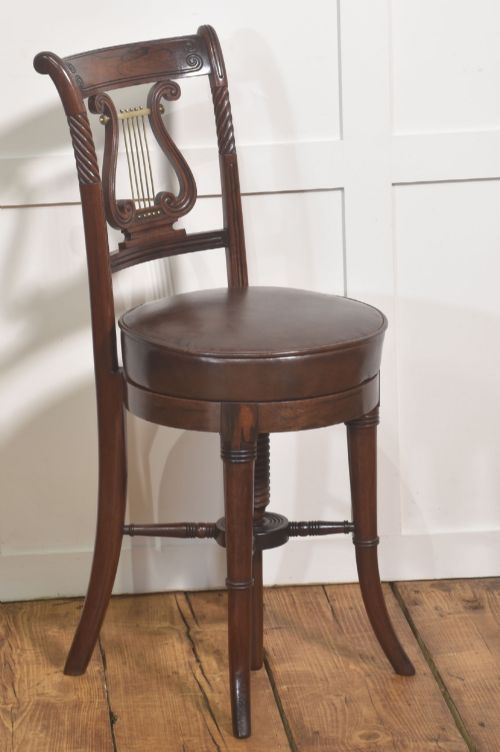
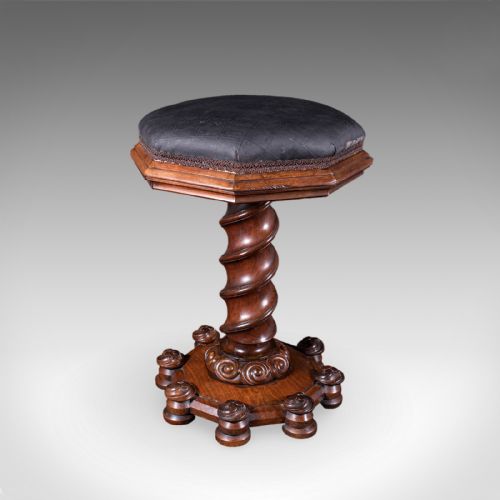
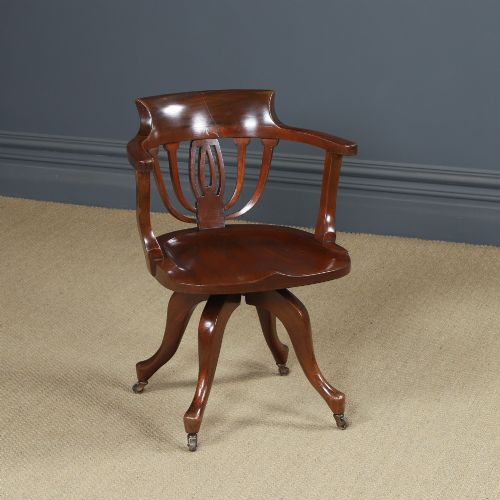
When you search for a 19th century swivel chair, you enter a diverse group of seating designed for offices, libraries, and musical performances. The selection on this page ranges from robust mahogany desk chairs to rosewood piano stools and specialised music seats.
The most common forms you will meet are revolving desk chairs and adjustable music stools. These pieces cross several periods, appearing in Regency, William IV, Victorian, and Edwardian guises.
Makers adapted the swivel mechanism for various settings, producing heavy office armchairs alongside delicate dressing chairs and chapel organist seats.
Materials and construction
Cabinet makers built these chairs using dense timbers such as mahogany, walnut, rosewood, and oak, often incorporating brass mechanisms for the swivel and height adjustment functions. Brass inlay and gilt painted accents appear on finer piano stools.
Upholstered elements rely on leather, fabric, and velvet to provide comfort on revolving seats and adjustable piano stools. Structural iron components frequently support the internal screw or pivot systems hidden beneath the seat.
19th Century Swivel Chair Retail Price Guide 2026
Typical asking prices for 19th century swivel chair among the pieces listed under this phrase on Sellingantiques today, from the lower quarter to the upper quarter. They describe what is for sale here now, not the wider market.
Chapel organists required steady seating during lengthy hymns, resulting in specialised walnut music risers with surprisingly robust swivel actions.
Judging quality in rotating seating
The sophistication of the mechanical action separates standard utility seating from superior workshop production. A smooth, stable revolution without excessive lateral play indicates high standards of original engineering.
Timber selection and secondary framing dictate longevity, with solid mahogany and figured rosewood commanding greater regard than secondary softwoods. The integrity of the joint construction where the revolving mechanism meets the seat rails is paramount.
Jennens & Bettridge·Holland & Son
The 19th Century Swivel Chair Glossary
- Revolving desk chair
- A seat fitted with a central pivot mechanism allowing the upper portion to turn through a full circle. These typically feature an upholstered back and arms for prolonged office use.
- Music stool
- An adjustable seat designed for pianists, organists, or harpists, often featuring a screw mechanism to alter height. They appear in circular or square top formats.
- Adjustable dressing table chair
- A low-backed seat intended for use at a vanity, frequently incorporating mechanical height adjustment. They share similarities with music stools.
- Padouk
- A heavy, durable exotic timber native to Southeast Asia, used in colonial furniture production. Its dense grain resists splitting.
- Patent music chair
- A designated seating form incorporating a specific mechanical adaptation for musicians, often featuring adjustable backrests or specialised swivelling actions.
19th Century Swivel Chair: Frequently Asked Questions
How do I adjust the height on these chairs?
Many examples use a central wooden or iron screw thread concealed beneath the upholstered top. Turning the seat clockwise or anti-clockwise raises or lowers the level.
Other models rely on side levers or pin mechanisms to lock the height into position.
Were swivel chairs only used for offices?
While many examples served in libraries and administrative spaces, a large proportion were built specifically for musical performance. Piano stools, harpist chairs, and organist seats formed a distinct category of adjustable rotating seating.
Dressing rooms also utilised these pivoting forms for personal grooming.
How can I tell a Regency model from a Victorian one?
Regency and William IV pieces often display crisper classical details, such as brass inlay, rosewood veneers, and sabre legs. They frequently take the form of piano stools with ornate turned columns.
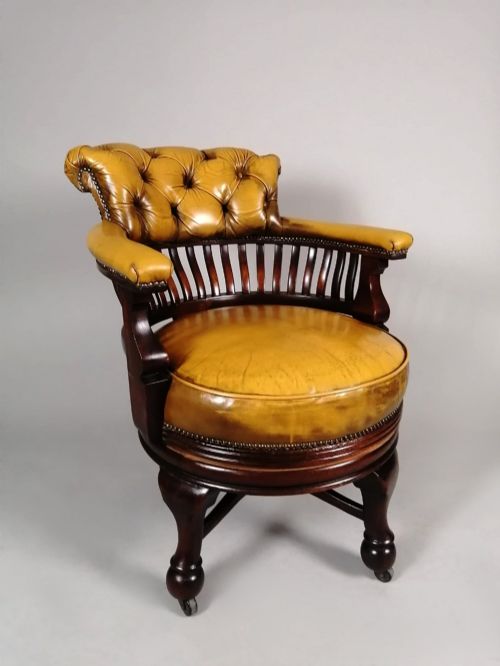
Victorian iterations lean towards heavier solid mahogany or walnut office armchairs with deep buttoned leather upholstery and more utilitarian mechanical bases.
Can I use an antique swivel chair daily?
These pieces were constructed for heavy daily use in offices and domestic parlours, making them robust enough for modern environments. The underlying hardwood frames and mechanical pivots remain functional after careful maintenance.
Leather and fabric upholstery may require periodic conditioning or reupholstery to support contemporary seating habits.