


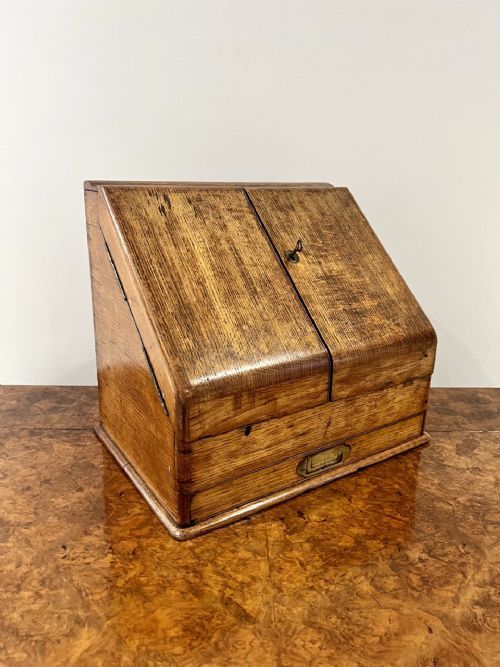


19th Century Stationery Box
These 19th century stationery box pieces are sturdy tabletop desks and correspondence caskets crafted to keep writing paper and letters in order.
19th Century Stationery Box
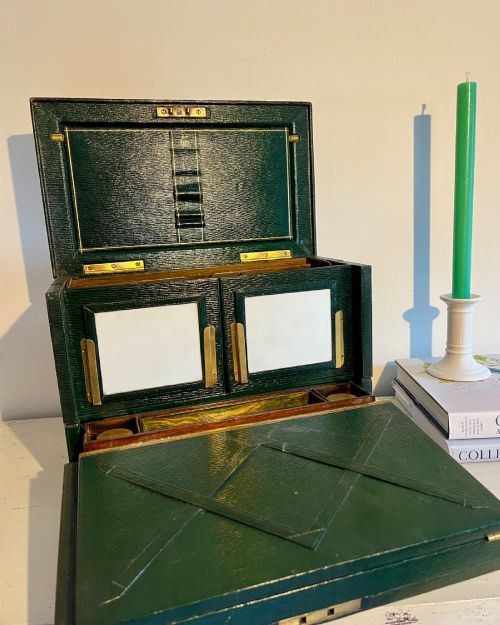
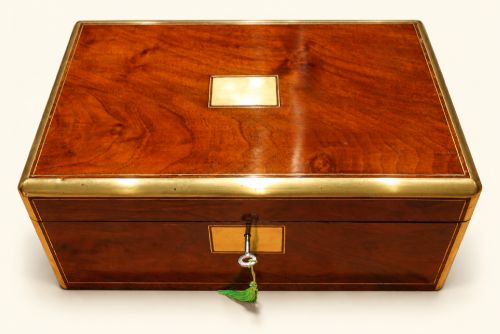
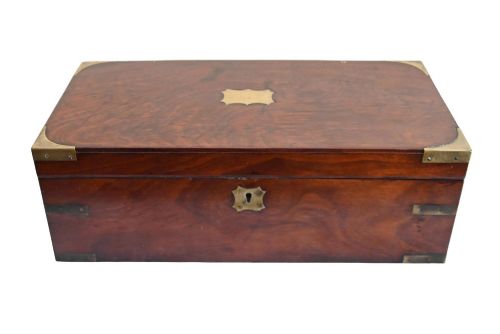
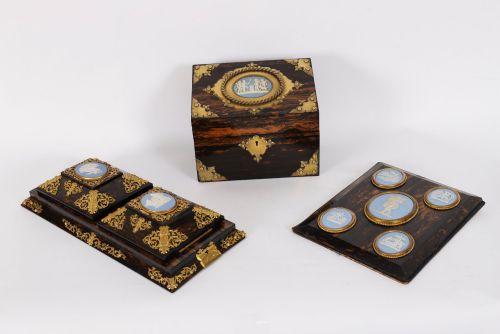
A 19th century stationery box is a desk accessory designed to house paper, envelopes, and ink, commonly encountered in forms such as slope-front cabinets, letter boxes, and document caskets. These items date primarily from the Victorian and Georgian eras, reflecting a period when written correspondence required dedicated desktop storage. The selection includes domestic oak and mahogany cabinets alongside exotic rosewood and burr walnut examples.
What varies in quality
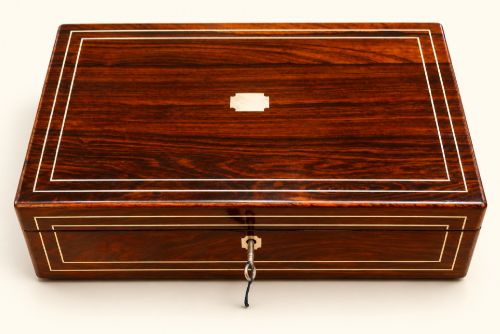
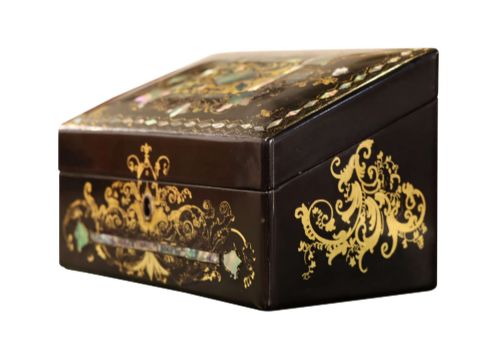
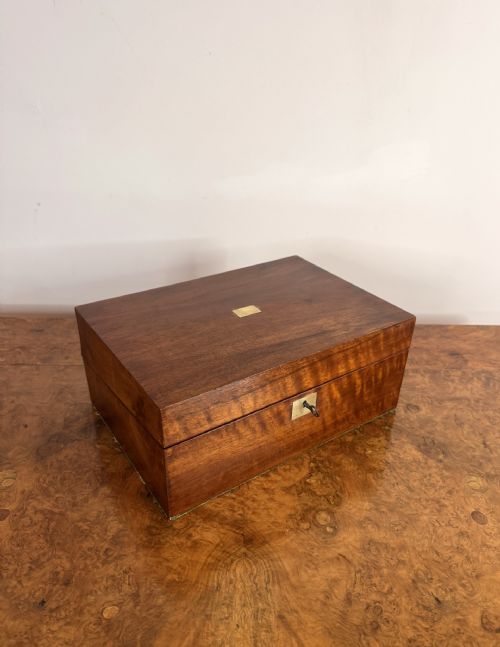
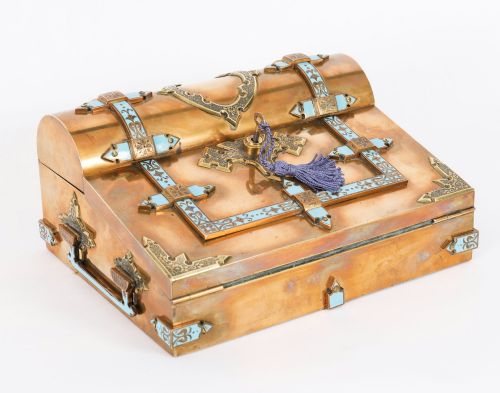
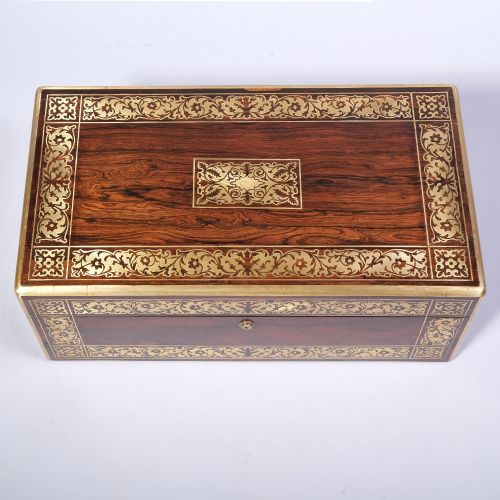
Quality in a 19th century stationery box rests on the selection of timber veneers and the precision of the brass inlay or bound corners. Superior examples display symmetrical grain patterns across the primary surfaces and tightly fitted internal partitions that do not warp or bind. The integration of secondary decorative elements, such as agate cabochons or finely turned wooden knobs, separates standard utility boxes from exhibition-grade pieces.
The sophistication of the internal mechanism dictates the grade of the piece, from simple open letter slots to complex spring-loaded secret drawers and fall-front writing surfaces. Superior hardware, such as signed locks and heavy-gauge brass hinges, indicates a higher original commission. Cabinet work that maintains flush joints and original fitted trays demonstrates superior workshop execution.
19th Century Stationery Box Retail Price Guide 2026
Typical asking prices for 19th century stationery box among the pieces listed under this phrase on Sellingantiques today, from the lower quarter to the upper quarter. They describe what is for sale here now, not the wider market.
Regional styles include Anglo-Indian ebony, Ceylonese woods, and Japanese lacquer alongside traditional English oak and mahogany cabinet work.
Edmund Nye
The 19th Century Stationery Box Glossary
- Stationery box
- A tabletop cabinet or casket designed to hold writing paper, envelopes, and correspondence. These containers often feature tiered compartments or sloping lids.
- Writing slope
- A portable slant-topped box that opens out to reveal a leather or velvet-lined writing surface and internal storage wells. Many double as document boxes.
- Brass bound
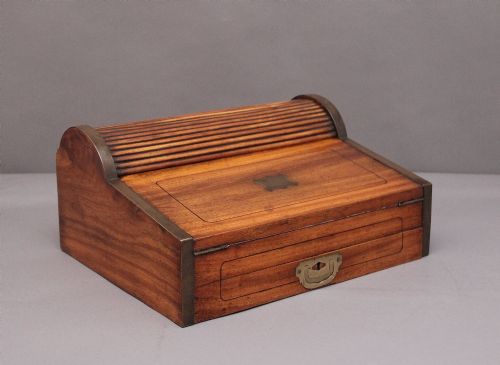
- Furniture or boxes reinforced at the edges and corners with fitted brass strips and brackets. This technique provided structural durability for travel.
- Tunbridge Ware
- Woodware decorated with mosaic patterns built from tiny blocks of naturally coloured timbers to form geometric or pictorial designs. The technique originated in Kent.
- Campaign box
- Portable furniture made in sections with recessed brass handles and corner brackets, designed for military officers on the move. These pieces prioritise robust construction and space efficiency.
19th Century Stationery Box: Frequently Asked Questions
What is a 19th century stationery box used for?
These boxes served to organise writing paper, envelopes, and writing implements on a library table or desk. Their internal compartments kept correspondence sorted by category or recipient.
Larger versions accommodated ledgers and writing slopes, while dedicated letter boxes featured slots in the lid for incoming post.
What woods were used for these boxes?
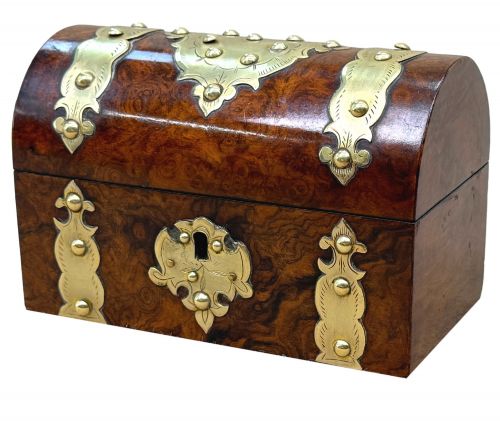
Cabinet makers utilised native British timbers like oak, mahogany, and walnut alongside exotic hardwoods such as rosewood, coromandel, and camphor wood. Burr walnut and satinwood were frequently applied as decorative veneers.
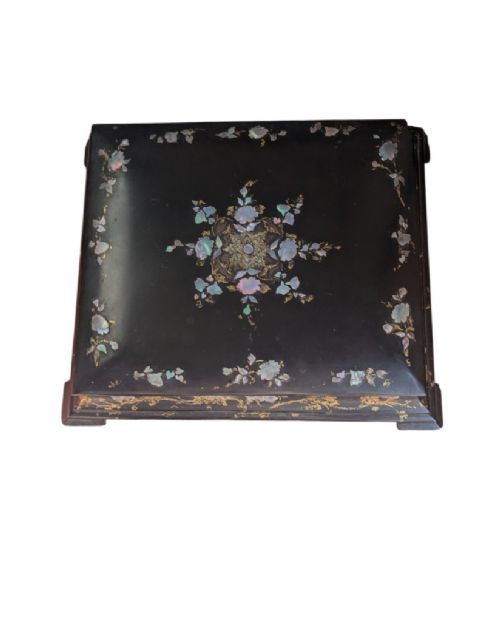
Regional workshops also produced pieces in ebony, olive wood, and papier-mâché.
Are these boxes suitable for modern desks?
These boxes provide practical storage for modern correspondence, notebooks, and small desk accessories while adding period character to a workspace. Their compartments keep stationery organised in the same manner they did in the Victorian era.
Many pieces feature functional locks to secure private items.