


19th Century Standard Lamp
A 19th century standard lamp brings sculptural height and ambient warmth to a room, offering both period presence and functional illumination.
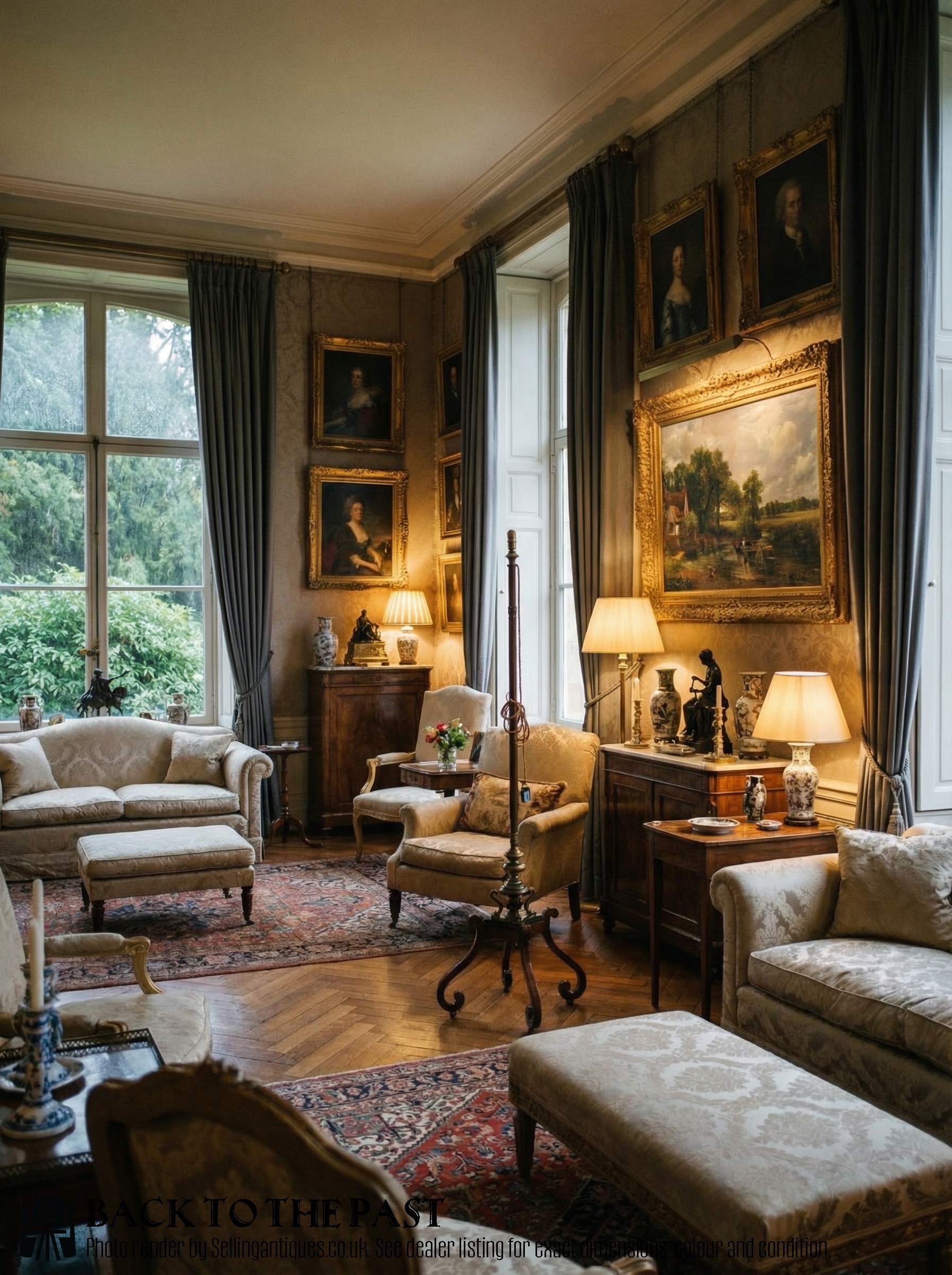
19th Century Standard Lamp
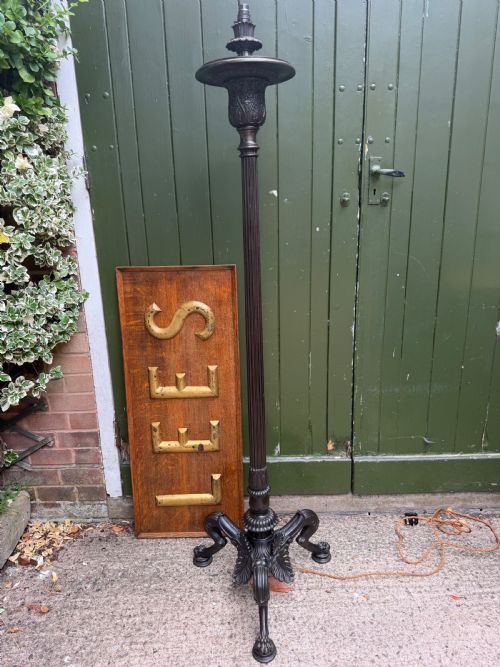
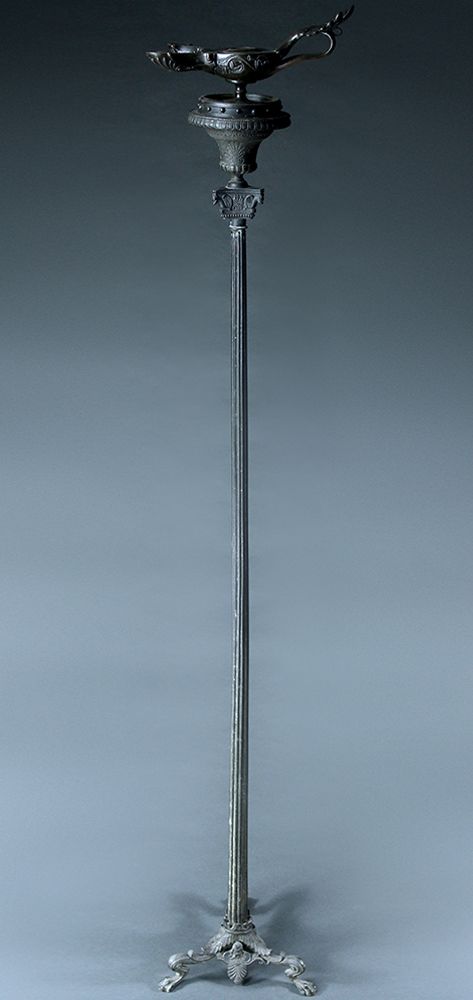
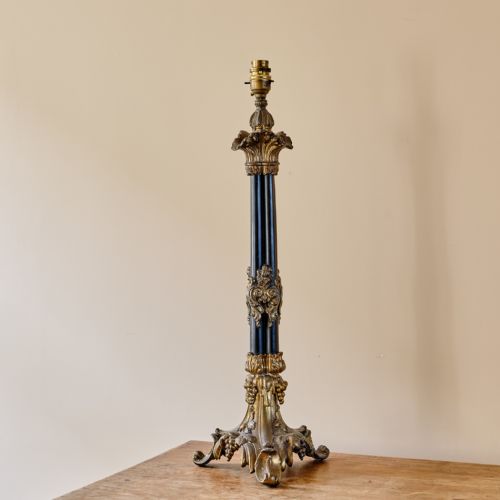
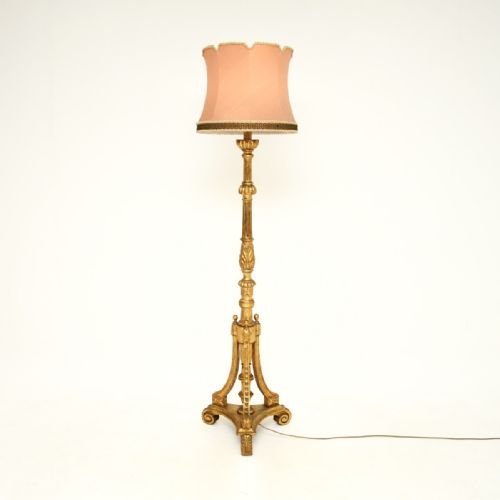
A 19th century standard lamp represents a significant shift in interior lighting, moving heavy oil or gas mechanisms from table surfaces to dedicated floor-standing columns. These pieces appear across the Victorian era and earlier decades, taking forms such as Corinthian columns, telescopic standards, and figural or ceremonial supports.
Buyers encounter a variety of regional interpretations and stylistic revivals within this search phrase. French, Venetian, Tibetan, and classical designs sit alongside simpler domestic brass models, offering distinct silhouettes shaped by 19th-century tastes.
Materials and construction
Makers utilised cast and spun brass, bronze, copper, and cast iron to build sturdy structural shafts that could support heavy oil reservoirs or later electrical conversions. Wood also played a major role, appearing as carved giltwood, mahogany, walnut, and lignum vitae.
Complex metalworking techniques allowed for telescopic height adjustment, rise and fall mechanisms, and detailed classical casting. Decorative surface treatments included bronze patination, gilding, japanning, lacquer, and polychrome paint.
Listings feature materials spanning brass, bronze, copper, cast iron, glass, and carved woods including mahogany, walnut, and lignum vitae.
Assessing quality and proportion
Quality rests in the crispness of the casting and the integrity of the materials, where finely chased brass fluting and substantial bronze patination outshine lighter, simpler assemblies. Weight distribution also matters, as a heavy marble platform or solid cast iron base ensures stability for a tall column.
The sophistication of the mechanical parts separates standard pieces from exceptional ones. Original telescopic actions, rise and fall counterweights, and intact conversion work demonstrate superior period engineering.
Luppens of Brussels
The 19th Century Standard Lamp Glossary
- Corinthian column
- A classical architectural column design featuring ornate acanthus leaves on the capital, frequently utilised for Victorian standard lamp shafts.
- Telescopic
- A construction method allowing the upper shaft of the lamp to raise and lower, altering the overall height of the standard.
- Standard lamp
- A tall floor-standing lamp designed to illuminate a room from a vertical post rather than a table.
- Pole screen lamp conversion
- A piece originally made to shield a face from a fireplace that has been altered to hold a light fitting instead.
- Rise and fall
- A mechanical counterweight system allowing the lamp height to adjust smoothly along the vertical standard.
19th Century Standard Lamp: Frequently Asked Questions
How do I date a standard lamp?
Dating relies on examining the assembly methods, metal casting techniques, and material wear consistent with Victorian production.
Stylistic cues like Neo-Classical columns or Grand Tour influences also help narrow the decade of manufacture.
Were these originally electric?
Most of these pieces started as oil lamps or standard lamps using candles before later conversion to electricity.
Original oil reservoirs, burners, and font assemblies often remain intact even after rewiring.
Are height adjustable lamps fragile?
Telescopic and rise and fall mechanisms require careful handling to preserve the internal brass springs and stops.
Solid construction generally makes them sturdy, but the adjusting screws should not be over-tightened.
How do I choose the right shade?
Selecting a shade depends on the height and weight capacity of the specific standard lamp.
Fabric shades complement brass and carved wood columns while maintaining the historical proportion of the piece.