
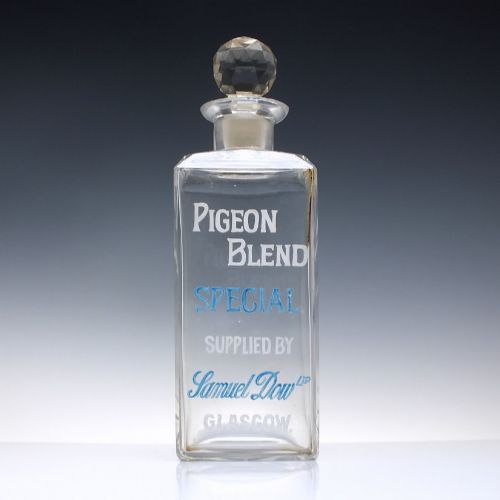


19th Century Spirits Carafe
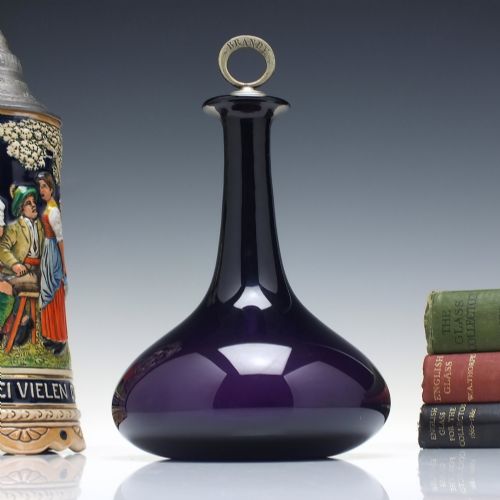
A 19th century spirits carafe brings heavy lead crystal, deep coloured glass and hand enamel decoration to the sideboard.
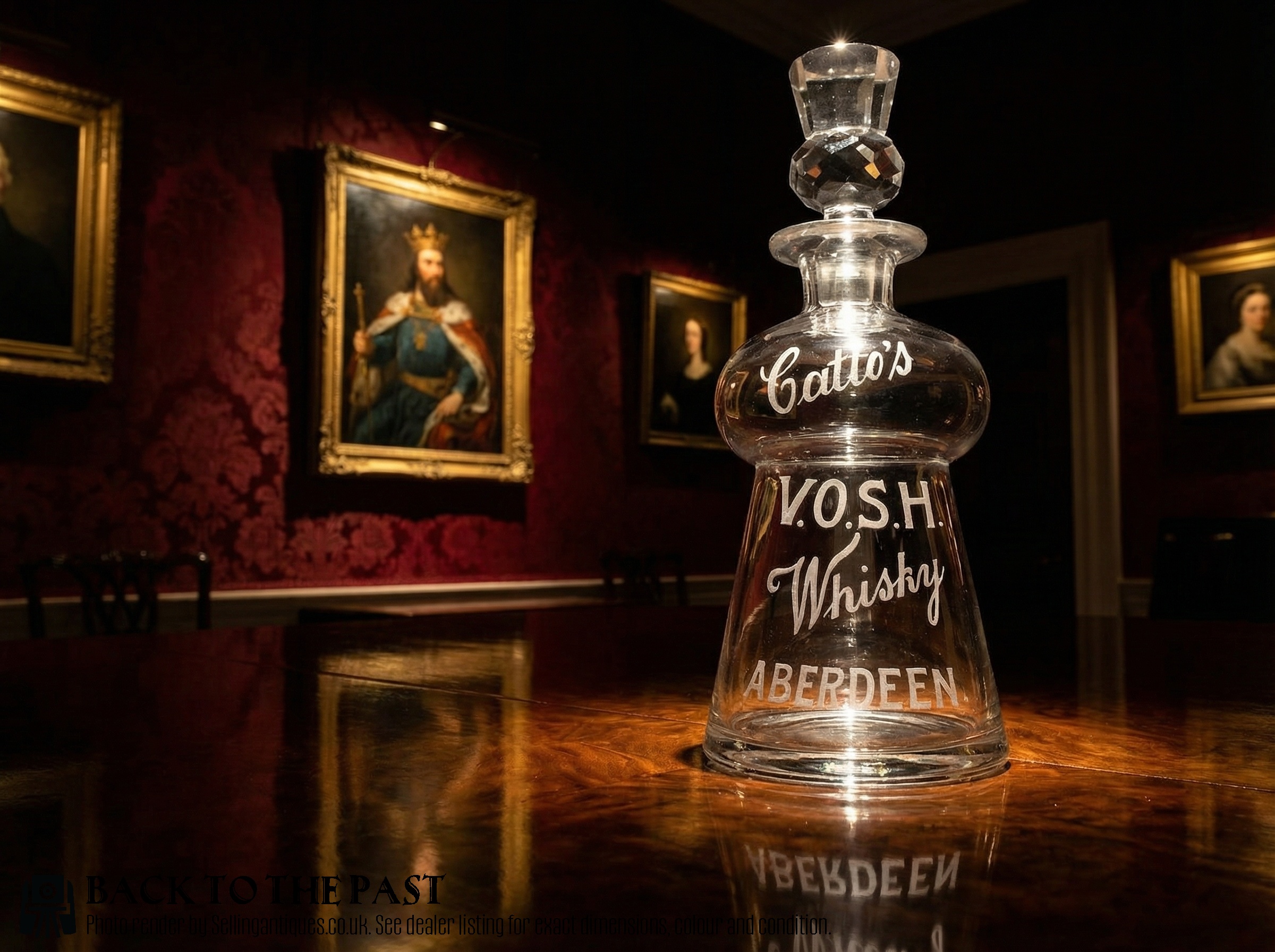
19th Century Spirits Carafe
A 19th century spirits carafe encompasses hand-blown glass bottles, decanters and serving vessels designed for whisky, gin, wine and cordials. The selection on this page draws heavily from the Victorian and Georgian periods, alongside Regency and William IV examples.
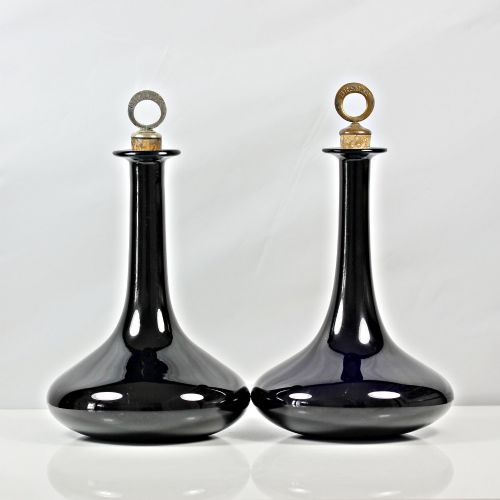
Buyers encounter distinct regional forms, from Bristol blue mell decanters and Irish whiskey bottles to Scottish enamel-labelled whisky containers and Dutch folk art gin flasks. Common shapes include ship's decanters, pillar-cut pairings, shaft and globe designs and occasional figural pieces.
Most entries originate from English, Scottish and French workshops, utilising lead crystal, clear glass, amethyst glass and ruby overlay. These vessels served both practical dining functions and personal hospitality display across the nineteenth century.
How they were made
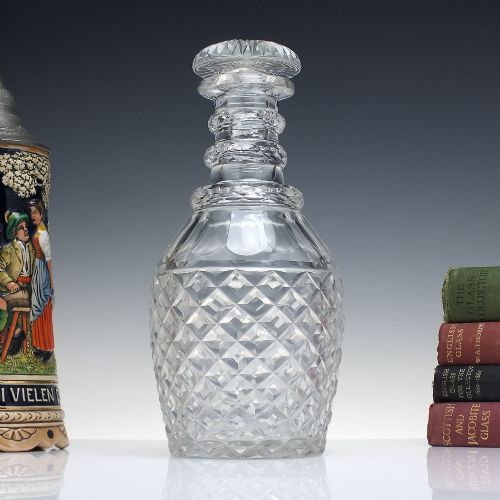
Glassmakers shaped these vessels using hand-blowing techniques, optical blowing and lead crystal moulding to achieve robust walls and heavy bases suitable for holding spirits. Workshops then applied deep wheel-cutting, pillar cutting and surface engraving.
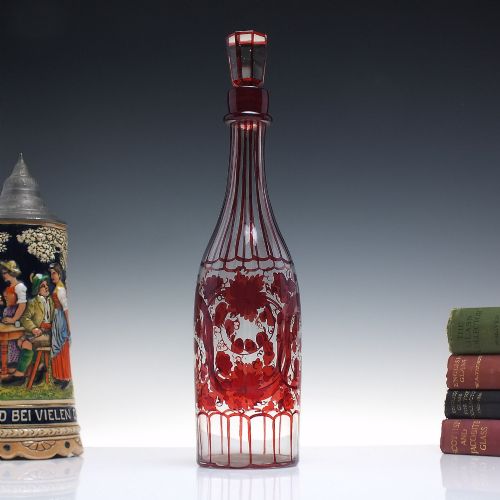
Decoration often involved hand-painted enamelling, polychrome designs, and metal accents, visible in pieces bearing specific regional names and crests. Artisans also utilised overlay techniques, fusing layers of coloured glass like ruby or amethyst over clear crystal before cutting back the surface.
One continental glassmaker shaped a nineteenth century spirit vessel into the form of a dog.
What varies in quality
The standard of a 19th century spirits carafe rests upon the depth and crispness of the glass cutting, the clarity of the metal and the precision of any hand enamel work. Heavy crystal with sharp, well-defined facets sits at the upper end of the scale.
Design complexity also dictates the tier, separating standard utility vessels from matched pairs, engraved heraldic pieces, and scarce coloured glass forms with original stoppers.
James Powell·Stevens & Williams
The 19th Century Spirits Carafe Glossary
- Mell decanter
- A mallet-shaped bottle with a wide base and tapering neck, common in the Georgian and early Victorian eras for serving spirits.
- Ship's decanter
- A glass vessel with a broad, low base and sloping sides designed to prevent tipping on rolling dining tables at sea.
- Ruby overlay
- A manufacturing method where a thin layer of red glass is fused over clear crystal and partially cut away to reveal the contrasting layer beneath.
- Pillar cut
- A decorative glass-cutting technique featuring broad, vertical flutes or columns carved deeply into the body of the decanter.
19th Century Spirits Carafe: Frequently Asked Questions
What spirits went into these carafes?
These vessels held a range of alcoholic drinks including whisky, gin, brandy, cider and fortified wines. Owners filled them from larger storage barrels for immediate dining table or sideboard service.
Specific regional bottles often displayed labels for branded blends or particular spirits like Irish whiskey.
How do I date a glass decanter?
Dating relies on stylistic shifts in shape, pontil mark evidence on the base, and cutting techniques. Georgian and Regency pieces often show heavy kick-ups and simpler mallet profiles.
Victorian examples frequently introduce deeper pillar cutting, coloured glass additions, and elaborate enamel decoration.
Are original stoppers important?
Original matched stoppers contribute significantly to the integrity and completeness of the piece. Glassmakers ground each stopper individually to fit its specific neck.
Collectors look for matching facet cuts or glass colours between the bottle and the stopper.
How should I display antique decanters?
These glass objects suit placement on sideboards, serving tables or within illuminated display cabinets where light passes through the crystal. Natural daylight highlights the depth of coloured glass varieties like Bristol blue or amethyst.
Keeping them away from direct heat sources protects the material and any painted enamel surfaces.