


19th Century Silver Caddy
These 19th century silver caddy pieces range from Georgian tea vessels to Victorian silver plate boxes, prized for their craftsmanship and historic utility.
19th Century Silver Caddy
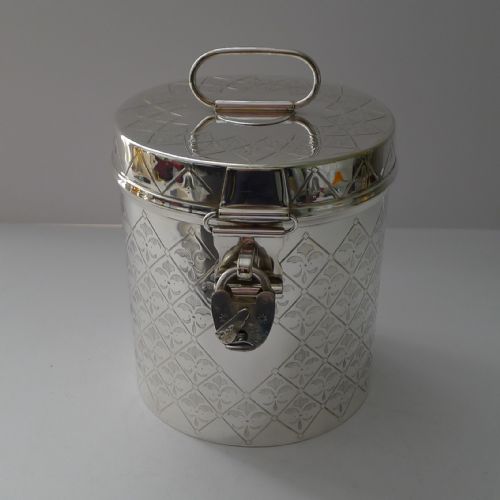
A 19th century silver caddy is primarily a dedicated container designed to store and preserve dry tea leaves securely under lock and key. The selection spans sterling silver, solid silver, and silver plate, alongside tortoiseshell and cut glass combinations.
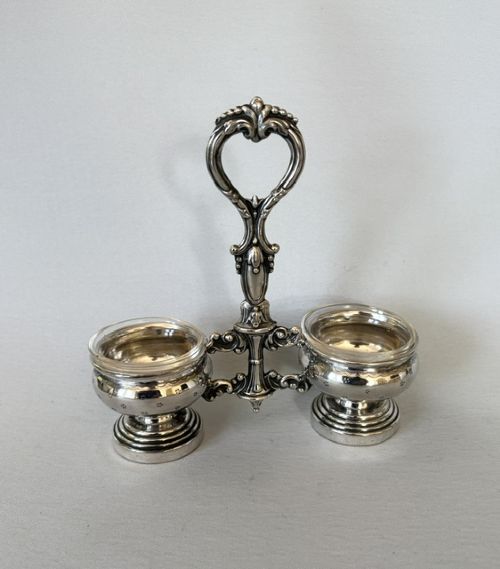
The pieces on this page also encompass related dining vessels from the same eras, including biscuit boxes, cruet sets, and condiment stands. Victorian and Georgian examples dominate the selection, reflecting the period's obsession with formal hospitality.
Makers and styles stretch across English workshops, Dutch empire designs, and French rococo motifs. Collectors encounter everything from plain circular Old Sheffield plated containers to elaborate tortoiseshell double boxes.
Materials and construction
Silversmiths utilised sterling silver, solid silver, and Old Sheffield plate over copper, shaping them into octagonal, circular, and drum forms. The incorporation of cut glass, frosted crystal, and tortoiseshell showcases complex multi-material assembly techniques.
Makers applied hand-engraving, silver-gilt accents, and detailed silver inlay to bronze and ceramic bodies. Hallmarks stamped into the metal verify the city, year, and maker of the solid silver items.
Listings span multiple nineteenth-century materials including tortoiseshell, bone, cut glass, and various forms of silver plate and solid sterling.
Distinctions in quality
Quality rests on the thickness of the silver gauge, the crispness of the chased or engraved ornament, and the integrity of internal wooden or foil linings. Sterling silver and solid silver examples demonstrate heavier weight and finer hand-detailing than standard plated wares.
The precision of the joinery in tortoiseshell and wood-carcasses dictates structural longevity. Original locking mechanisms with functioning keys and fully struck hallmarks elevate the desirability of individual boxes.
Mappin and Webb·Mappin Brothers·William Rudkins·William Hutton·George Unite·Wade Wingfield Wilkins·Elkington and Co·Hunt and Roskell·Martin Hall
The 19th Century Silver Caddy Glossary
- Tea caddy
- A small storage box or jar originally built to hold loose tea leaves safely. They often featured internal lids or divided compartments.
- Old Sheffield plate
- An early fusing technique where a thin sheet of silver is fused to a heavier copper base metal. This method leaves characteristic copper seams visible along edges and wear points.
- Hallmark
- Official stamps pressed into precious metals indicating the standard of purity, the assay office, and the specific year of production. These marks allow precise dating of solid silver pieces.
- Silver-gilt
- Sterling silver that has been coated with a thin layer of pure gold on the interior or exterior surfaces. This process prevents tarnishing from acidic substances.
- Cruet set
- A matched collection of glass bottles or cruets held within a silver or silver-plated stand for condiments and sauces. They typically sat on formal dining tables during the Victorian period.
19th Century Silver Caddy: Frequently Asked Questions
What was a silver caddy used for?
A silver caddy served as a secure storage container for expensive tea leaves during eras when tea was a heavily rationed and costly commodity. Wealthy households kept the caddy locked to prevent theft by domestic staff.
Over time, the form evolved to accommodate different social rituals, housing biscuits or condiments on formal dining tables alongside tea service.
How do I identify a Georgian tea caddy?
Georgian tea caddies date from the eighteenth century into the early decades of the nineteenth century, typically displaying neoclassical or restrained geometric proportions. They frequently utilise materials like tortoiseshell, burr walnut, or heavy gauge silver.
Look for hand- cut joinery, older hinge mechanisms, and absence of mid-Victorian revival ornamentation. Solid silver examples will bear period assay office stamps.
Are silver plated caddies collectable?
Silver plated caddies from the nineteenth century are highly collectable, particularly those produced by renowned firms like Elkington or Mappin and Webb. Old Sheffield plate and early electroplate items demonstrate exceptional manufacturing skill.
Collectors value these pieces for their decorative presence and historical connection to Victorian dining habits, often rivalling solid silver in craftsmanship.
How do I care for antique tortoiseshell?
Tortoiseshell requires stable environmental conditions away from direct sunlight and extreme humidity to prevent warping or shrinking. Clean the surface only with a soft, dry microfibre cloth without chemical polishes.
Keep the material conditioned by avoiding dry artificial heat sources, which can cause the delicate organic shell to split along its core joints.