


19th Century Silhouette Artwork
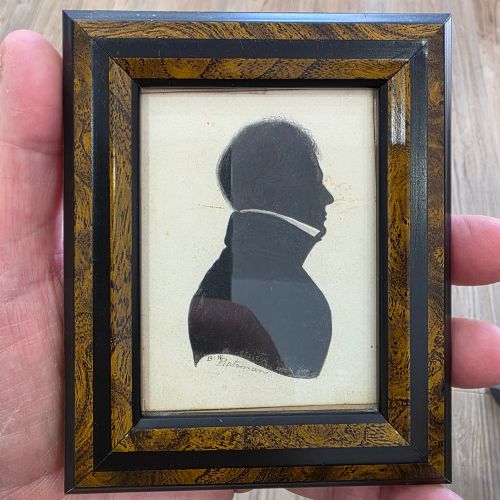
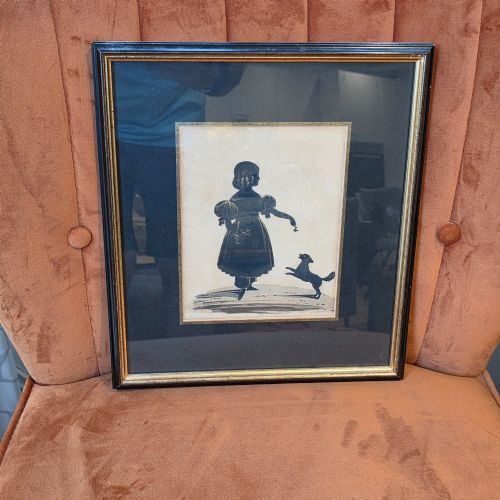
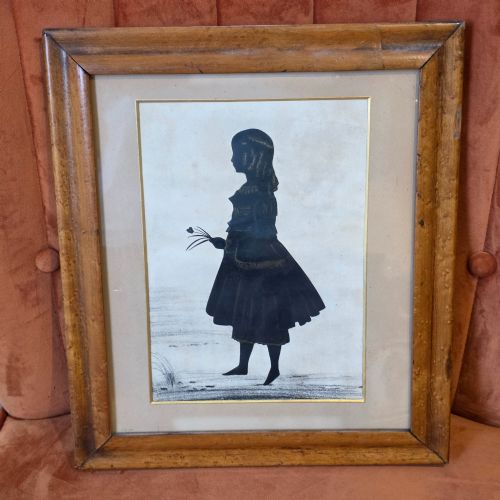
These 19th century silhouette artwork pieces capture the sharp profile likenesses of sitters from the Regency, Georgian, and Victorian eras.
19th Century Silhouette Artwork
When you search for 19th century silhouette artwork, you find framed likenesses rendered in cut paper, painted ink, and reverse glass painting. These works record sitters from periods spanning the Georgian, Regency, Early Victorian, and late Victorian eras.
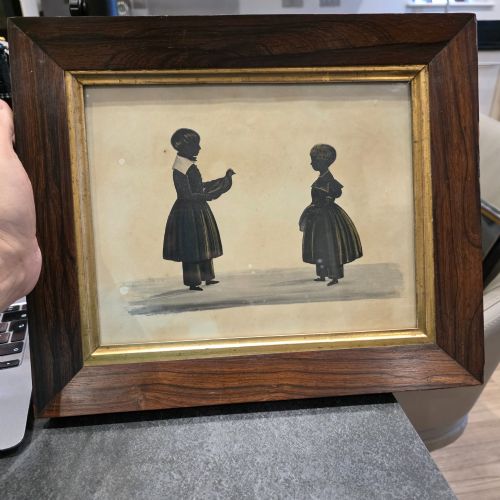
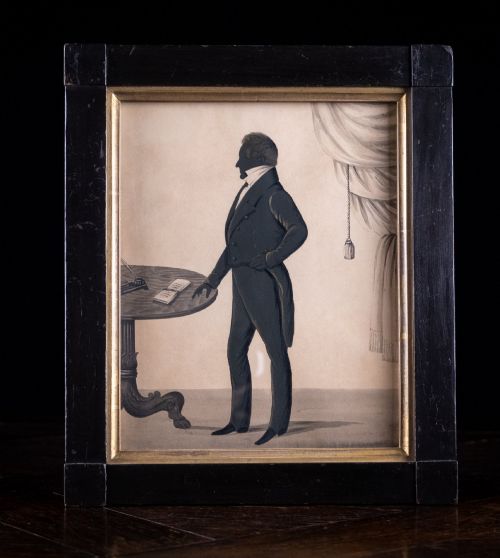
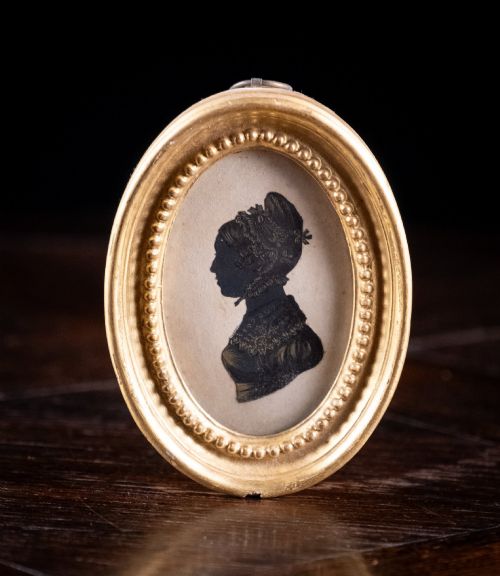
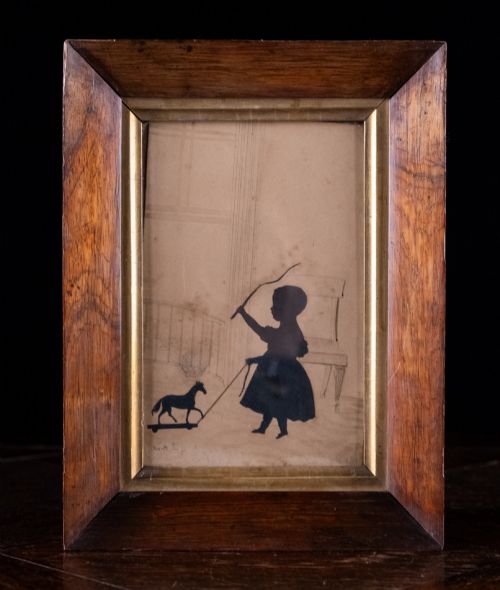
The objects appear as framed wall art, silhouette portraits, conversation pieces, and miniature watercolours. Subjects range from single gentlemen and ladies to children with animals, families, and equestrian scenes.
Most examples date firmly within the nineteenth century, though the selection reaches back into the eighteenth century and forward to eighteen eighty. Pieces often incorporate delicate gold leaf highlights and watercolours alongside the primary dark profile.
How they were made
Makers produced these works using cut paper mounted on contrasting grounds, alongside ink and watercolour painted directly onto card or paper. Some pieces utilise reverse glass painting techniques to achieve a glossy, finished surface.
Framing typically involves ebonised wood moulding, frequently complemented by brass fittings and applied gold leaf details. The physical construction combines papercraft, painting, and traditional framing methods of the period.
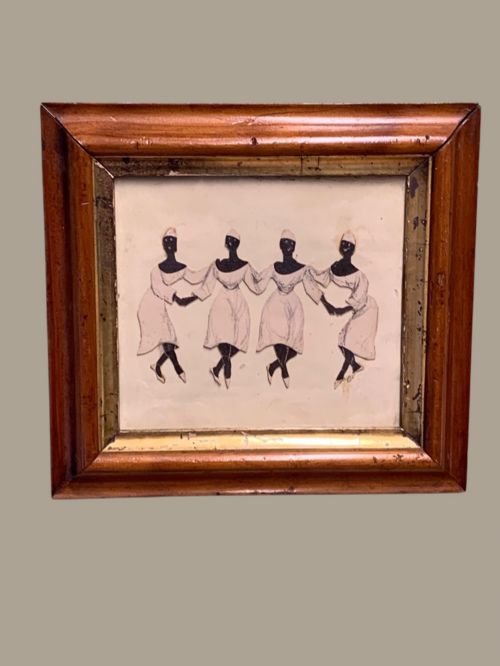
One lively nineteenth-century piece records dancing African girls in a detailed collage work.
What varies in quality
The distinction between standard examples and the finest works lies in the precision of the cutting and the crispness of the painted detail. Cut paper portraits with delicate hand-drawn watercolour embellishments or gold leaf highlights command attention.
Quality also rests in the complexity of the composition, moving from simple single profiles to intricate conversation pieces involving multiple figures, animals, and detailed backgrounds. The preservation of the original ebonised wood frame and glass contributes to the standing of a piece.
William James Hubard·Augustin Edouart·John Smith of Edinburgh·Skeolan·J. Deacon
The 19th Century Silhouette Artwork Glossary
- Cut paper
- A technique where the profile is meticulously snipped from paper using small scissors before being mounted. Artists often added subtle watercolour washes or gold leaf highlights to enhance the flat paper.
- Reverse glass painting
- An art form where the image is painted directly onto the reverse side of a glass panel. When viewed from the front, the glass provides a glossy protective layer that deepens the dark tones.
- Ebonised wood
- Timber treated with a finish to imitate expensive ebony wood. This dark framing material provides the traditional high-contrast border standard for nineteenth-century profile portraits.
- Conversation piece
- An informal group portrait depicting family members or groups engaged in daily activities. These works show subjects in domestic settings rather than formal isolated poses.
19th Century Silhouette Artwork: Frequently Asked Questions
How do I identify a Regency silhouette?
Regency silhouettes often feature delicate cut paper work enhanced with fine gold leaf highlights and watercolour details. The sitters typically wear Regency attire such as high-waisted dresses or tailcoats.
These pieces are usually housed in narrow ebonised wood frames with small brass hangers at the top. The overall aesthetic leans toward crisp, refined lines and intimate portraiture sizes.
What is a silhouette conversation piece?
A conversation piece is an artwork showing multiple people, and sometimes animals, interacting in a shared scene rather than a single isolated profile. These complex compositions record family groups or social gatherings.
Such works require greater skill from the artist in arranging multiple cut or painted figures within a single framed narrative. They offer a vivid glimpse into nineteenth-century domestic life.
How should I hang silhouette art?
Hang these framed works away from direct sunlight to protect delicate watercolours and paper from fading over time. Maintain stable indoor humidity to prevent the paper support from warping within the antique frame.
Group smaller portrait miniatures together on a wall to create a traditional gallery display reminiscent of period homes. Ensure the hanging wire and original wall fixings remain secure.
Are all silhouettes cut from paper?
Not all examples are cut from paper, as many artists painted the profile directly onto card, paper, or the reverse side of glass using dark ink and watercolours. Painted versions allow for finer linework around hair and costume details.
Both cut and painted methods were widely practiced throughout the nineteenth century by itinerant artists and established galleries alike.