



Regency Miniature Silhouette
A regency miniature silhouette captures the precise profile of an ancestor in ink, paper, or glass.
Regency Miniature Silhouette
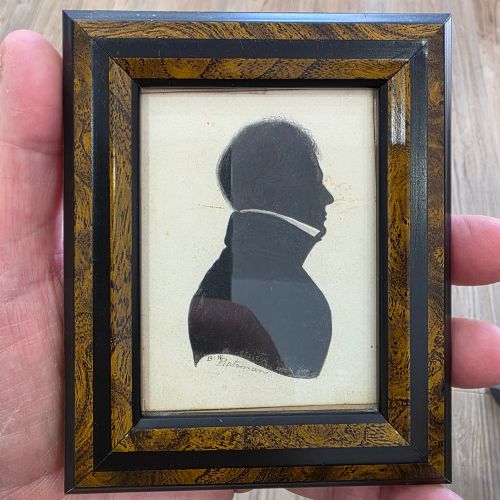
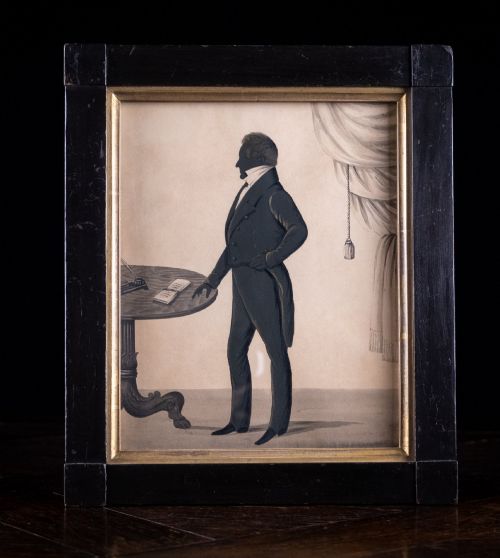
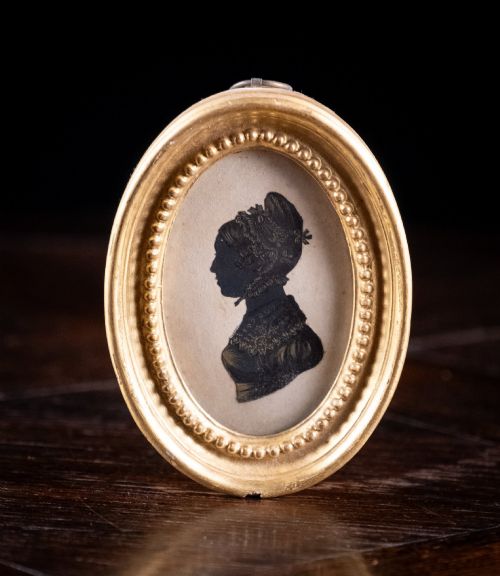
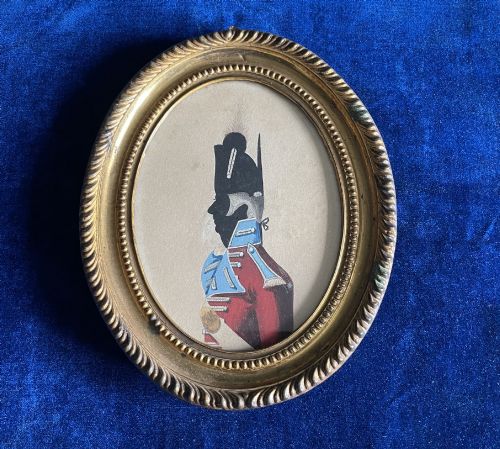
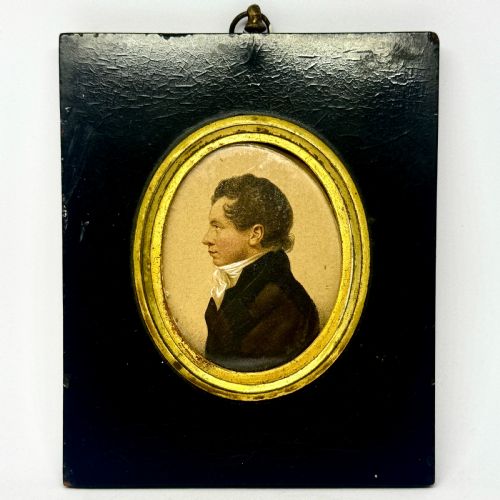
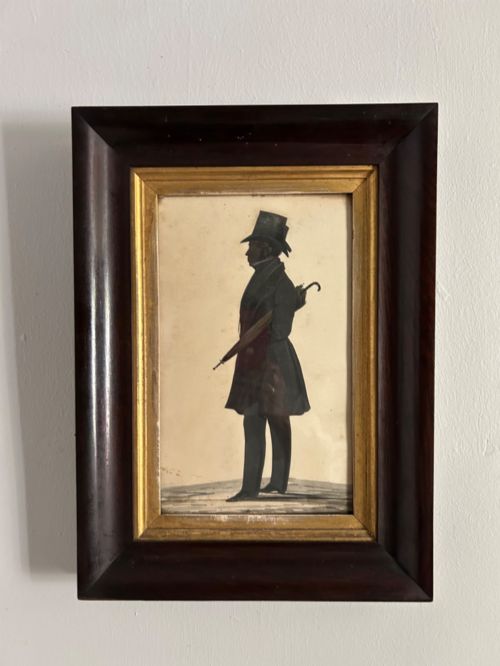
A regency miniature silhouette represents a small-scale profile portrait created during the late Georgian and Regency eras. These works capture the likeness of sitters through solid black pigment or cut paper, often enhanced with delicate gold leaf details.
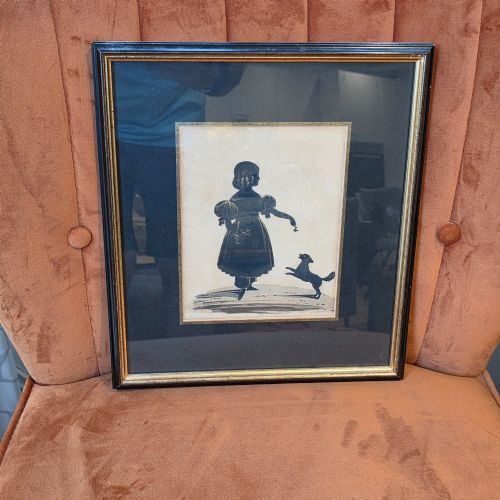
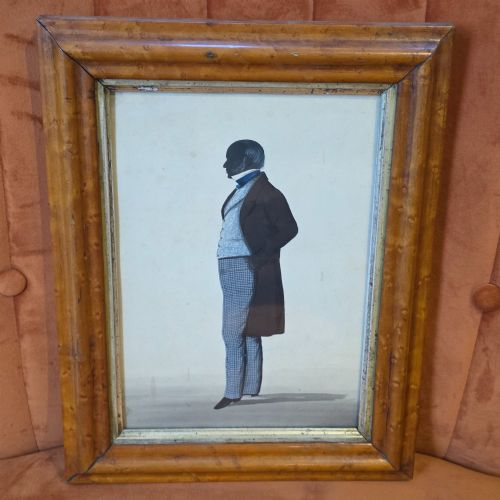
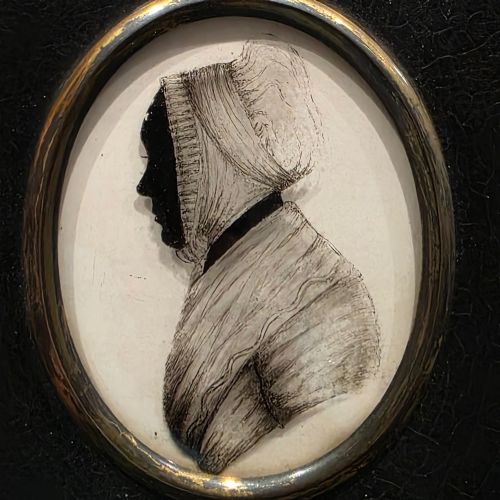
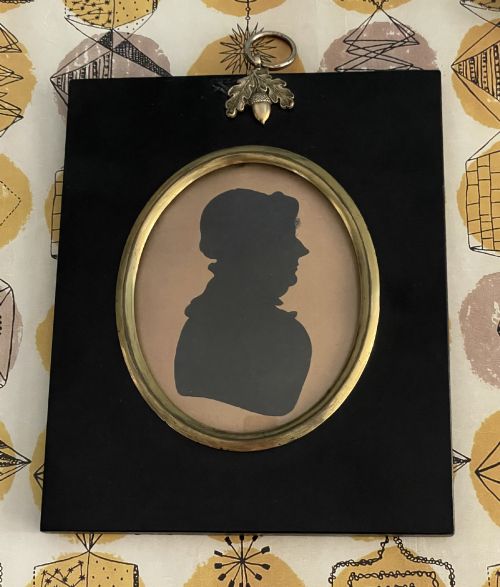
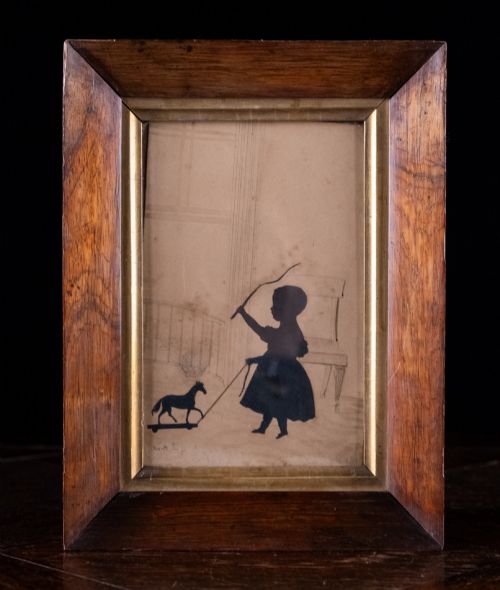
The versions most commonly met on this page date from the 19th century and take the form of framed wall art. They depict gentlemen, ladies, children, and occasionally animals in profile, housed within timber frames made of rosewood, ebony, or gilt wood.
Materials and Techniques
Artists utilised paper, glass, and ink to build these compact portraits, frequently cutting freehand with scissors or applying black pigment directly to the reverse of a glass panel. Gilt leaf was then added by hand to highlight buttons, bonnets, and lace collars.
Frames made of papier-mache, brass, and wood completed the construction, protecting the fragile paper or painted glass surface behind glazing. Many examples incorporate wooden surrounds fitted with small brass hangers for wall display.
Several profiles record family pets joining their owners for posterity.
Assessing the Standard
The survival of original glass, backing papers, and period frames significantly influences the integrity of the piece. Works bearing legible signatures or historic inscriptions on the reverse offer a clearer connection to the original maker.
Bateman·William James Hubard·Frith·George Atkinson·James Gillespie·Augustin Edouart·John Miers·Thomas London·J. Deacon·John Smith of Edinburgh·Yeo
The Regency Miniature Silhouette Glossary
- Silhouette
- A solid profile portrait, typically filled in with black pigment or cut from dark paper. The style gained immense popularity during the 18th and 19th centuries before the widespread adoption of photography.
- Reverse painted
- A technique where the artist paints the portrait directly onto the back of a glass panel. This method leaves a glossy, protected finish on the front.
- Gilt
- A thin application of gold leaf or gold paint used to accent details such as jewellery or garment trim. This embellishment brings contrast to the dark profile silhouette.
- Papier-mache
- A durable composite material formed from paper pulp mixed with adhesive, pressed into moulds, and dried. It frequently served as the primary material for dark, polished frames.
Regency Miniature Silhouette: Frequently Asked Questions
How were silhouettes displayed?
These miniature portraits were designed to hang in small groups on parlour walls or sit upon side tables. Their compact scale allowed owners to arrange multiple family members closely together in tight decorative clusters.
Today, they suit small wall spaces or study rooms where their dark profiles provide strong contrast against light-coloured wallpaper.
Are these portraits painted or cut?
Makers employed both methods, sometimes combining paper cutting with ink and watercolour work on the same sheet. Some artists snipped the likeness from black paper and mounted it onto a pale background.
Other practitioners applied ink or paint directly onto paper or the reverse side of glass panels to achieve a sharp profile.
How do I identify a period frame?
Period frames on these works typically utilise papier-mache, rosewood, or ebony, often fitted with intricate brass bezels and acorn hangers at the top. The timber shows deep patination and the backing boards consist of early pine or card secured with old nails.
Modern replacements lack this historic construction and usually feature clean, uniform timber without the signs of age found on original surrounds.
Did these portraits include children?
Makers frequently produced profiles of children, sometimes accompanied by pets such as dogs or horses to capture family life. These pieces are often smaller in scale and show the young sitters in traditional period dress.
Inscriptions on the reverse frequently record the age and first name of the child alongside the date of execution.