
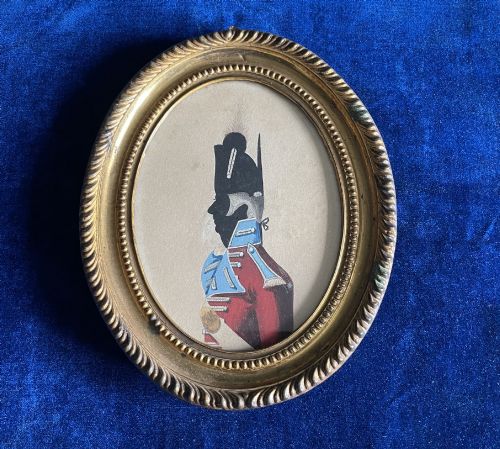
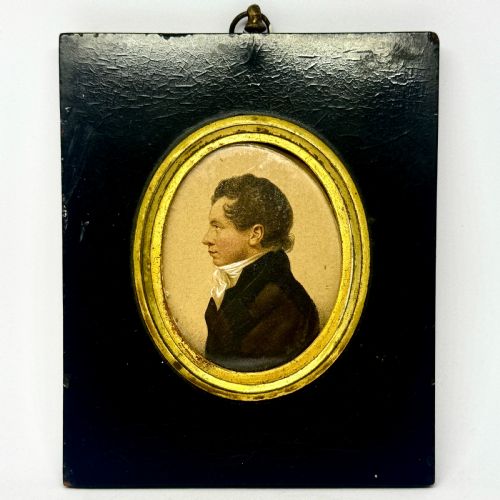
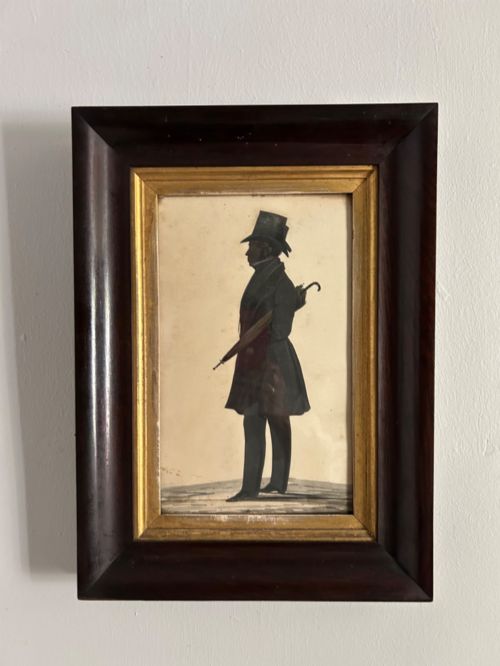


Gilt Framed Silhouette Art
Gilt framed silhouette art captures the sharp profile portraits of Georgian and Victorian sitters bounded in polished brass and burnished gold leaf.
Gilt Framed Silhouette Art
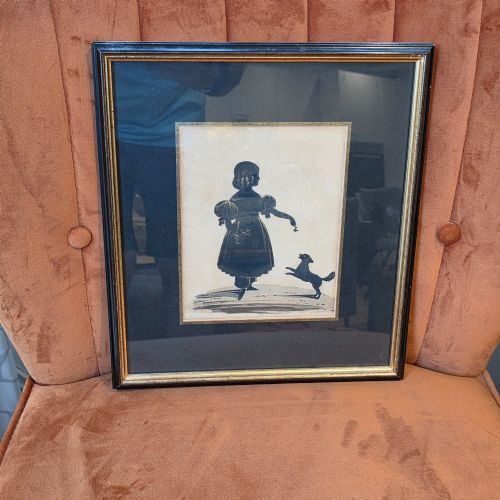
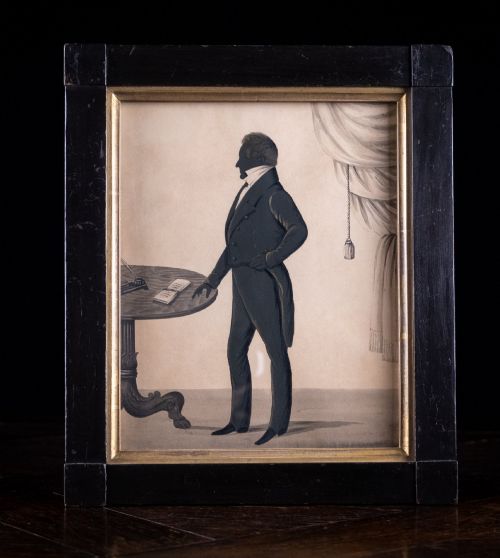
When you search for gilt framed silhouette art, you encounter intimate portrait miniatures and wall art originating from the eighteenth and nineteenth centuries. These profiles capture sitters from Regency dandies to children and domestic animals through precise cut paper or delicate ink work.
The versions most common on this page date from the nineteenth century, often reflecting the Regency and Georgian eras in their attire and framing. They appear primarily as framed wall art and silhouette portraits enclosed in polished wood, brass, or gilt wood enclosures.
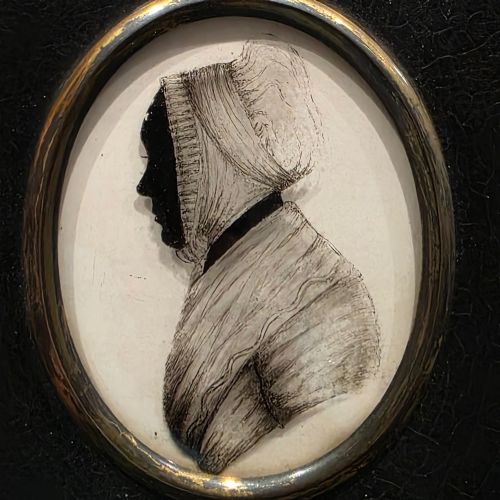
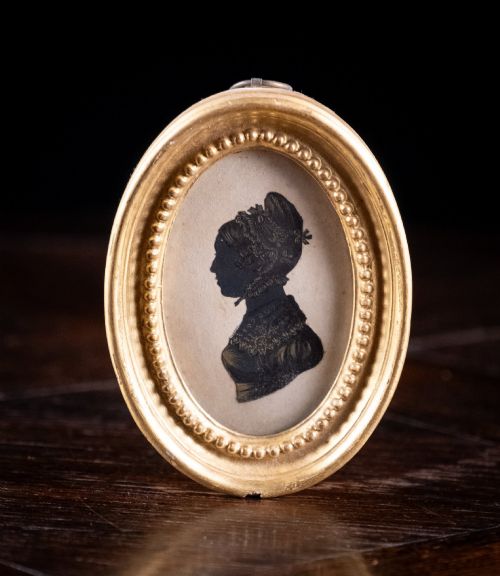
The historical scope spans from the eighteenth century into the Victorian age, incorporating distinct styles such as Regency profile work and Georgian portrait miniatures. Each piece preserves a likeness through silhouette portraits or painted profiles on paper, glass, or plaster.
How they were made
Makers produced these works using paper, ink, and glass, frequently employing reverse painting techniques or hand cut paper silhouettes. Artists mounted these profiles against contrasting backgrounds, sometimes adding delicate watercolor or gold leaf highlights to enhance costume details.
Framing involved wood, brass, and gilt wood, creating protective housings that preserved the fragile paper and plaster mediums within. Artisans utilised gold leaf to gild wooden mouldings, framing the dark profiles with a luminous border.
Listings feature works from the 18th century, Regency period, and 19th century, utilising glass, paper, ink, wood, brass, and gold leaf.
What varies in quality
The sophistication of the silhouette cutter's hand dictates the precision of the profile, separating generic likenesses from masterly portraits that capture exact facial structures and hairstyles. Subtle brushwork in watercolour highlights or bronzing adds depth that distinguishes finer works from basic black paper cutouts.
The integrity of the original framing, whether rosewood or gilt wood, alongside the preservation of the glass and backing papers, influences the overall character of the piece. Contemporary mountings differ substantially from period frames that retain their original brass hangers and bezels.
William James Hubard·Frederick Frith·J. Deacon·Alfred Darbyshire·John Miers·John Smith of Edinburgh·Nathaniel Bermingham·Skeolan
The Gilt Framed Silhouette Art Glossary
- Silhouette
- A solid dark profile portrait, usually in black, cut from paper or painted onto a pale background. This form emerged long before photography as an accessible method of recording likenesses.
- Reverse painted
- A technique where an artist paints directly onto the underside of a glass panel, so the image appears correctly when viewed through the front. This method protects the pigment from dust and damage.
- Portrait miniature
- A small-scale painting or silhouette created with intense detail during the eighteenth and nineteenth centuries. These objects were designed to be held in the hand or displayed in small domestic spaces.
- Gilt wood
- Wood coated with a thin layer of gold leaf or metallic powder to create a reflective golden surface. It provides the characteristic bright border found on many period frames.
Gilt Framed Silhouette Art: Frequently Asked Questions
How do I date an antique silhouette?
Examine the sitter's clothing, hairstyle, and bonnet shapes, which closely follow the fashions of the eighteenth and nineteenth centuries. The framing materials and handwritten notes on the reverse often provide additional chronological clues.
Period techniques, such as specific cutting styles or signature practices of known artists like John Miers, also help narrow down the decade of creation.
Were silhouettes made as pairs?
Makers frequently produced silhouette portraits in pairs to represent married couples or family members. These matching pieces share identical framing and scale so they could hang side by side on a drawing room wall.
Individual portraits were equally common, commissioned by sitters to record their likeness for family members or personal keepsakes.
How should I hang gilt framed art?
Protect these fragile works from direct sunlight, which can fade antique paper, watercolours, and delicate ink work over time. Maintain stable indoor humidity levels to prevent the wood and gesso frames from cracking.
Display them at eye level in low-traffic areas using secure picture hooks suited to the weight of the original wooden or brass frames.