


Shadow Portrait Painting
These shadow portrait painting pieces capture likenesses in silhouette, offering collectors intimate profiles executed with remarkable precision on glass, paper, and card.
Shadow Portrait Painting
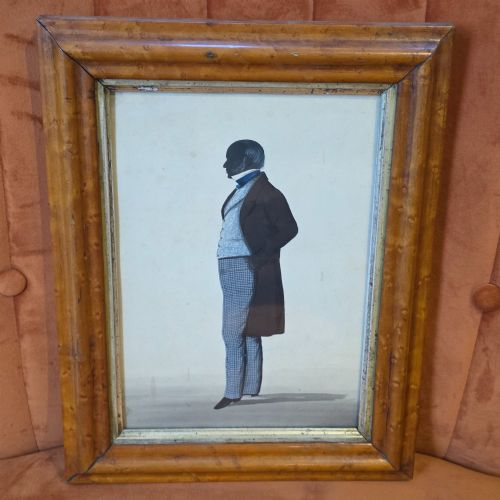
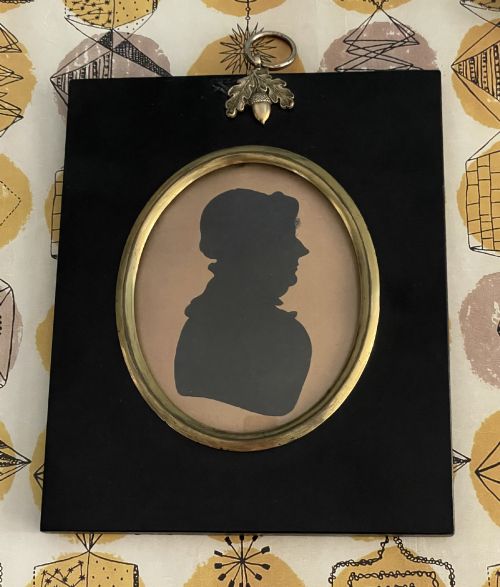
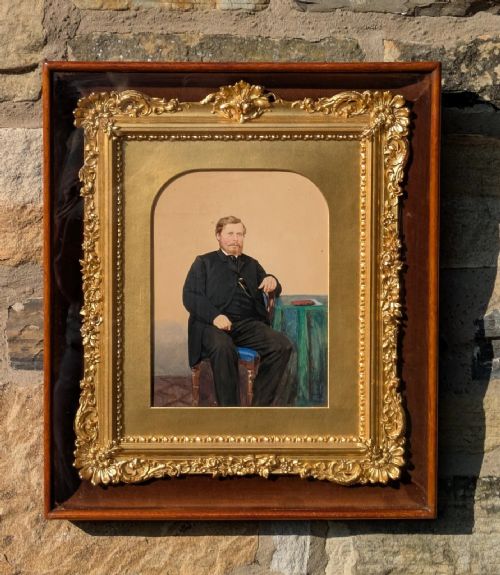
When you search for shadow portrait painting, you encounter a distinct tradition of profile likenesses spanning the Georgian, Regency, and Victorian periods. The works appearing on this page take several forms, including framed silhouette art, portrait miniatures, and wall art.
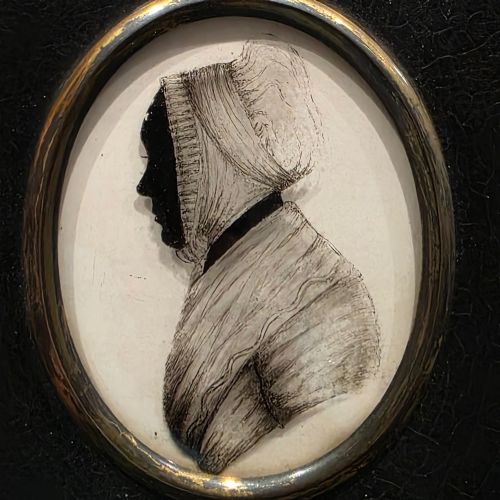
The versions you are most likely to meet combine ink, paint, or cut paper mounted within period frames. Examples range from hand-cut full-length silhouettes of gentlemen to delicate miniatures painted on glass and maple-framed family scenes.
Makers recorded in the evidence such as Miers, J. Deacon, James Gillespie, Alfred Darbyshire, and Frith demonstrate the range of skill found across these centuries. Works attributed to specific artists sit alongside pieces created by the British School.
How they were made
Makers utilised specific materials to achieve contrast and depth, mounting paper profiles or applying paint directly to glass. Reverse painting on glass allowed artists to seal the delicate pigment behind a protective transparent panel.
Several Victorian family groupings include vigilant household dogs immortalised alongside their owners in shadow profile.
What varies in quality
The standard of execution in shadow portrait painting rests upon the crispness of the cutting or the sureness of the brushwork. Works by named practitioners display superior control over line and proportion compared to anonymous workshop pieces.
Original framing contributes significantly to the integrity of a piece, particularly where brass fittings, gold leaf accents, and rosewood or maple housings remain intact. The preservation of the glass and the underlying paper or paint surface dictates the overall condition.
Frith·James Gillespie·J. Deacon·Alfred Darbyshire·Miers
The Shadow Portrait Painting Glossary
- Silhouette
- A solid profile portrait, typically filled in with dark pigment or cut from paper.
- Reverse painting
- A technique where the artist paints on the back of a glass panel so the image is viewed through the front.
- Portrait miniature
- A small-scale painting or likeness designed for intimate viewing.
- Ebonised wood
- Timber treated to resemble heavy, dark ebony wood.
- Box mount
- A deep frame housing that creates physical space between the portrait and the glass.
Shadow Portrait Painting: Frequently Asked Questions
How do I date a silhouette?
Dating relies on costume styles, hair fashion, and framing materials characteristic of Georgian, Regency, or Victorian eras. Inscribed dates or maker signatures on the reverse provide definitive periods.
Changes in mounting techniques, such as the shift from simple wooden surrounds to deep glazed velvet boxes, also help establish chronology.
Are these portraits painted or cut?
Makers employed both methods, sometimes combining them within a single composition. Some works feature paper cutouts mounted against a contrasting background.
Others involve delicate ink or paint applied directly to paper or reverse-painted onto glass surfaces.
Who were the notable makers?
Prominent practitioners include Miers and J. Deacon, alongside artists like James Gillespie and Alfred Darbyshire whose signed works appear in collections.
Many fine examples remain attributed to the British School or bear dealer attributions to craftsmen such as Frith.
How should I display them?
Keep these framed works away from direct sunlight to prevent the fading of paper, ink, and coloured pigments. Maintaining stable indoor humidity protects both the delicate glass panels and the wooden frames.
Group hanging works from similar periods creates a cohesive display that reflects historical gallery arrangements.