


19th Century Salon Suite
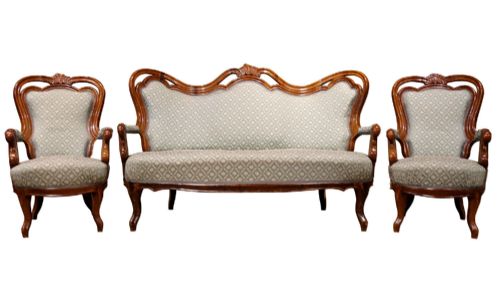
A 19th century salon suite brings formal sitting room seating together in matched sets, offering coordinated elegance for formal entertaining.
19th Century Salon Suite
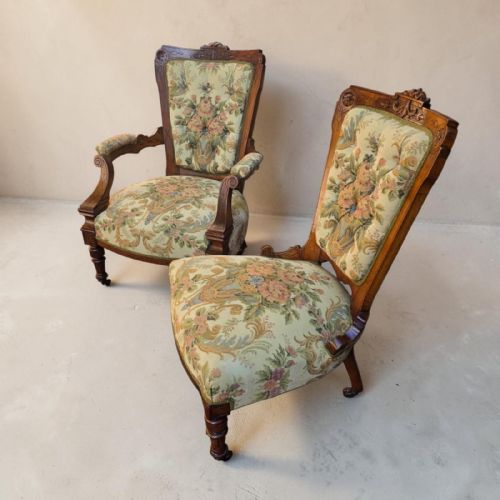
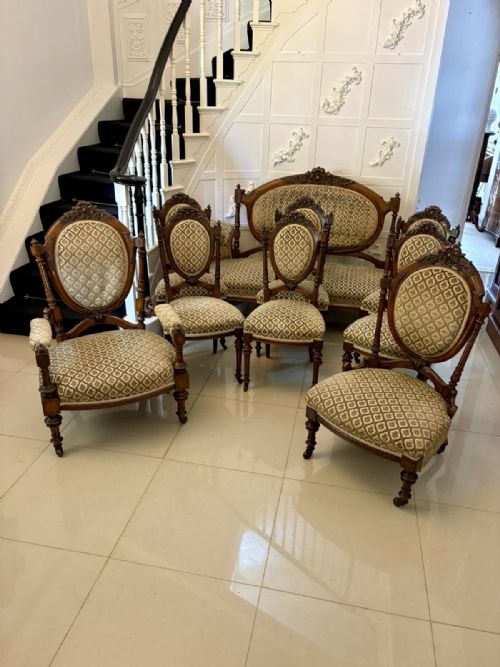
A 19th century salon suite comprises matched sets of seating designed for formal entertaining and reception rooms. These groupings typically include settees, sofas, armchairs, and side chairs sharing identical timber, carving, and upholstery schemes.
The most common versions met on this page are walnut and giltwood suites from the Victorian and French revival periods. Pieces range from intimate three-piece arrangements to large multi-piece drawing room suites featuring sofas and footstools.
Stylistic influences span widely across the nineteenth century, including Rococo Revival, Louis Philippe, French Empire, Louis XVI, and Biedermeier. Continental and English workshops produced these coordinated groupings for formal drawing rooms.
Materials and construction
Walnut, mahogany, satinwood, and burr birch provide the primary timber foundations for carved wooden frames. Giltwood and ebonised finishes appear frequently alongside painted and parcel-gilt surfaces.
Upholstery incorporates traditional textile coverings such as velvet, fabric, tapestry, and Aubusson weave. Brass hardware and metal components support structural joinery and decorative mounts on continental pieces.
The inventory records regional variations including Swedish production alongside English and continental workshops.
Distinctions in quality
The refinement of the timber carving sets apart finer suites from simpler production. Deeply undercut scrollwork, crisply moulded frames, and balanced proportions indicate superior cabinet-making.
The ambition of the suite scales with the number of matched components and the complexity of the upholstery. Comprehensive sets featuring matching sofas, armchairs, and side chairs represent higher levels of original commission.
John Tesch
The 19th Century Salon Suite Glossary
- Salon suite
- A matched set of seating furniture designed for a formal drawing room or reception space. These groupings usually combine a settee or sofa with several matching chairs.
- Giltwood
- Timber treated with a thin layer of gold leaf or gold paint over a prepared gesso surface. This finish creates a bright metallic appearance characteristic of French revival seating.
- Rococo Revival
- A nineteenth-century design movement inspired by eighteenth-century French styles, marked by asymmetrical scrolls, floral carving, and curving cabriole legs. It appears frequently on Victorian walnut frames.
- Aubusson tapestry
- Hand-woven French textile used for upholstery, traditionally featuring pastoral scenes or floral motifs. These luxury coverings distinguish high-status nineteenth-century suites.
- Cameo back
- An oval upholstered chair back framed by carved wood, resembling a cameo portrait. This form is common on Victorian drawing room seating.
19th Century Salon Suite: Frequently Asked Questions
How many pieces make a complete salon suite?
Suites vary from small three-piece groupings consisting of a settee and two chairs up to extensive collections of nine or eleven pieces. The original commission determined the total number of matching seating elements.
Larger configurations often include specialised seating such as side chairs, armchairs, footstools, and full-length sofas designed to furnish a large drawing room cohesively.
What is the difference between a salon suite and a drawing room suite?
Both terms describe matched sets of formal seating furniture used during the nineteenth century. The designation often reflects regional terminology or stylistic preference rather than a functional distinction.
French-influenced groups frequently use the term salon suite, while English-origin sets of the Victorian period are often catalogued as drawing room suites.
Where were these suites originally placed in a home?
These seating groups furnished the principal reception rooms where guests were received and entertained. The matched chairs and settees were arranged to facilitate formal conversation.
In larger nineteenth-century houses, the salon or drawing room served as the primary public space for social gatherings, requiring coordinated and decorative furniture.
How do I identify French revival styles in a suite?
French revival suites display design elements borrowed from seventeenth and eighteenth-century royal court furniture, such as Louis XV or Louis XVI aesthetics. Look for giltwood finishes, tapered fluted legs, and Aubusson tapestries.
Maker techniques and carving motifs help distinguish French-influenced walnut and giltwood suites from simpler domestic Victorian designs.