
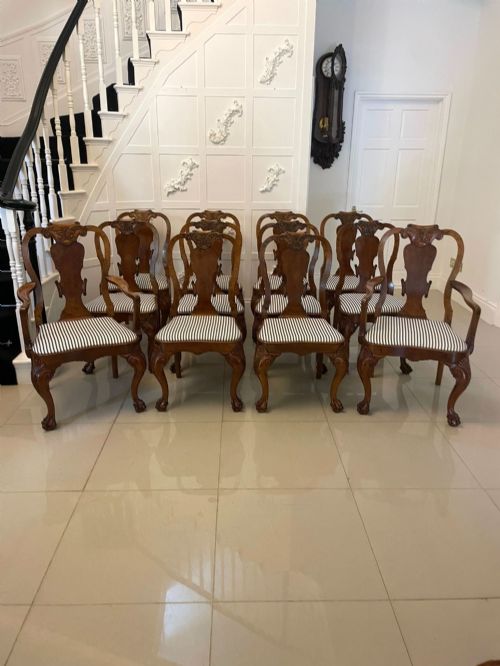
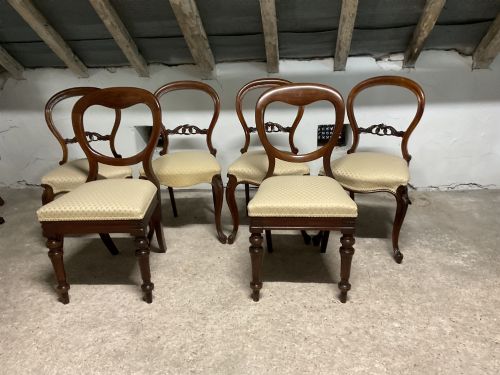
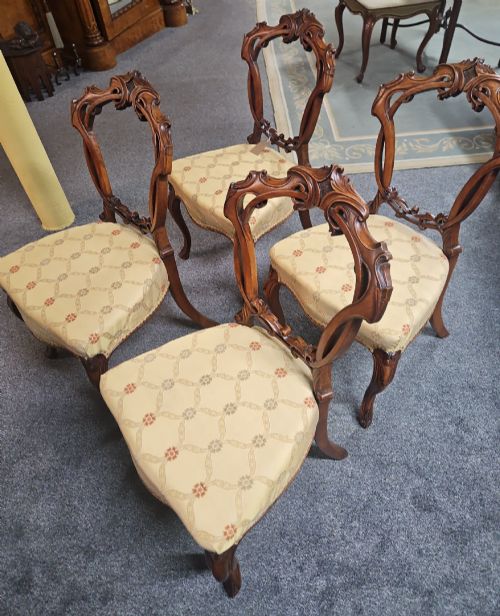
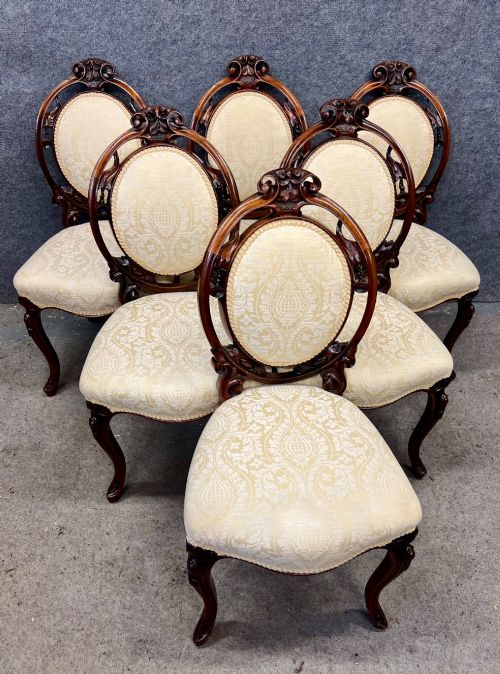


Victorian Walnut Seating Set
A victorian walnut seating set brings rich timber tones and refined nineteenth-century craftsmanship into a modern dining room or salon.
Victorian Walnut Seating Set
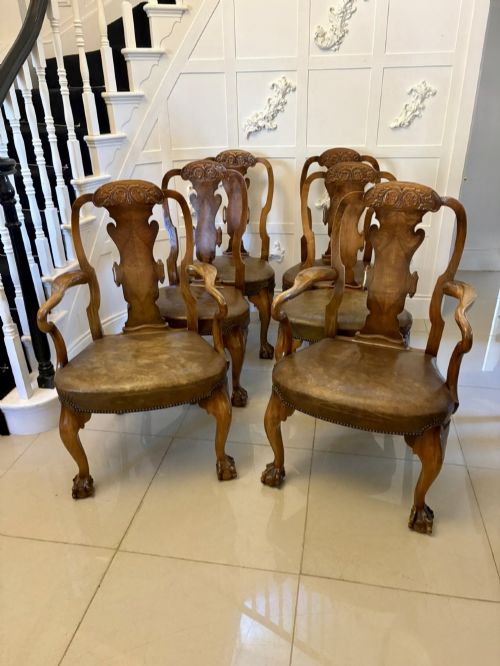
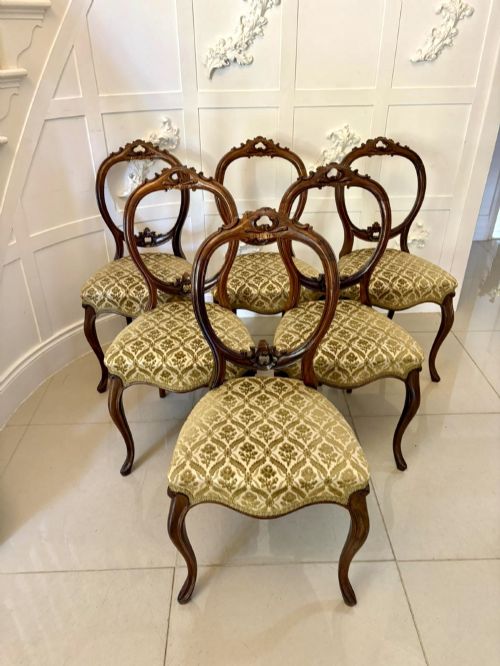
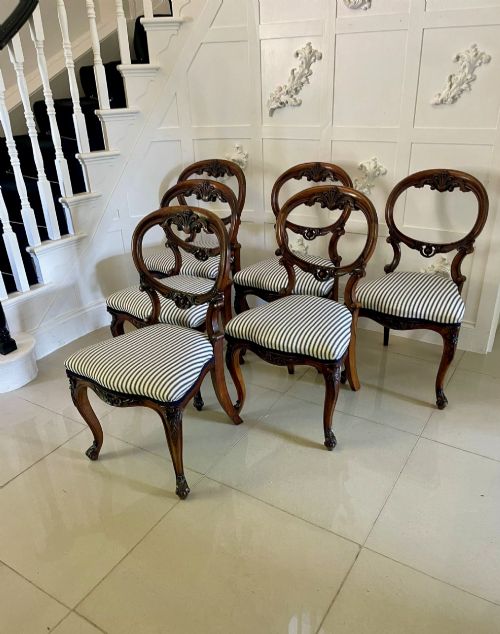
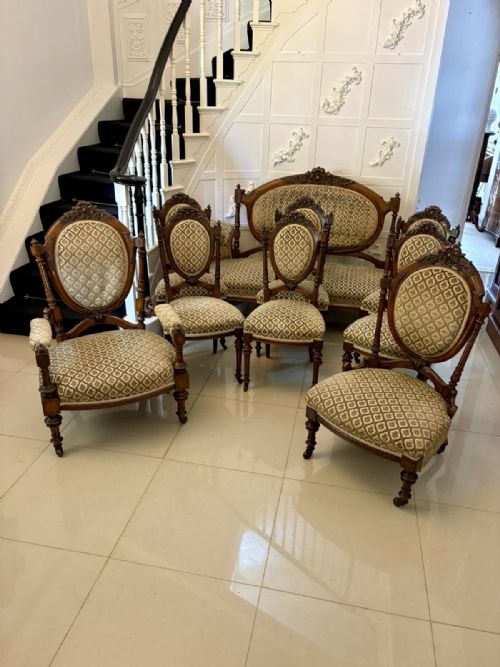
When you search for a victorian walnut seating set, you encounter matched groups designed for formal dining and reception rooms. These suites range from small quartets of balloon back chairs to large gatherings of twelve or more dining seats and multi-piece salon suites.
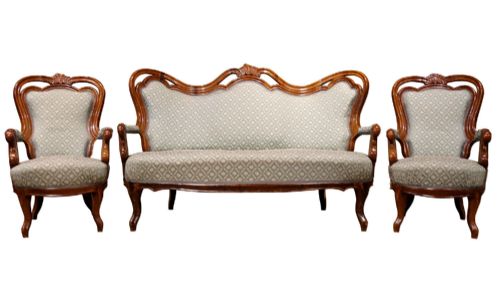
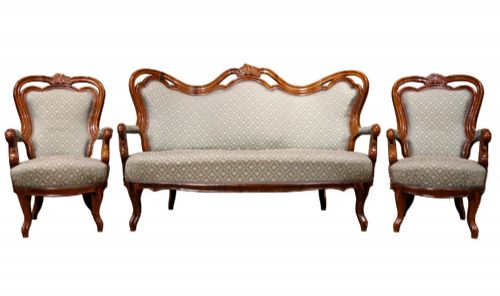
The most common configurations on this page include sets of six dining chairs alongside three-piece salon suites comprising a settee and a pair of matching armchairs. Pieces originate primarily from the Victorian period, spanning the mid to late nineteenth century.
Makers and designers of the era utilised various revival movements, incorporating Rococo, French, Aesthetic, and Art Nouveau influences into the walnut frames. This variety ensures that matching sets possess distinct decorative carving and silhouette profiles.
Materials and Construction
Cabinet makers of the nineteenth century built these chairs using solid walnut and burr walnut veneers, prized for their deep grain patterns and warm hue. Artisans applied hand-carved ornamentation directly to the structural timber frames.
Upholstery formed an integral part of the manufacturing process, employing materials such as velvet, leather, and various traditional textile fabrics. Brass accents and internal button-backing techniques frequently completed the construction of both salon suites and dining chairs.
Nineteenth-century conversation seats allowed two people to sit facing opposite directions while gossiping comfortably.
Judging Quality
The standard of a victorian walnut seating set rests upon the crispness of the hand-carved woodwork and the selection of figured burr timber veneers. Superior examples display deeply sculpted balloon backs and robust, finely turned legs without structural compromise.
Cohesion within the set dictates overall desirability, as larger groupings that retain matching frames and uniform upholstery show greater original intent. Pieces attributed to documented firms or specific design movements demonstrate higher tiers of nineteenth-century craftsmanship.
Lamb of Manchester·Blyth & Sons
The Victorian Walnut Seating Set Glossary
- Balloon Back
- A chair back shaped in a continuous curved oval resembling an inflated balloon. This design gained immense popularity during the mid-nineteenth century.
- Burr Walnut
- Wood cut from a walnut tree growth or burl, yielding intricate, swirling grain patterns. Cabinet makers utilised these highly decorative veneers on prominent surfaces.
- Salon Suite
- A matched set of reception room furniture typically consisting of a settee and matching armchairs or occasional chairs. These suites furnished formal Victorian drawing rooms.
- Aesthetic Movement
- A late nineteenth-century design style emphasising visual beauty and artistic reform over heavy historicism. It rejected ornate Victorian clutter in favour of simpler, elegant lines.
Victorian Walnut Seating Set: Frequently Asked Questions
How many pieces make up a suite?
A standard dining set usually comprises four to twelve chairs, while salon suites typically combine a settee with a pair of matching armchairs.
Individual configurations depend on the original commission and the specific room for which the seating was intended.
What is walnut furniture?
Walnut furniture utilises a durable hardwood prized for its rich dark brown colour and ability to hold intricate carved details. Nineteenth-century craftsmen often combined solid timber with decorative burr veneers.
This material provided both the structural strength required for dining chairs and the refined finish necessary for formal salon suites.
Can these chairs be used daily?
Victorian walnut chairs were constructed for robust everyday dining and formal reception use. Their solid timber frames offer enduring structural integrity.
Periodic checks of the joints and modern upholstery maintenance ensure they remain practical for contemporary homes.