


19th Century Salon Set
A 19th century salon set brings formal seating and reception furniture into a room, offering coordinated pieces shaped by Victorian and Continental revivals.
19th Century Salon Set
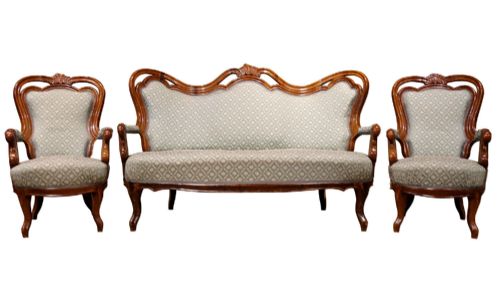
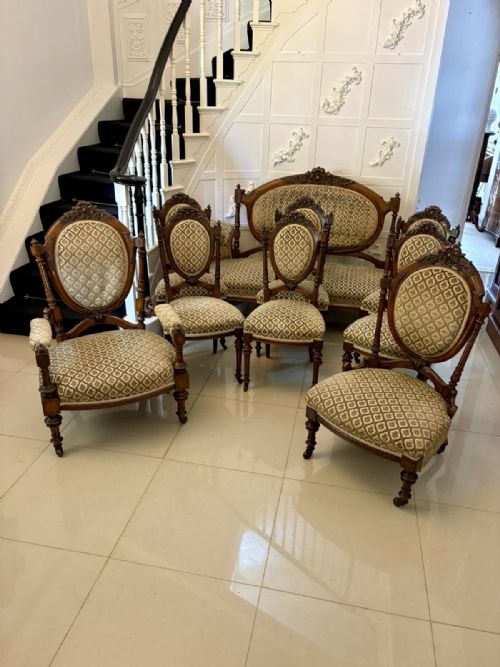
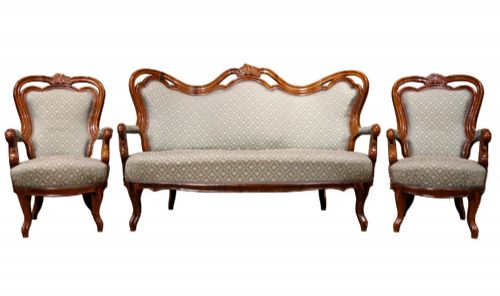
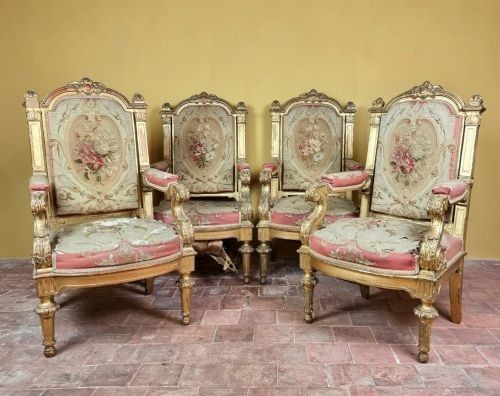
A 19th century salon set comprises matched groups of seating designed for formal entertaining and drawing rooms, appearing on this page in configurations from small three-piece groupings to large suites containing sofas, armchairs, and side chairs. These groupings frequently reflect Victorian taste alongside French Rococo, Louis XV, and Louis XVI revival styles.
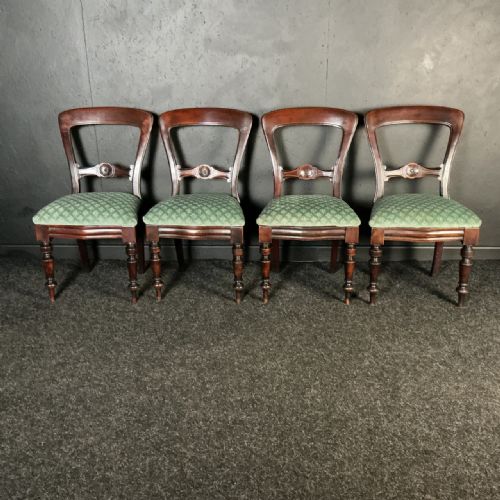
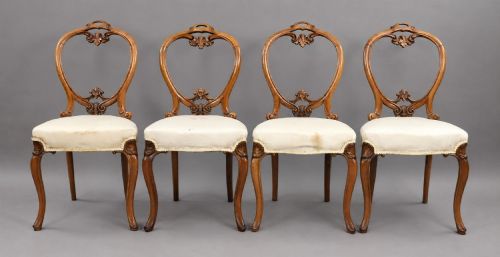
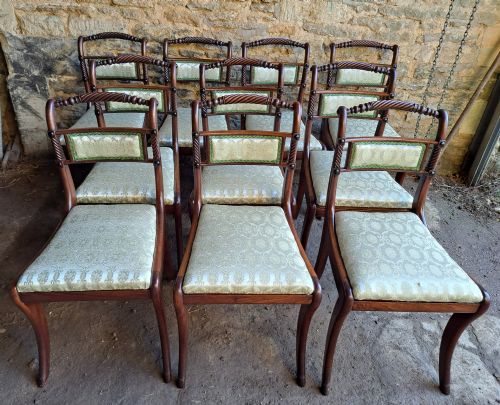
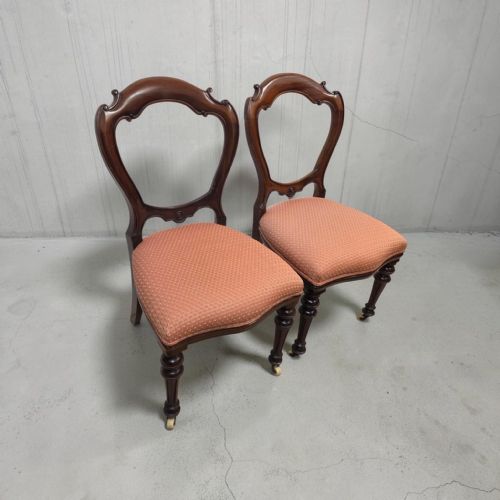
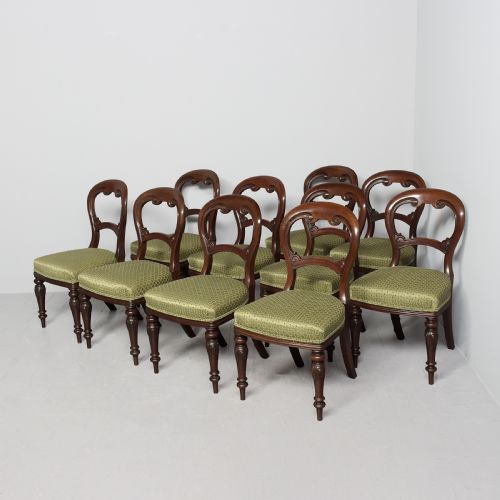
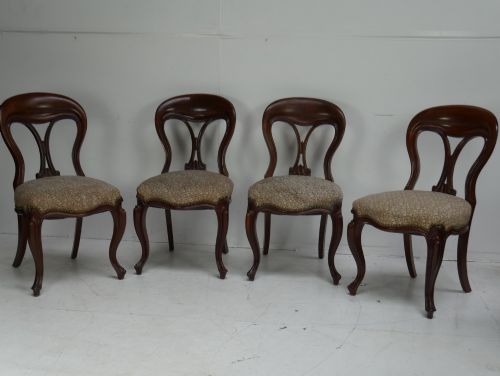
Buyers encounter matching multi-piece suites alongside sets of dining and salon chairs originating across the nineteenth century, particularly from the 1850s to the 1890s. The forms span walnut balloon back chairs, giltwood fauteuils, and settees built for formal reception spaces.
Materials and construction methods
Cabinet makers constructed frames using dense hardwoods like walnut, mahogany, rosewood, and burr birch, often incorporating carved details and gilded finishes on showframes. Gilt-wood and carved walnut form the structural basis for French-inspired revival pieces.
Upholstery relies on traditional fabrics including velvet, textile, and tapestry, paired with brass details where appropriate. Button-back padding and sprung seating support the upholstered elements seen across the Victorian and Continental groups.
Footstools occasionally survived the centuries alongside their towering settees, proving that nineteenth-century relaxation required elevated feet.
Distinctions in quality
The standard of carving defines the upper tiers of these suites, where hand-carved floral motifs and deep mouldings on walnut and rosewood showframes demonstrate superior cabinet work. Lesser examples rely on simpler turned members and minimal applied ornamentation.
Cohesion across multi-piece suites and the integrity of original upholstery fabric or period-appropriate textile coverings separate comprehensive drawing room groupings from assembled or mismatched sets.
John Tesch
The 19th Century Salon Set Glossary
- Salon suite
- A matched group of seating furniture designed for a formal drawing room or reception space, typically comprising a settee and several matching armchairs or side chairs.
- Balloon back
- A chair back style shaped in a continuous curve resembling a balloon, characteristic of Victorian seating from the mid-nineteenth century.
- Fauteuil
- An open-armed French armchair with upholstered back and seat, featuring exposed wooden arms that often show carving or gilding.
- Showframe
- A wooden chair or settee frame where the polished or gilded wood remains visible around the upholstered panels.
- Gilt-wood
- Timber coated with gold leaf or a gold-coloured finish, common on French revival salon furniture.
19th Century Salon Set: Frequently Asked Questions
What pieces belong in a salon suite?
A standard nineteenth-century salon suite combines a settee or sofa with a pair of matching armchairs and several side chairs. Larger arrangements may also incorporate footstools or additional seating to furnish a complete drawing room.
These collections were produced to provide visually unified seating for formal entertaining. The pieces share identical wood types, carved motifs, and upholstery fabrics to maintain a consistent aesthetic across the room.
How do I identify a Victorian salon set?
Victorian salon sets generally feature dark hardwoods such as walnut and rosewood, often adorned with floral carvings and button-back upholstery. The styling draws heavily on Rococo revival influences, showing curved lines and cabriole legs.
Cabinet makers of this period also favoured balloon back forms for smaller chairs within the suite. Surviving pieces usually display the robust joinery and dense timber characteristic of mid-to-late nineteenth-century British production.
Were these sets made in France or Britain?
Nineteenth-century salon furniture originated in both British workshops and Continental centres, with French styles proving particularly influential. Many British makers produced pieces directly inspired by Louis XV and Louis XVI designs.
Items explicitly designated as French salon suites or giltwood fauteuils reflect continental aesthetic standards, whilst regional British workshops adapted these luxury aesthetics for domestic drawing rooms.
How should I care for antique upholstery?
Preserving original fabrics like velvet, tapestry, or textile requires protecting the material from direct sunlight and regular, gentle dusting. Avoid harsh chemical cleaners that can degrade nineteenth-century fibres and wooden showframes alike.
When structural repairs or reupholstery become necessary, consult a specialist familiar with traditional nineteenth-century springing and stuffing techniques. Maintaining the integrity of the wooden frame prevents long-term damage to the piece.