


19th Century Rosewood Chest
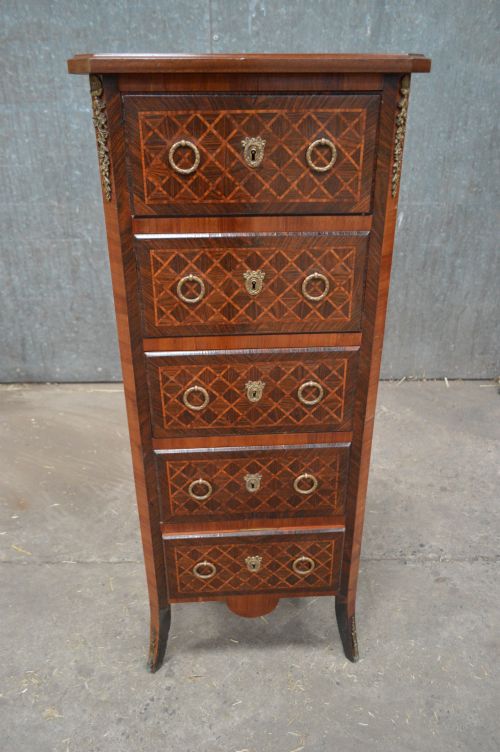
These pieces combine dense timber with refined brass and parquetry, offering functional storage with the distinct deep grain characteristic of a 19th century rosewood chest.
19th Century Rosewood Chest
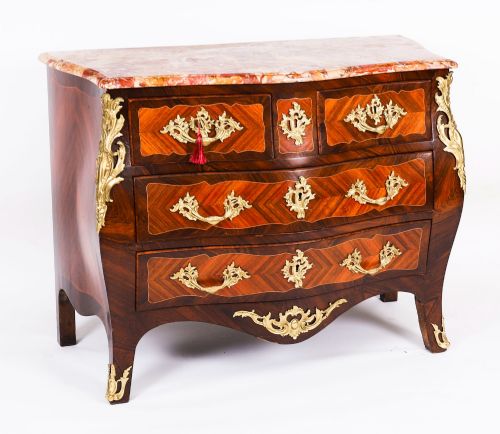
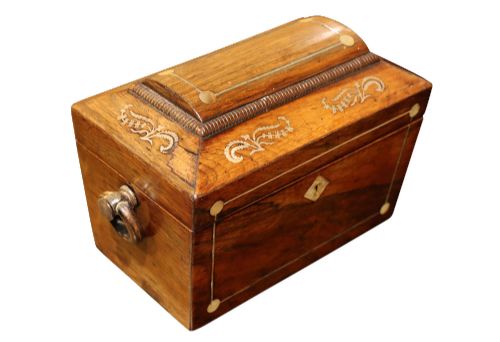
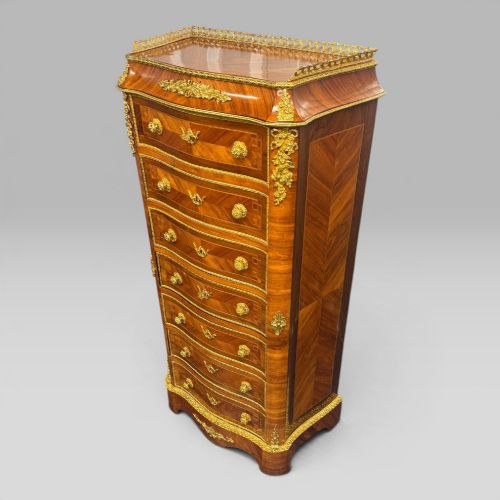
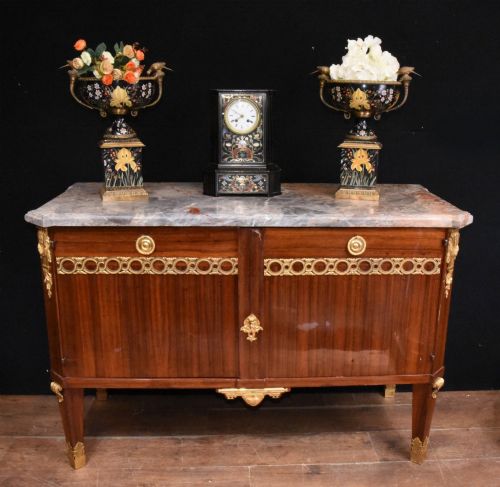
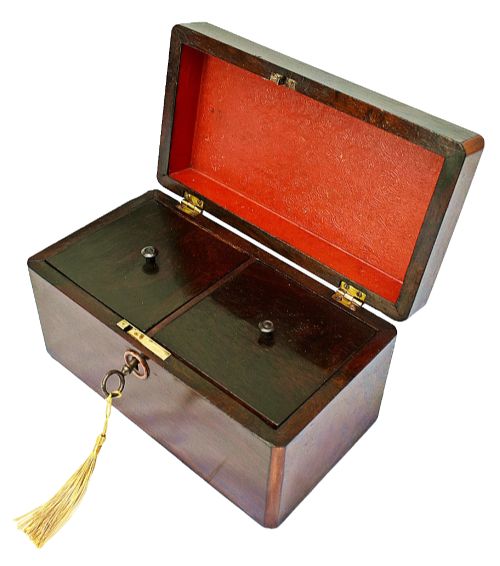
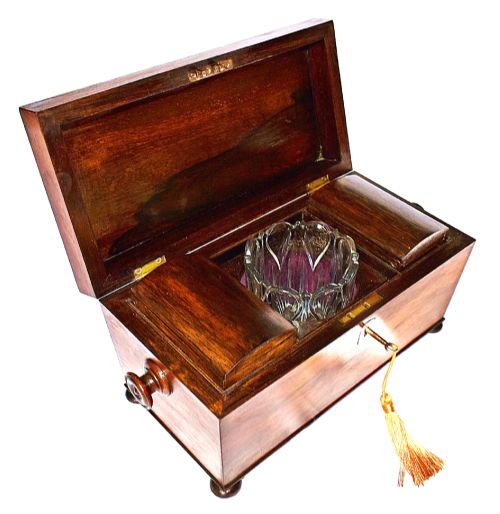
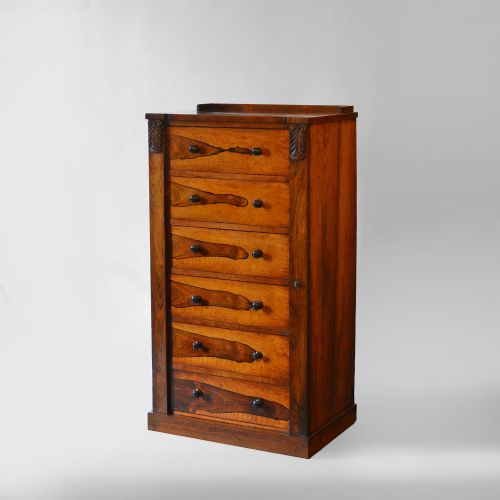
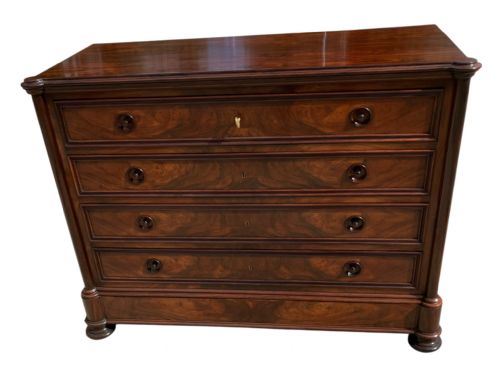
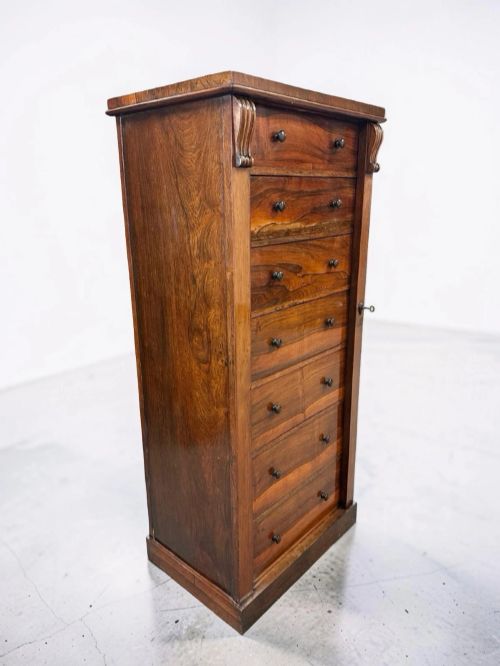
A 19th century rosewood chest encompasses a varied group of furniture and smaller lidded receptacles created during the Georgian, Regency, and Victorian periods. Buyers encounter larger drawer units such as Wellington chests and commodes alongside smaller tabletop forms like tea caddies, teapoys, and jewellery boxes.
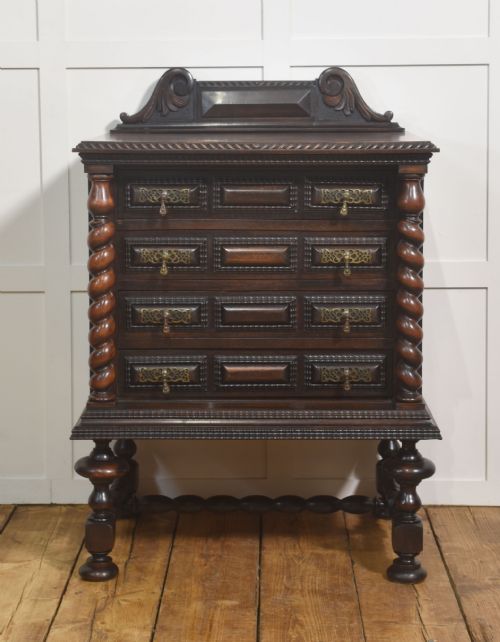
The material appears across multiple stylistic traditions, including English Regency brass-inlaid boxes, French marquetry cabinets, and Portuguese colonial stands. Pieces span from the early 1800s through to the late Victorian era, reflecting shifting domestic habits regarding storage and display.
How They Were Made
Construction relies heavily on solid or veneered rosewood applied to secondary hardwoods, often enriched with contrasting stringing and banding in boxwood, satinwood, or walnut. Timber preparation required careful cutting to stabilise the dense wood while showcasing its varied grain patterns.
Decorative detailing incorporates brass inlay, mother-of-pearl plaques, and Tunbridge ware mosaic work, requiring skilled hand-fitting into recessed channels. Sarcophagus and commode forms utilise robust carcase construction with dovetailed drawer boxes and fitted internal compartments.
19th Century Rosewood Chest Retail Price Guide 2026
Typical asking prices for 19th century rosewood chest among the pieces listed under this phrase on Sellingantiques today, from the lower quarter to the upper quarter. They describe what is for sale here now, not the wider market.
Listings feature items from the Georgian, Regency, and Victorian eras, utilising rosewood combined with mother-of-pearl, brass, and tortoiseshell.
What Varies in Quality
Quality rests upon the precision of the cabinetmaker's joinery and the selection of the rosewood veneer, where symmetrical grain alignment elevates a piece. Finer examples display meticulous execution in brass stringing, parquetry patterns, and interior fittings such as velvet linings or removable canisters.
Proportion and structural integrity distinguish superior items from standard production, particularly in multi-drawer Wellington chests and commodes where smooth drawer operation is essential. The integration of specialised hardware, such as functioning locks with original keys and cast metal handles, adds to the standing of an object.
Henry Hollamby·Maison Krieger·Gillow
The 19th Century Rosewood Chest Glossary
- Wellington chest
- A tall, slender chest of drawers featuring a locking stile on one side that secures all the drawers simultaneously. This form became popular during the nineteenth century for efficient storage in gentlemen's studies.
- Teapoy
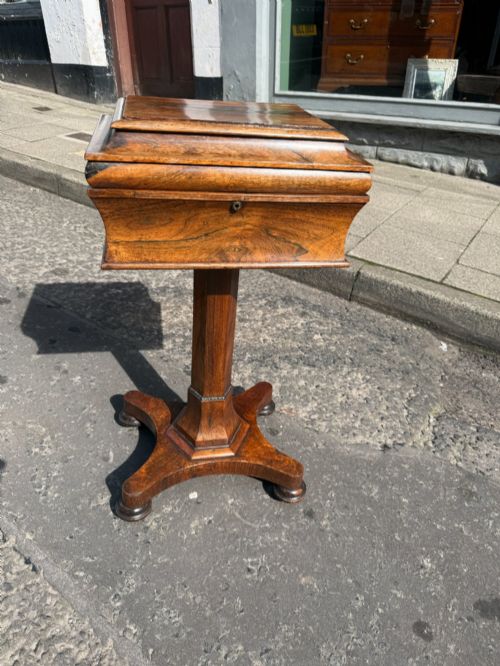
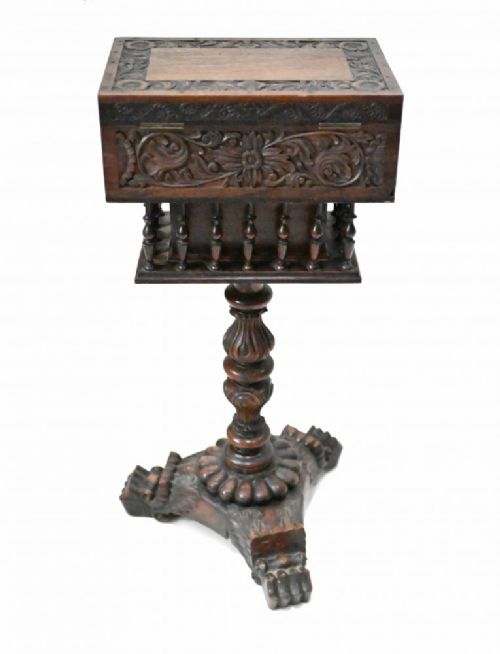
- A small stand or table fitted with internal compartments to hold tea canisters and mixing bowls. They frequently feature elaborate rosewood veneers and pedestal bases.
- Sarcophagus form
- A box shape with a domed or stepped lid, sloping sides, and often resting on paw feet, resembling a classical stone coffin. The style was widely adopted for Regency tea caddies and work boxes.
- Tunbridge ware
- Small wooden decorative items adorned with mosaic patterns made from thousands of tiny tinted wood blocks. Named after the Kent town, these designs often incorporate floral or geometric motifs.
- Ormolu
- Gilded bronze mounts and decorative accents applied to furniture and boxes, particularly on French pieces of the period. The technique adds metallic highlights against the dark rosewood surfaces.
19th Century Rosewood Chest: Frequently Asked Questions
What is a Wellington chest?
A Wellington chest is a tall, narrow set of drawers secured by a hinged vertical locking bar on the right side. This design allowed owners to lock all drawers securely with a single key.
Originally produced in the nineteenth century, these cabinets served as compact wardrobes or linen stores in bedrooms and dressing rooms.
How do I care for rosewood furniture?
Rosewood benefits from stable indoor humidity and protection from direct sunlight, which can bleach the deep natural tones. Regular dusting with a dry, soft cloth maintains the finish without chemical buildup.
Avoid placing damp items directly onto wooden surfaces, particularly on antique tea caddies and serving boxes.
What is the difference between a tea caddy and a teapoy?
A tea caddy is a small, portable box designed to hold loose tea leaves securely under lock and key. They were typically kept on sideboard tables in the dining or drawing room.
A teapoy is a larger, freestanding piece of furniture on a pedestal or legs that incorporates tea storage compartments and often mixing bowls for preparing the brew.
How do I identify Regency pieces?
Regency items generally date from the early decades of the nineteenth century and often feature classical architectural motifs. Characteristic details include contrasting brass inlay, ring handles, and dark rosewood veneers.
Proportions tend to be clean and restrained, drawing inspiration from ancient Greek and Roman design traditions.