


19th Century Religious Artwork
These pieces of 19th century religious artwork carry centuries of devotional devotion and skilled handwork into modern rooms.
19th Century Religious Artwork
When searching for 19th century religious artwork, buyers encounter a diverse range of devotional objects spanning oil paintings, icons, bronze figures, and carved plaques. These items reflect various cultural traditions, including Russian Orthodox, Indian, Himalayan, and European schools.
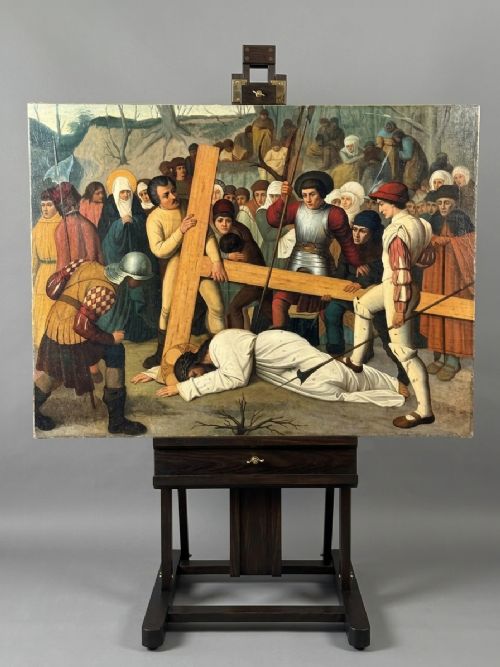
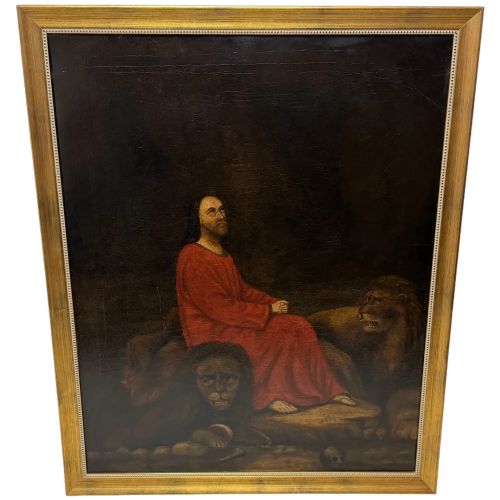
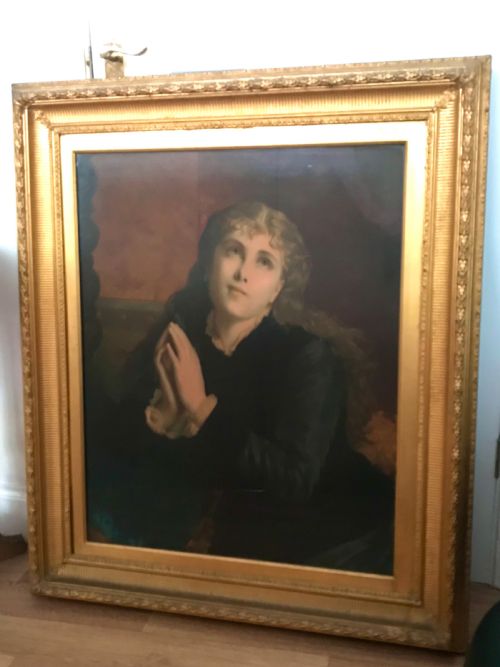
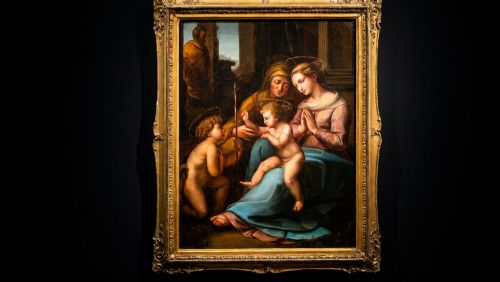
Oil paintings on canvas dominate the selection, often taking the form of copies or interpretations after old masters such as Raphael and Guido Reni. Alongside these canvases, buyers regularly find wooden panels, tempera icons, and framed engravings portraying biblical narratives and saints.
The selection also encompasses mixed media pieces like mother-of-pearl shell carvings and textiles such as samplers and thangkas. These diverse objects serve as tangible links to historical religious practice and aesthetic revivals.
Materials and construction methods
Makers utilised oil paint on canvas and wood panels to create rich, layered portraits and narrative scenes. Many of these works incorporated gold leaf and gesso to illuminate halos and backgrounds.
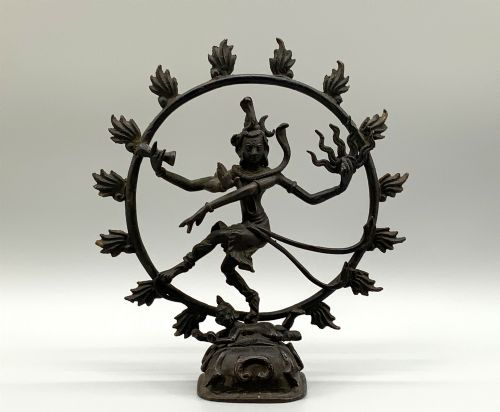
Sculptural works rely on materials such as bronze, gilt wood, and polychrome wood. Artisans employed hand carving and casting techniques to shape intricate figures like temple guardians and deities.
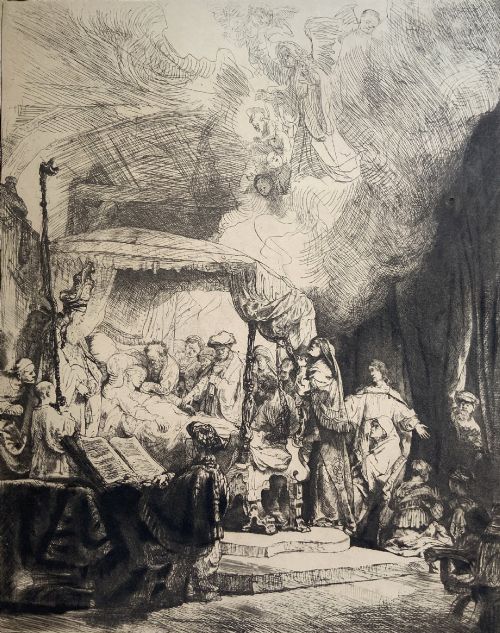
Works on paper, including engravings, etchings, and pen and ink drawings, demonstrate precise line work framed alongside textiles like embroidered samplers.
Object forms span oil paintings, statues, sculptures, religious icons, fine art prints, and embroidered samplers.
Indicators of quality and execution
The sophistication of the brushwork and the precision of the detailing distinguish finer paintings from simpler decorative copies. Hand-painted icons on wood panels display varying degrees of artistic refinement in facial expressions and drapery.
The integrity of original materials, such as untouched gold leaf, period gilt wood frames, and authentic canvas grounds, elevates the status of a piece. Finer sculptures exhibit deep, crisp casting work and well-preserved polychrome surfaces.
Amand Durand·Costantino Frixione·Ernst Stierhof·F R Roffe·Jane Pattinson
The 19th Century Religious Artwork Glossary
- Tempera
- A permanent, fast-drying painting medium consisting of coloured pigment mixed with a water-soluble binder, commonly egg yolk. This technique appears frequently on early Russian icons.
- Icon
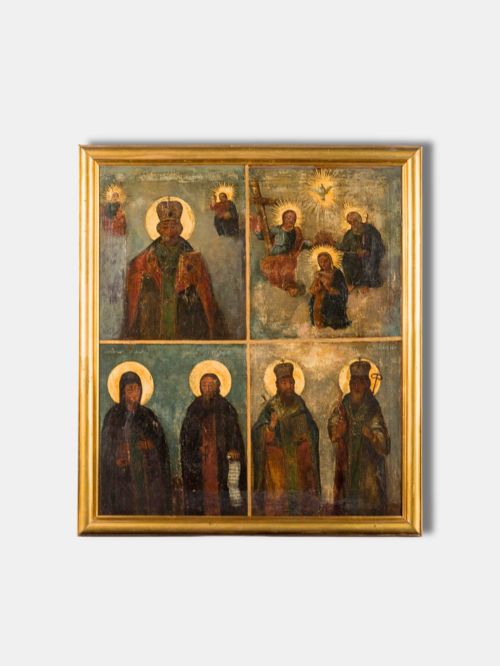
- A religious work of art, most commonly a painting, from Eastern Christianity depicting sacred figures. These are typically executed on wood panels using tempera and gold leaf.
- Oleograph
- A type of chromolithographic print textured to imitate an oil painting on canvas. These appeared as mass-produced reproductions in the nineteenth century.
- Gesso
- A paint mixture consisting of a neutral binder mixed with chalk, gypsum, or pigment used to prepare a substrate for painting or gilding. It provides a smooth surface for gold leaf application.
- Thangka
- A Tibetan Buddhist painting on cotton, usually appliquéed to silk, depicting a deity or mandala. These textile works are traditionally framed with rich brocades.
19th Century Religious Artwork: Frequently Asked Questions
What is a Russian icon?
A Russian icon is a sacred wooden panel painting depicting holy figures, created within the Eastern Orthodox tradition. These items often incorporate gold leaf and tempera.
They served as focal points for prayer and reflection in homes and places of worship, functioning as windows to the divine.
How do I hang a heavy framed oil painting?
Heavy oil paintings require secure wall anchors and robust picture wire rated for the specific weight of the canvas and wood frame. Professional installation ensures the piece remains stable.
Position the artwork at eye level to replicate gallery display standards and protect it from direct sunlight and moisture.
What is a Globe de Marie?
A Globe de Marie is a nineteenth-century French decorative display featuring a glass dome set over religious mementoes and figures. These assemblies commemorated significant life events such as weddings.
The arrangement inside typically includes wirework, mirrors, and devotional items preserved beneath the protective glass envelope.
How do I identify a nineteenth-century print?
Nineteenth-century prints often present as engravings, etchings, or engravings on paper, sometimes bearing publisher details or engraver signatures in the margins. Examining the paper stock helps confirm the period.
Magnification reveals the fine, crisp lines characteristic of hand-pulled intaglio printing rather than modern dot-matrix reproduction.