



19th Century Red Glass
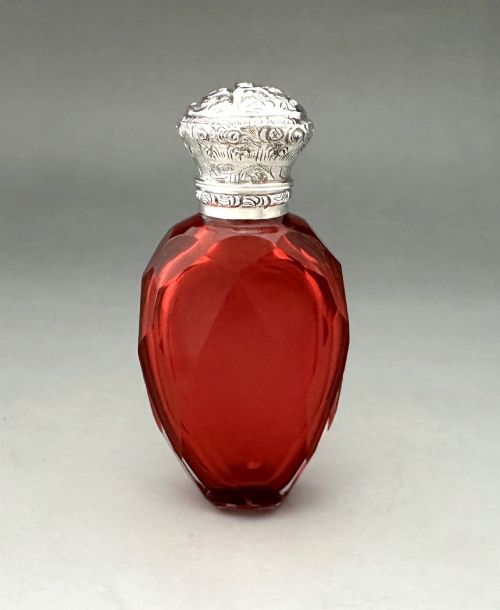
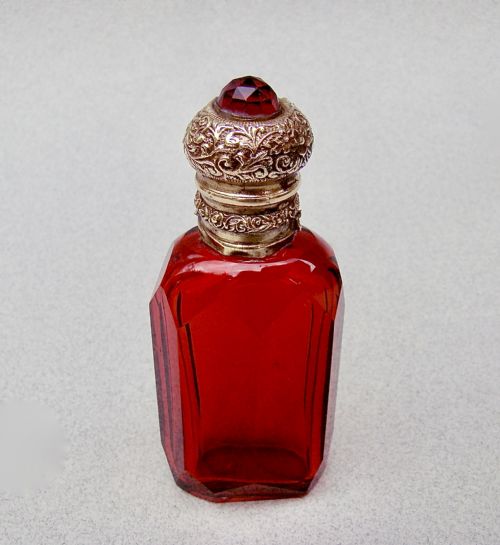
When buyers search for 19th century red glass, they encounter rich cranberry and ruby tones shaped into scent bottles, decanters, and tablewares that bring deep colour to a room.
19th Century Red Glass
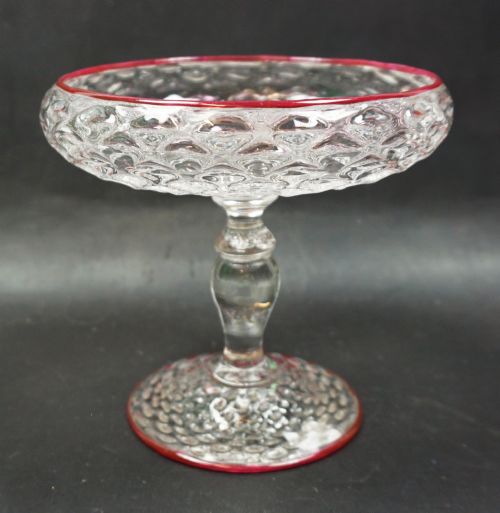
Pieces grouped under 19th century red glass span utilitarian vessels and decorative objects originating from English, French, and Bohemian workshops. Collectors meet cranberry glass, ruby glass, and overlay glass worked into items such as wine glasses, jugs, tazzas, and scent bottles.
The selections on this page incorporate styles ranging from Victorian British production to French works mounted in ormolu and Continental cut glass. Vessels vary from simple blown stemware to heavily gilded and engraved presentation pieces.
How they were made
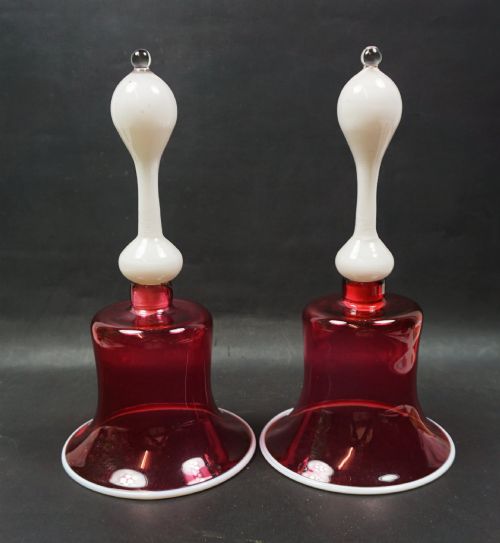
Glassmakers achieved the characteristic red coloration by adding gold or copper compounds to the molten batch during production. Artisans then shaped the vessels through free-blowing or mould-blowing techniques before applying handles, rims, or canes of contrasting white and clear glass.
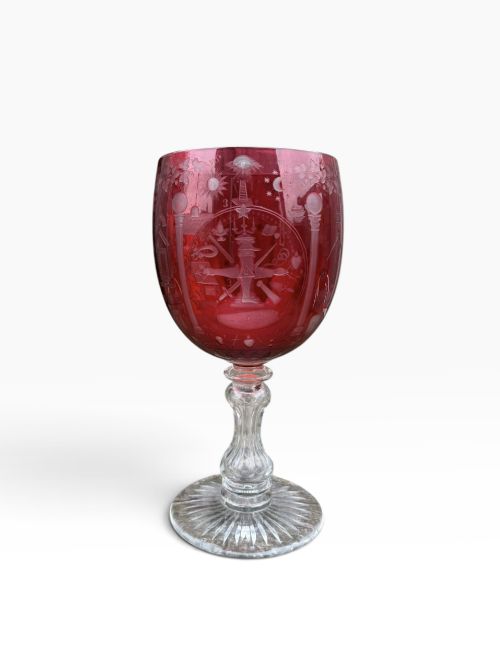
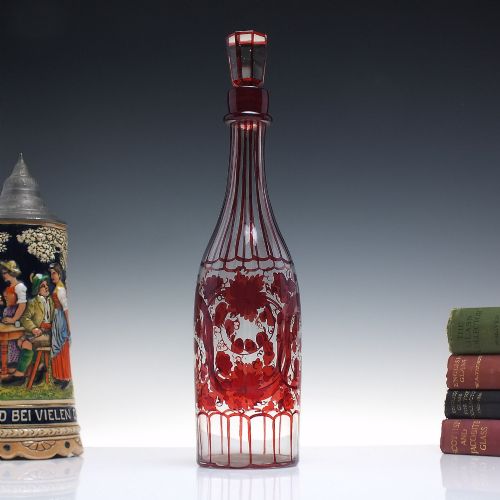
Many high-end pieces received secondary decoration through wheel-cutting, facet-cutting, or hand-gilding with gold leaf. Overlay techniques involved fusing a layer of red glass over a clear crystal body, which workers then cut away to expose the transparent layer beneath.
Listings demonstrate that 19th century red glass frequently incorporates cut crystal, gilt accents, and French ormolu mounts.
What varies in quality
The standard of a piece depends on the depth and evenness of the colour within the metal, alongside the precision of any wheel-cut or engraved detailing. Crisp facets and sharply defined engraving separate master workshop output from simpler domestic wares.
Mounts and secondary materials influence overall merit, particularly when silver, ormolu, or specialised handles are integrated into the design. Intact gilding and minimal wear on high-friction surfaces such as bases and rims indicate superior preservation.
St. Louis·Paul Sormani·Henri Lapeyre
The 19th Century Red Glass Glossary
- Cranberry glass
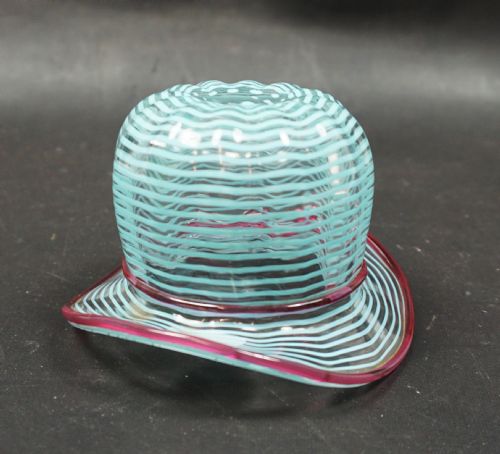
- A transparent pinkish-red glass produced by adding gold chloride to the molten batch. It gained popularity during the Victorian era for tableware and decorative novelties.
- Ruby glass
- A deep, saturated red glass typically coloured with copper or gold. It appears frequently in Bohemian and English decorative objects.
- Tazza
- A shallow ornamental cup or bowl raised on a stem and foot. These pieces were often utilised for serving fruit or sweetmeats on formal tables.
- Overlay glass
- A technique where a layer of coloured glass is fused over a clear or contrasting body. Artisans cut through the outer layer to create intricate patterned designs.
- Nailsea
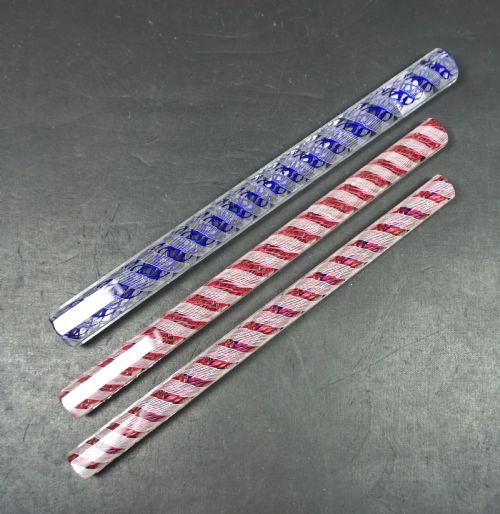
- A style of glasswork traditionally associated with English production featuring looped or trailed threads of white and coloured glass within a clear or tinted body.
19th Century Red Glass: Frequently Asked Questions
How do I clean antique red glass?
Wash pieces by hand in warm, soapy water using a soft cloth, avoiding abrasive pads that can scratch the surface or remove gilding.
Dry the items immediately with a lint-free towel to prevent water spots, particularly on pieces with cut facets or metallic mounts.
Was all red glass made in England?
Production occurred across several European centres, with significant output originating from French factories, Bohemian workshops, and English glasshouses.
Distinguishing between regional origins depends on weight, cutting styles, and associated metal mounts such as French ormolu.
Can these glasses be used for dining?
Many Victorian wine glasses and decanters were built for practical use, though older or heavily gilded items warrant careful handling.
Hand-washing is essential for any historic stemware to preserve the integrity of the coloured metal and surface decoration.
How can I tell cranberry glass from ruby glass?
Cranberry glass typically displays a brighter, translucent pinkish-red hue derived from gold content in the batch.
Ruby glass tends to be deeper and darker in tone, sometimes requiring strong transmitted light to reveal the true saturation of the red colour.