
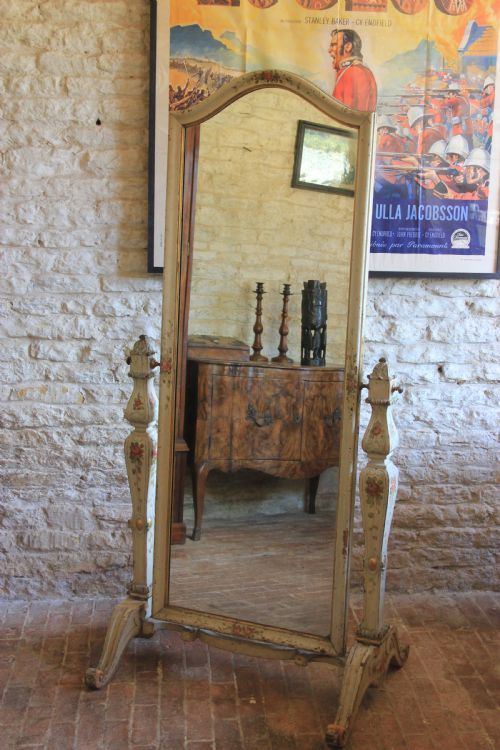
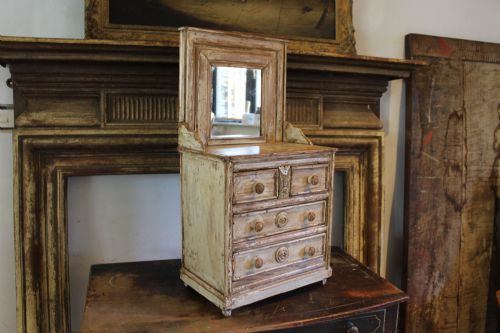


19th Century Psyche Mirror
A 19th century psyche mirror offers the definitive reflection for a bedroom or dressing room, combining practicality with striking period presence.
19th Century Psyche Mirror
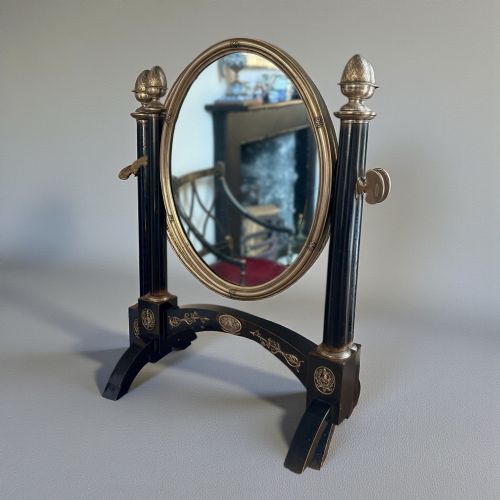
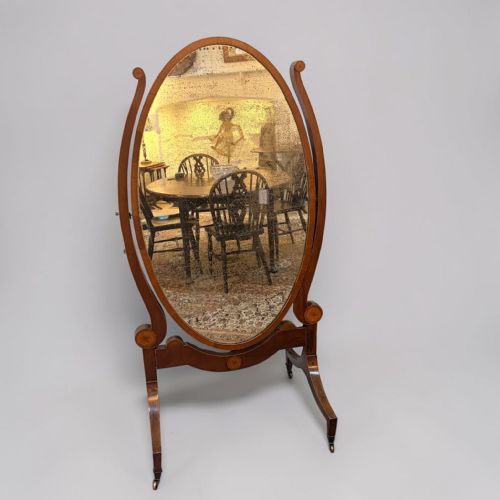
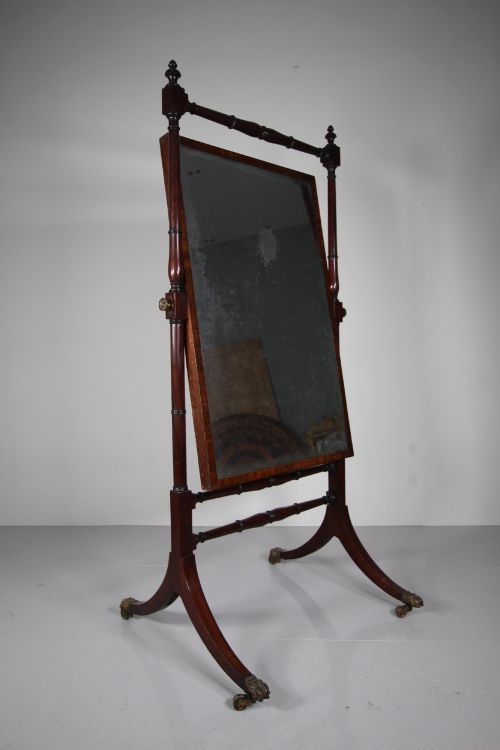
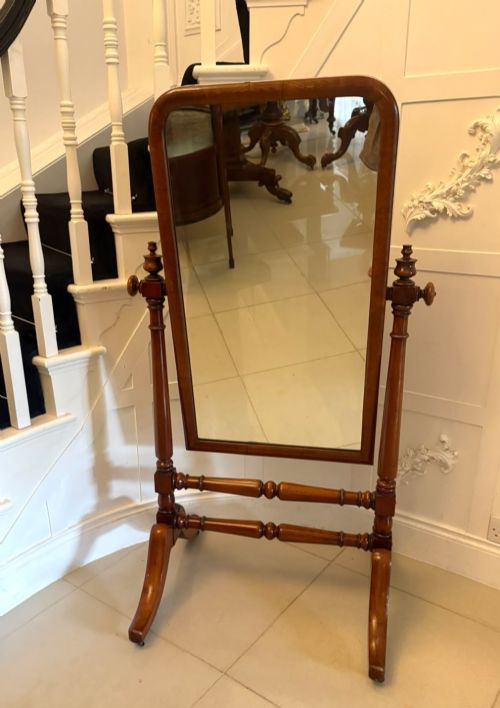
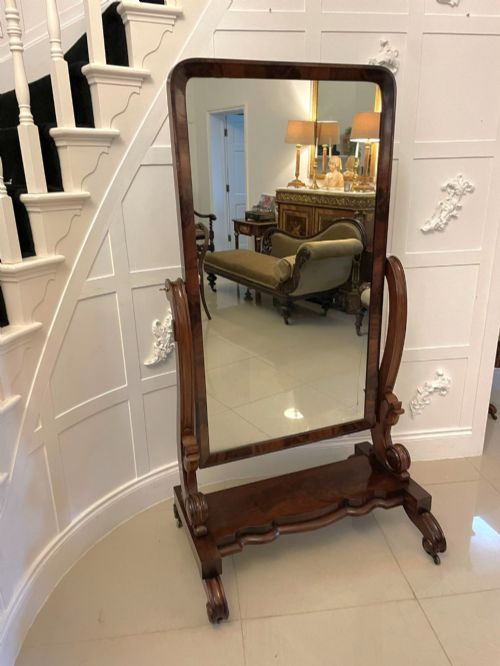
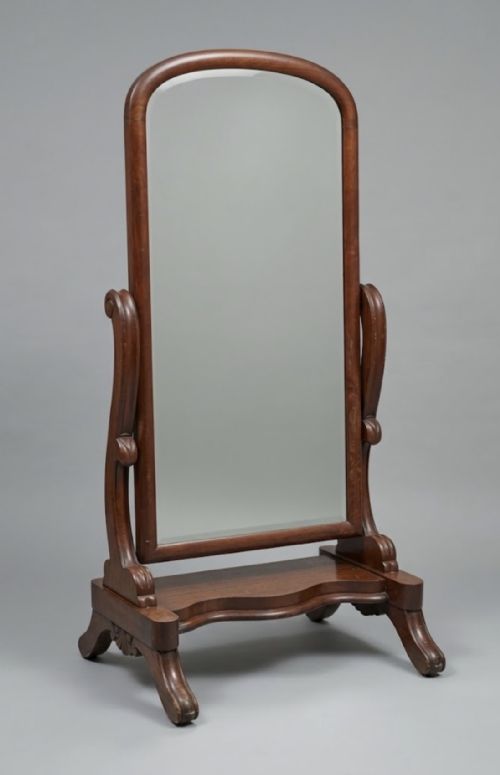
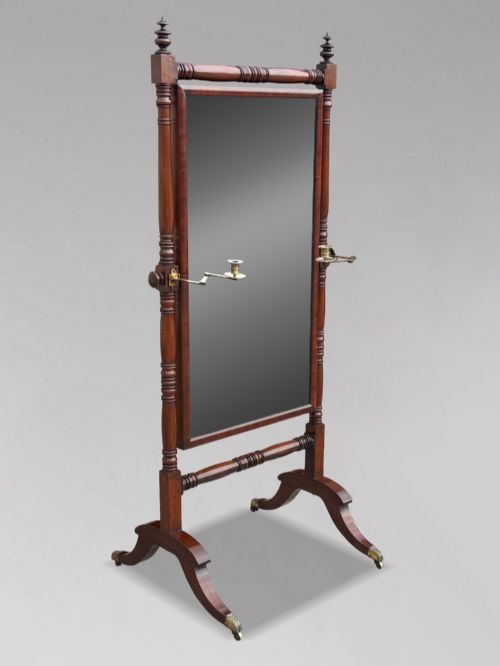
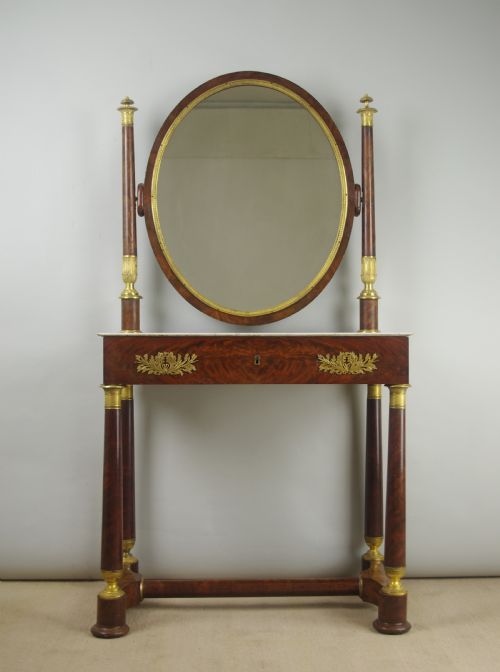
A 19th century psyche mirror is a floor-standing or table-supported swing glass designed for full-length viewing during dressing. The pieces appearing here span the Victorian era, the Regency period, and French Empire designs.
Most examples found on this page take the form of cheval mirrors in freestanding frames. Alongside these, buyers encounter dressing table mirrors, pedestal mirrors, and dressing tables incorporating pivot glass.
Origins stretch across British workshops and continental centres, including French and Italian examples alongside traditional Victorian mahogany pieces. These objects served as essential bedroom furnishings throughout the eighteen-hundreds.
Materials and construction
Makers utilised solid timbers and rich veneers, with mahogany and flame mahogany appearing frequently across British and continental pieces. Pitch pine and painted timber also occur in specific regional examples.
Metal mounts in brass, ormolu, and gilt bronze provide structural support and decorative contrast, particularly on French Empire and Regency pieces. Brass sabots and castors frequently finish the feet of freestanding cheval frames.
Some nineteenth-century mirrors include hidden swivel locks that occasionally surprise anyone leaning too heavily against the glass.
Distinctions in quality
Quality rests upon the selection of timber veneers and the crispness of carved or cast metal mounts. Superior pieces display carefully matched flame mahogany grain and substantial bronze or ormolu detailing.
The sophistication of the pivoting mechanism and the stability of the supporting frame dictate the overall excellence of the mirror. Fine proportion and balanced joinery separate standard utility pieces from grander architectural examples.
The 19th Century Psyche Mirror Glossary
- Cheval mirror
- A large floor-standing mirror suspended on a vertical frame that allows it to swing. This form became popular for full-length dressing in the nineteenth century.
- Ormolu
- Gilded bronze mounted onto furniture or mirrors. This technique is particularly characteristic of French Empire design.
- Sabot
- A metal sleeve fitted to the foot of a furniture leg. Brass sabots often incorporate castors on freestanding mirror frames.
- Flame mahogany
- Mahogany veneer cut to reveal a distinctive flickering flame pattern. Cabinet makers used this grain on principal display surfaces.
19th Century Psyche Mirror: Frequently Asked Questions
Where should I place a psyche mirror?
These mirrors suit bedrooms, dressing rooms, and large hallways where their height and reflective glass enhance natural light.
Position the piece away from direct, damp heat sources to protect timber frames and silvered glass.
How do I adjust the mirror angle?
Most swinging glasses operate via lateral pivot screws or trunnions fitted into the upright side supports. Tighten or loosen these fixings gently to alter the tilt without straining the frame.
Assistance is useful when adjusting larger cheval frames to prevent sudden movement.
Are these mirrors heavy to move?
Freestanding examples incorporate dense hardwoods like mahogany and substantial glass plates, creating considerable weight.
Many period pieces feature original castors to assist with repositioning across floor surfaces.
How do I identify a Regency period frame?
Regency designs often display classical restraint, saber legs, and restrained brass mounts rather than heavy Victorian carving. Flame mahogany and architectural symmetry mark pieces from this earlier phase.
Proportions tend to remain lean and structural compared to later nineteenth-century alternatives.