


19th Century Prayer Carpet
A 19th century prayer carpet brings centuries of textile artistry and ritual design directly into a modern interior through distinctive mihrab motifs.
19th Century Prayer Carpet
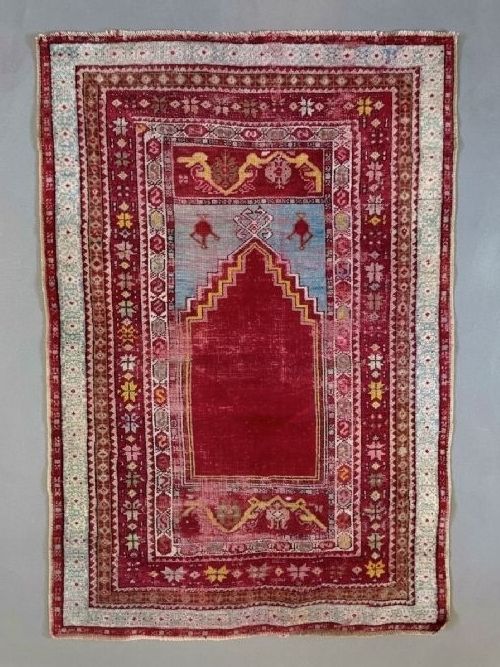
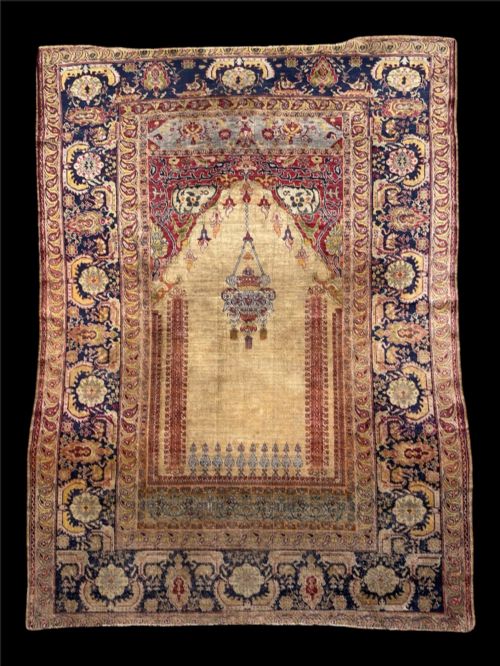
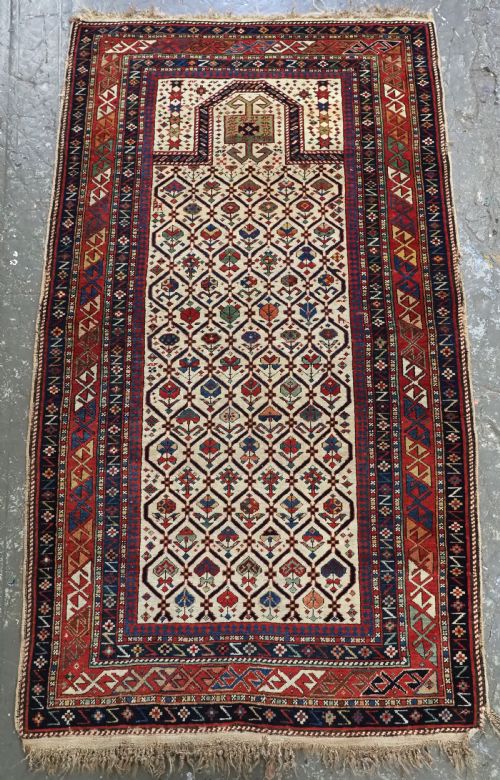
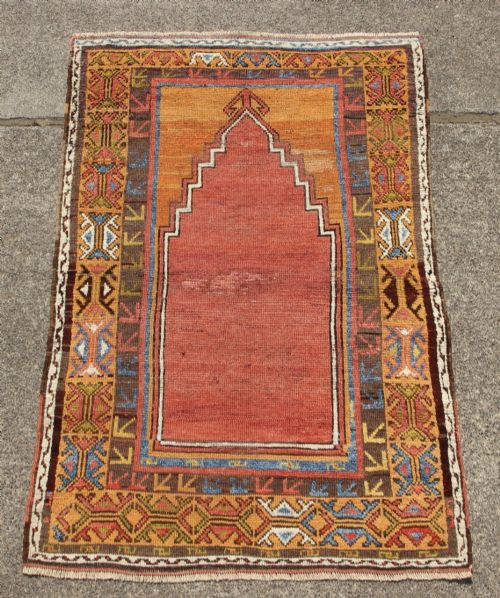
When seeking a 19th century prayer carpet, collectors encounter woven textiles defined primarily by a central arch or mihrab motif that oriented the worshipper towards Mecca. These portable rugs were created across Anatolia, the Caucasus, and Persia, fulfilling both practical daily devotion and tribal identity. The most common examples met on this page originate from Turkish weaving centres like Ghiordes, Milas, and Konya, alongside Caucasian and Baluch tribal workshops.
How They Were Made
Weavers relied on animal fibres, predominantly hand-spun wool for the pile, combined with cotton or wool foundations and occasional silk highlights in finer urban workshops. Camel hair and goat hair also appear in specific tribal contexts, adding natural tone variations to the foundation or borders. Natural dyes extracted from plants and minerals provided the deep blues, reds, and yellows that developed patinas over decades of light exposure.
Knots were tied by hand onto vertical warps, determining the density and crispness of the geometric or floral pattern. Once the pile was knotted, it was sheared to an even height, and the outer edges were overcast in wool to secure the structure against fraying.
Some weavers cleverly hid tiny comb motifs in the pile to remind users of daily grooming before stepping onto the sacred wool.
What Varies in Quality
Quality in these textiles rests upon the precision of the knotting and the complexity of the design rendered by the weaver. Finer examples display high knot counts that allow intricate floral lattices or sharp geometric outlines to emerge with clarity from the background field. The purity and depth of the natural dye palette also dictate the aesthetic standing of a piece, with vibrant or unusually balanced colour combinations elevating certain formats.
Another factor is the cultural integrity of the weaving, where traditional village or nomadic pieces retain authentic regional proportions and symbols. Consistency in wool quality and the survival of original side cords and outer borders contribute significantly to the standing of an individual rug.
The 19th Century Prayer Carpet Glossary
- Mihrab
- The arched niche at one end of a prayer rug that mimics the prayer niche in a mosque. This focal point directs the spiritual orientation of the user.
- Ghiordes
- A historic Turkish town renowned for classical prayer rugs featuring tiered arches and subtle floral borders. Weavings from this centre often utilise soft pastel or ivory fields.
- Medallion
- A central decorative motif placed within the field of the rug. In prayer formats, this often sits just beneath the apex of the arch.
- Natural Dyes
- Colourants derived from organic sources such as plants, insects, and minerals prior to the invention of synthetic aniline dyes. These substances age gracefully, developing rich secondary tones.
- Warp
- The vertical threads stretched tightly on the loom that form the structural skeleton of the rug. The pile knots are tied around these stationary parallel lines.
19th Century Prayer Carpet: Frequently Asked Questions
How were these rugs used originally?
These textiles served as portable sacred spaces for daily ritual prayers performed five times a day. The woven arch indicated the direction of Mecca during domestic or travel devotions.
Because they were personal items, they experienced direct use on floors rather than display on walls, though finer urban examples were occasionally hung or treasured as heirlooms.
Where were these carpets woven?
Production centred primarily across Anatolia, the Caucasus, and regions inhabited by Baluch and Turkmen tribes. Each geographic area utilised distinct colour palettes and geometric or floral vocabularies.
Towns such as Ghiordes, Milas, Kirsehir, and Kuba established specific weaving traditions that distinguish their carpets from nomadic tribal output.
How should I care for a antique rug?
Place the textile in low-traffic areas or mount it securely on a wall to minimise physical wear on the wool pile. Regular gentle vacuuming without a rotating brush bar prevents dust accumulation in the foundation.
Keep the rug away from direct sunlight to protect the natural dyes from fading and ensure stable indoor humidity levels.
How do I identify different regional styles?
Study the geometry of the arch, border arrangements, and the specific colour combinations unique to each weaving group. Caucasian pieces often display crisp, bold polygons, while Anatolian village rugs lean towards softer floral forms and mihrab columns.
Examining the materials used for the foundation threads and the knotting structure also helps pinpoint the likely origin.