




19th Century Poster Bed
A 19th century poster bed brings monumental timber and grand scale to a bedroom, offering a commanding architectural presence.
19th Century Poster Bed
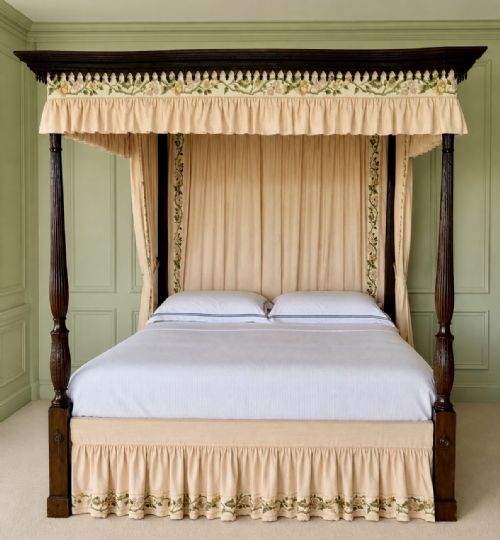
A 19th century poster bed encompasses substantial timber frames, architectural testers, and prominent upright posts designed to anchor a principal bedroom. These pieces frequently appear in rich mahogany, resilient hardwood, and gleaming brass, reflecting the diverse cabinet-making traditions of the era.
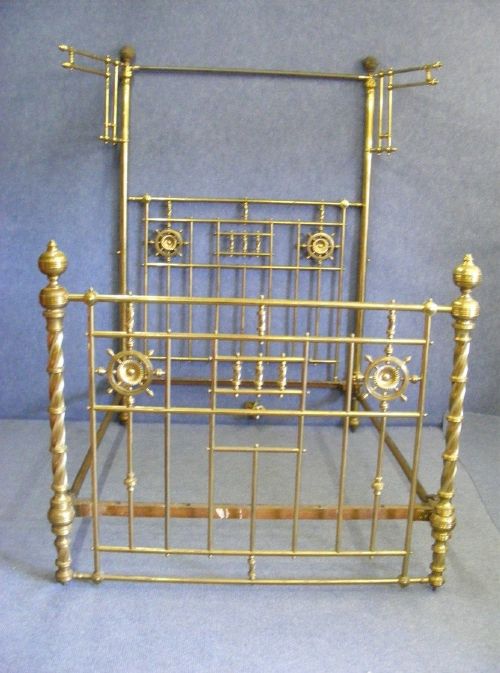
The selections available range from classical Regency and Victorian four-poster bedsteads to exotic Anglo-Indian colonial models and Chinese hardwood marriage beds. Buyers are most likely to encounter substantial mahogany frames alongside gleaming brass half tester bedstead designs.
Beyond standard domestic furniture, the category extends to specialised forms such as dog four poster beds and architectural salvage elements like individual Regency bedposts. Each variation demonstrates the period's obsession with vertical presence and domestic grandeur.
Materials and construction
Makers utilised dense timbers such as mahogany, ebony, oak, tiger maple, and rosewood, often pairing heavy structural framing with decorative turning and spiral carved details on the posts. Metalworking played a vital role in examples constructed from brass and iron, particularly within half tester and military-influenced designs.
Surface treatments varied from polished timber and red lacquer to applied porcelain and woven cane bases, showcasing a blend of indigenous craftsmanship and imported luxury materials. Structural stability was achieved through heavy joinery and robust bolt systems designed to support lofty testers and fabric canopies.
19th Century Poster Bed Retail Price Guide 2026
Typical asking prices for 19th century poster bed among the pieces listed under this phrase on Sellingantiques today, from the lower quarter to the upper quarter. They describe what is for sale here now, not the wider market.
Listings feature 19th-century poster beds spanning diverse regional styles, including Chinese hardwood marriage beds, Portuguese Baroque Revival frames, and Anglo-Indian colonial pieces.
Markers of distinction
Quality rests in the architectural integrity of the canopy, the depth and precision of hand-carved details on the posts, and the purity of the primary timber. Superior examples exhibit harmonious proportions between the tester, posts, and headboard without clumsy alterations or mismatched elements.
The sophistication of the brass work, the integration of specialised elements like cane bases or porcelain mounts, and the originality of the finish elevate an ordinary bedstead to a tour de force of period design.
R W Winfield
The 19th Century Poster Bed Glossary
- Half tester
- A wall-mounted or post-supported canopy that extends only partway over the head of the bed rather than covering its full length. This configuration was particularly popular in Victorian brass and mahogany designs.
- Bedstead
- The complete structural framework of a bed, including headboard, footboard, and rails, excluding the mattress and bedding. It forms the architectural skeleton upon which testers and hangings are mounted.
- Caning
- A woven lattice material made from rattan or split bamboo used for bed bases and panels. It provided lightweight ventilation in warmer colonial climates.
- Spirally carved
- Timber posts turned with a twisted, rope-like fluting running down their length. This decorative technique was favoured during the Regency and William IV periods.
19th Century Poster Bed: Frequently Asked Questions
How do I measure for a 19th century poster bed?
Take precise measurements of your bedroom's ceiling height before acquiring a four-poster bed, as these structures often exceed standard domestic clearances. Account for the cornice and tester proportions alongside the overall footprint of the corner posts.
Verify that stairways and doorways along the delivery route can accommodate long mahogany posts and heavy headboard panels. Many period frames utilise knock-down bolt construction, but turning radii remain a practical consideration.
Can I use standard modern mattresses with these beds?
Nineteenth-century bed dimensions frequently depart from contemporary standard sizing, occasionally requiring custom-made mattresses to fit historic frames properly. Internal rails and footboards must be measured carefully to ensure modern foundations sit securely.
Historic side rails may also require discreet wooden slats or modern support platforms added safely within the antique frame. This protects the original timber while providing adequate support for contemporary sleep standards.
How do I distinguish Regency from Victorian poster beds?
Regency poster beds typically display lighter proportions, classical architectural influences, and refined brass or rosewood details. The turning on the posts tends to be crisper and inspired by ancient Greek and Roman forms.
Victorian examples lean towards heavier mass, darker mahogany finishes, and more exuberant ornamentation such as deep mouldings and elaborate carvings. Brass half tester variations also proliferate strongly within the later Victorian decades.
How should I care for antique mahogany and brass?
Maintain polished mahogany surfaces with applications of microcrystalline wax rather than silicone-based sprays, which can degrade old finishes over time. Keep the timber away from direct heat sources and dramatic humidity fluctuations to prevent warping.
Clean brass components gently with a dry microfiber cloth to preserve their aged patina without stripping the historical surface. Avoid harsh commercial brass cleaners that can etch the surrounding timber frame.