


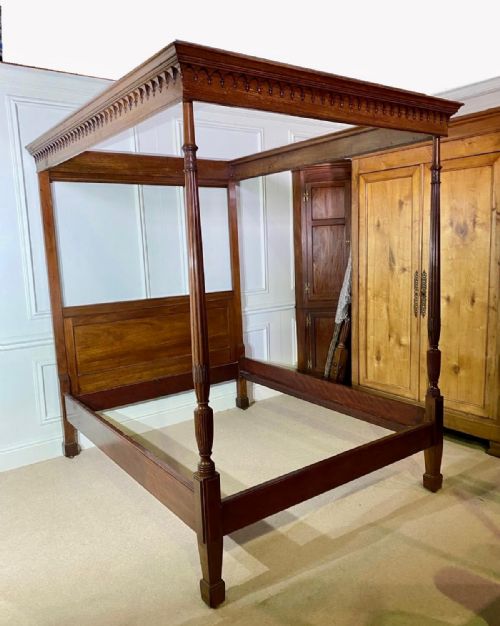


Mahogany Canopy Bed Frame
A mahogany canopy bed frame offers commanding presence and rich timber depth, turning a bedroom into a classical sanctuary.
Mahogany Canopy Bed Frame
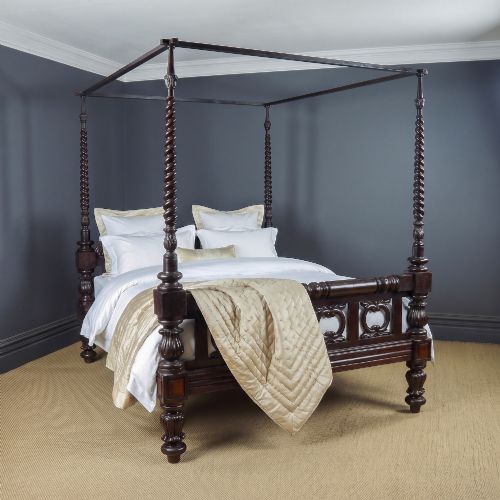
When you search for a mahogany canopy bed frame, you are looking at substantial structural sleeping furniture defined by upright posts and an upper tester. The pieces listed on this page span several eras, originating predominantly from the Georgian, Regency, and Victorian periods.
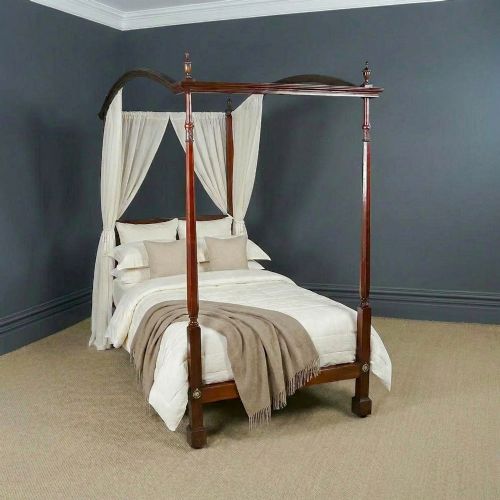
You are most likely to meet stately four poster beds and half tester designs constructed from dense tropical timbers. These grand frames range from traditional single sizes up to generous super king dimensions.
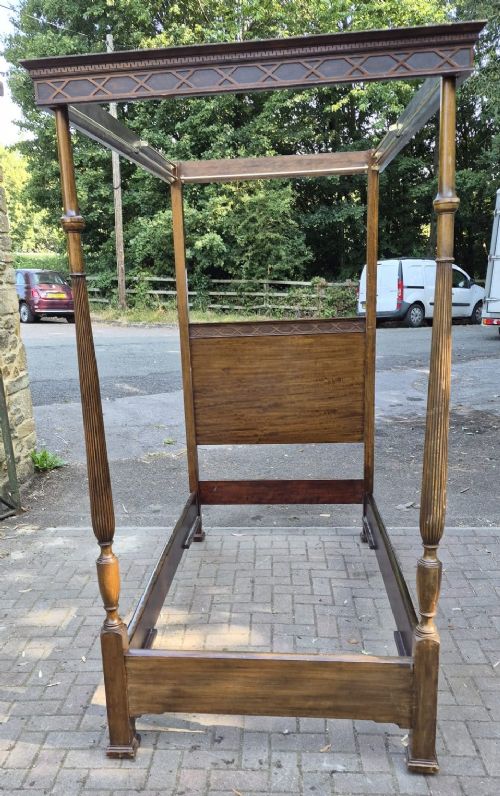
Stylistic influences vary widely across the selection, encompassing classical Chippendale details, Sheraton proportions, and distinctive Anglo-Indian Colonial interpretations. Each version brings a different architectural weight and decorative flourish to the domestic interior.
How they were made
The primary material underpinning these frames is solid mahogany, often supported by secondary timbers such as pine and hardwood for internal framing. Craftspeople shaped these dense woods using traditional joinery and extensive hand carving on the posts and cornices.
Surface finishing relies on French polishing and waxing to bring out the deep reddish-brown grain of the mahogany. Some examples incorporate contrasting elements like gilt wood and painted details to accent the structural woodwork.
Listings feature mahogany, pine, and teak timber constructions across Georgian, Victorian, and Edwardian periods.
What varies in quality
The distinction between ordinary and exceptional examples lies chiefly in the depth and crispness of the hand carving on the main posts. Finer pieces display deeply undercut acanthus leaves, reeded columns, and precise classical proportions that demonstrate superior sculptural skill.
Construction integrity also dictates value, with top-tier frames utilising robust timber scantlings and clever dismantling joints that have survived centuries of assembly. The choice of prime, highly figured mahogany veneer and solid timber sections further elevates the finish of the bed.
Heals of London·Howard and Sons
The Mahogany Canopy Bed Frame Glossary
- Half tester
- A wall-mounted or post-supported canopy that covers only the head end of the bed rather than the entire length.
- Chippendale
- A mid-eighteenth-century English design style known for Rococo curves, Chinese fretwork, and Gothic tracery applied to furniture.
- Reeded
- A decorative surface moulding consisting of parallel convex strips placed side by side, frequently seen on bed posts.
Mahogany Canopy Bed Frame: Frequently Asked Questions
How do I assemble a four poster bed?
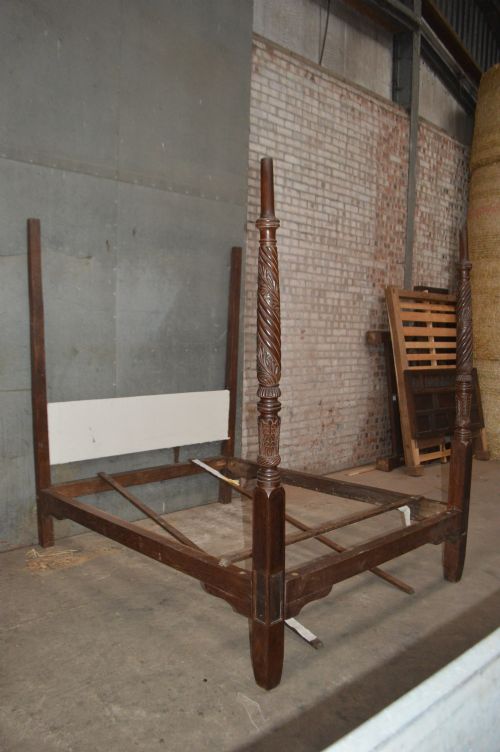
These large frames typically dismantle into separate headboards, footboards, side rails, posts, and the overhead tester canopy. Assembly requires at least two people to slot the heavy wooden components together using traditional bed bolts and wooden pins.
Care must be taken to ensure the upright posts remain plumb before tightening the upper canopy structure. Professional installation is often recommended due to the sheer weight of the solid mahogany timber.
What mattress size fits an antique bed?
Many older frames predated modern standard sizing and were built by hand to bespoke imperial dimensions. You will find widths ranging from narrow single formats up to generous king and super king proportions.
It is essential to measure the internal rails of the specific frame carefully before ordering a custom mattress. Modern pocket-sprung or foam mattresses can then be tailored to fit snugly within the wooden perimeter.
How do I date a mahogany bed frame?
Dating relies on examining the joinery techniques, timber selection, and stylistic details visible across the headboard and posts. Georgian and Regency pieces generally feature hand-sawn components and dense, dark Cuban mahogany.
Later Victorian and Edwardian revivals often incorporate machine-toothed elements or softer secondary woods behind the primary mahogany show-wood. Maker stamps or labels, where present, provide a definitive point of reference.