
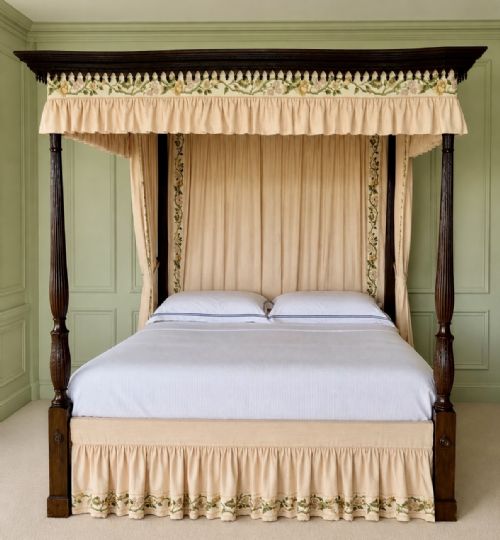


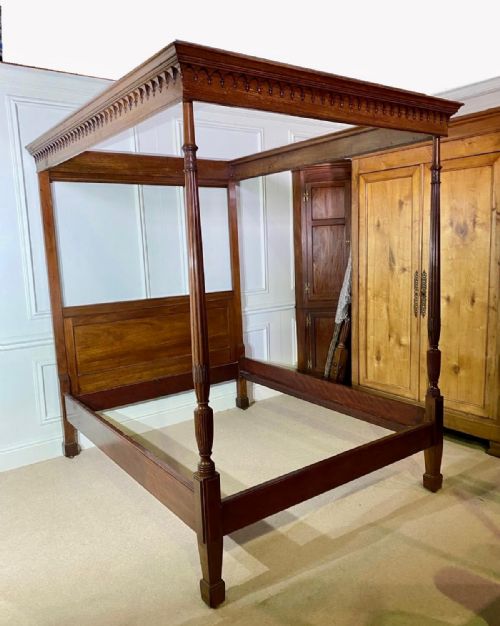


Traditional Mahogany Poster Bed
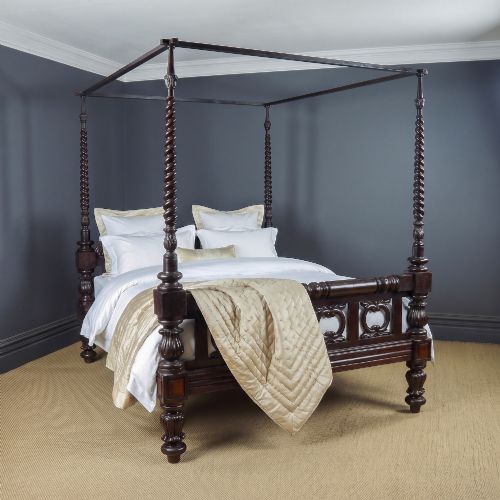
A traditional mahogany poster bed brings architectural presence to a bedroom, offering soaring corner posts and substantial timber frames.
Traditional Mahogany Poster Bed
When you search for a traditional mahogany poster bed, you encounter substantial sleeping frameworks dominated by tall corner posts and timber construction. These grand frames originate primarily from the eighteenth and nineteenth centuries, with later revivals appearing in Edwardian times.
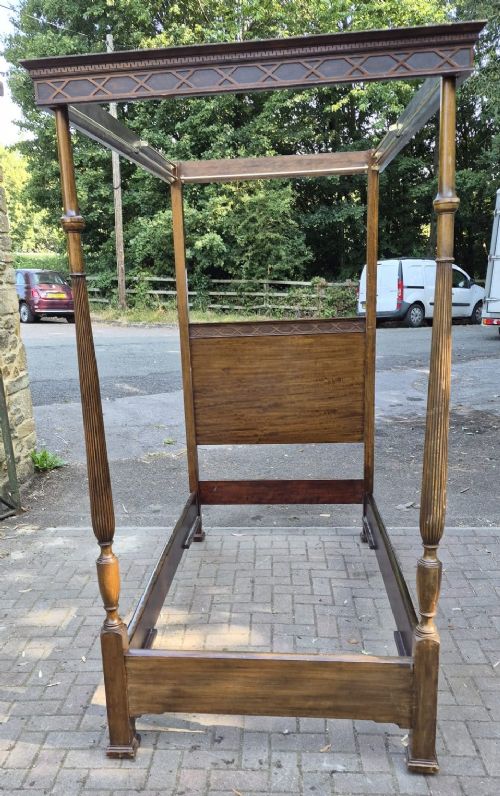
The versions most commonly met on this page span Victorian, Regency, and Georgian periods, alongside twentieth century revivals. Forms range from standard single sizes to super king dimensions, often incorporating hand-carved ornamentation upon the posts.
Stylistic influences vary widely across the inventory, touching upon Chippendale designs, colonial aesthetics, and grand Regency proportions. Buyers find both robust hardwood structures and pieces utilising flame mahogany veneer for decorative impact.
How traditional mahogany poster beds were made
Maker workshops relied heavily upon solid mahogany timber and supportive secondary woods like pine for internal framework components. Artisans frequently applied flame mahogany veneer to visible surfaces to create dramatic grain patterns across the headboards and footboards.
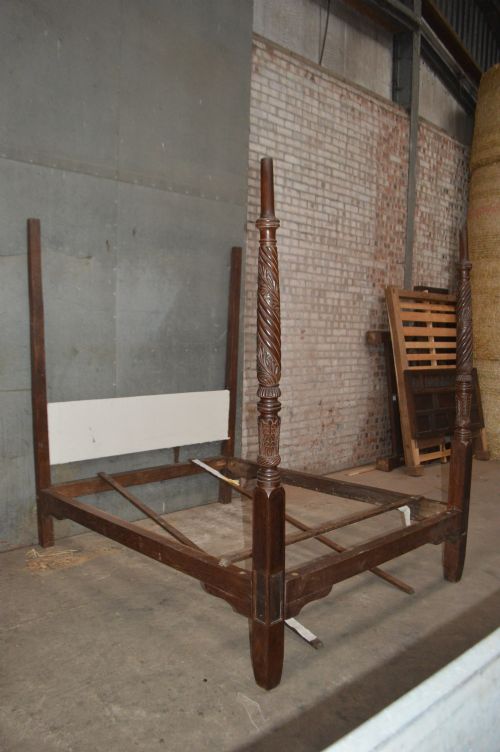
Carving techniques defined the creation of the upright posts, employing hand-carved motifs that ranged from classical reeding to elaborate foliate patterns. Structural joints utilised traditional timber joinery methods to support the substantial weight of the tester frame above.
Listings feature pieces spanning the eighteenth, nineteenth, and early twentieth centuries, utilising mahogany, flame mahogany veneer, and pine.
What varies in quality
The standard of carving upon the corner posts dictates much of the visual hierarchy within these sleeping structures. Crisp, deep hand-carving executed with precision separates superior examples from plainer, more mechanical interpretations.
Timber selection and veneer application further divide the grades of construction, particularly where figured mahogany displays rich depth. The integration of maker attributions, such as pieces associated with Heal of London or Howard and Sons, introduces distinct provenance value.
Heals of London·Howard and Sons
The Traditional Mahogany Poster Bed Glossary
- Tester
- The wooden canopy or frame suspended above a four-poster bed. It often supports drapery or fabric pelmets.
- Flame mahogany veneer
- A thin slice of wood cut from the fork of the mahogany tree to create a distinctive flickering flame pattern. This decorative surface layer appears on prominent sections of the bedstead.
- Chippendale style
- A mid-eighteenth-century design aesthetic characterised by ornate carved details and robust proportions. Pieces in this style often display classical architectural influences.
- Four poster bed
- A bed featuring four vertical columns supporting an upper canopy framework. These large pieces create a dramatic focal point in a bedroom.
Traditional Mahogany Poster Bed: Frequently Asked Questions
How do I fit a modern mattress?
Many antique frames accommodate standard modern sizes like king or super king, though exact interior dimensions require verification.
Custom mattress support bases can be tailored to fit older wooden rails securely without altering the antique structure.
Are these beds difficult to assemble?
Most historic four-poster frames utilise traditional bed bolts and slot-in joints that require methodical handling during assembly.
Enlisting professional installation help ensures the heavy canopy and tall posts align correctly and stand stable.
Can I hang curtains from the tester?
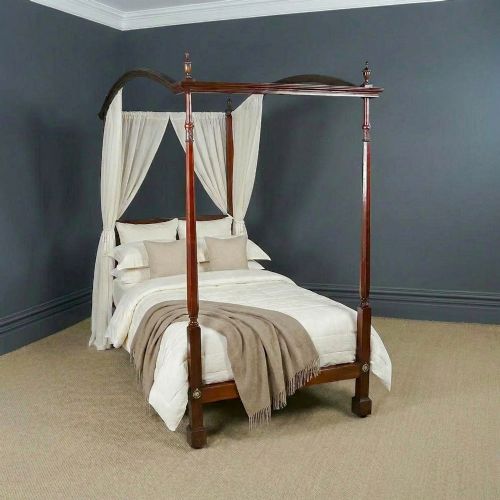
The upper wooden framework is traditionally built to support fabric tester coverings, drapes, and pelmets.
Historical examples frequently incorporated curtains for privacy and warmth in older homes.
How do I identify a Regency piece?
Regency beds typically display classical restraint, clean architectural lines, and dark mahogany surfaces influenced by ancient Roman or Greek forms.
Carved details on these models tend to be sharper and less ornate than earlier Georgian counterparts.