
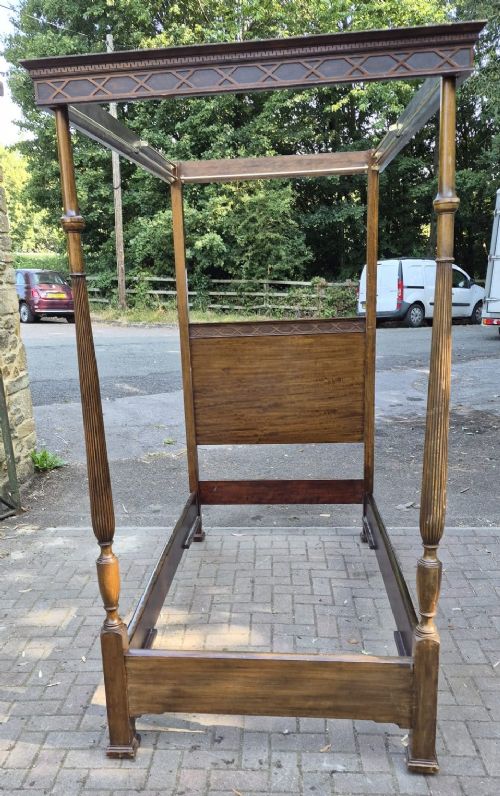
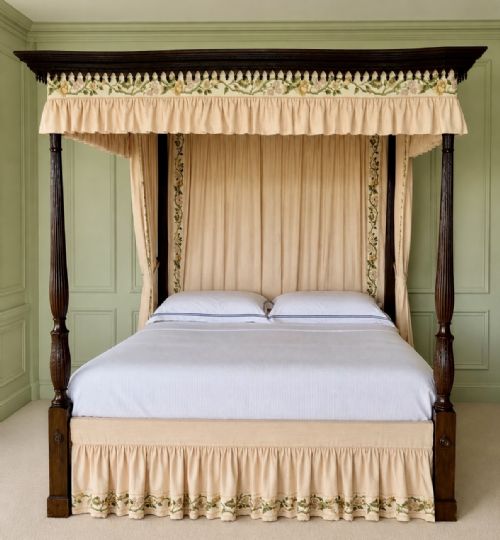


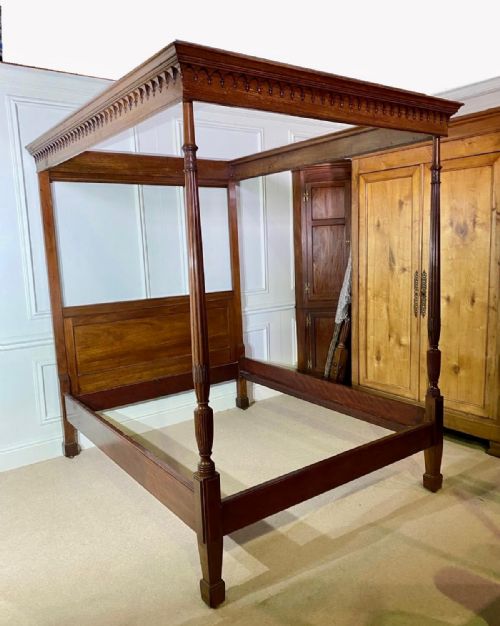

Carved Mahogany Bed Posts
Carved mahogany bed posts are substantial architectural elements that anchor grand historic bed frames and bring rich timber warmth to a room.
Carved Mahogany Bed Posts
Carved mahogany bed posts appear within listings as architectural salvage, matching column stands, or integral components of grand four poster and tester beds. When you search for carved mahogany bed posts, you encounter structural timbers derived from complete bed frames or offered as matched pairs for display.
The selections span distinct historical eras, including Regency, William IV, Victorian, and Georgian Revival periods. These supports often manifest in heavier proportions or colonial interpretations such as Anglo-Indian designs.
Makers adapted these columns from full-scale bedsteads, meaning they frequently function today as decorative pedestals, plinths, or freestanding architectural fragments. Their origins range from domestic British workshops to colonial production centres.
How they were made
Makers selected dense tropical hardwoods, predominantly mahogany, sometimes supplemented by secondary timbers such as pine or structural framing in hidden sections. Craftsmen turned these substantial logs on large lathes before executing deep manual chisel work along the shafts.
Surface finishing relied on traditional polishing techniques that saturated the timber grain to highlight natural figure and deep reddish-brown colouration. Structural joints often incorporated heavy tenons or threaded iron fixings designed to support massive tester frames.
Some bed posts spent a century holding up heavy canopies before retiring to act as very tall pedestals for house plants.
What varies in quality
The crispness of the hand-carved ornamentation distinguishes finer examples from simpler turned supports, separating standard production from master joinery. Depth of relief, symmetry of fluting, and organic detailing in acanthus leaves or reeding reflect the time invested by the original carver.
Timber selection dictates the visual weight of the piece, with dense, highly figured mahogany commanding greater presence than plainer hardwood stock. The integrity of the original surface patina, free from heavy modern stripping, preserves the historical character of the wood.
Howard And Sons
The Carved Mahogany Bed Posts Glossary
- Regency
- A British design period spanning the early nineteenth century defined by classical restraint and inspiration from ancient Greece and Rome. This style frequently employs bold mahogany turning and brass mounts.
- Chippendale
- A mid-eighteenth-century design vocabulary associated with Thomas Chippendale, known for intricate carved detail and robust proportions. Pieces in this style utilise elaborate Gothic, Chinese, or classical motifs.
- Architectural Salvage
- Building elements or furniture fragments rescued from historic structures for reuse in interior design or display. These items retain their original structural purpose in a new decorative context.
- William IV
- A distinct British design phase from the 1830s characterised by heavy, robust furniture forms and bold scrolling motifs. Pieces from this era display substantial timber scantlings and assertive carving.
Carved Mahogany Bed Posts: Frequently Asked Questions
What are carved mahogany bed posts used for today?
These architectural elements function primarily as decorative pedestals, freestanding column stands, or replacement components for historic bed restorations. Interior designers also utilise paired posts to flank doorways or create focal points in large rooms.
Because many examples originate from dismantled bed frames, they adapt well to creative room schemes where historic timber adds texture and vertical line.
How do I distinguish Regency posts from Victorian ones?
Regency supports tend to show tighter, more restrained classical turning with crisp reeding and finer proportions inspired by antiquity. Victorian examples often increase in physical mass, displaying heavier proportions and bolder decorative carving associated with nineteenth-century comfort.
Examining the depth of the timber turning and the style of any acanthus leaf carving helps clarify the specific period of manufacture.
Can I use these posts to build a new bed?
Historical bed posts can serve as the structural anchor for a bespoke bedstead, provided the joinery and weight-bearing capacities match modern mattress scales. Many listings represent salvage from super king or king size frames, offering substantial height and girth.
Consulting a skilled joiner ensures that any historic posts integrate safely with modern side rails and support systems.
How should I care for antique mahogany timber?
Maintaining these surfaces requires simple dusting with a dry lint-free cloth and occasional application of traditional beeswax to nourish the polished grain. Avoid placing timber pieces near direct heat sources or strong sunlight, which can dry out the historic wood and fade the colour.
Gentle maintenance preserves the accumulated patina developed over centuries of handling.