


19th Century Porcelain Teapot
A 19th century porcelain teapot brings centuries of ceramic history and daily tea-pouring tradition straight to the table.
19th Century Porcelain Teapot
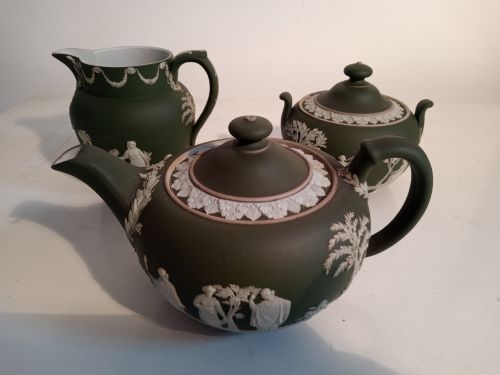
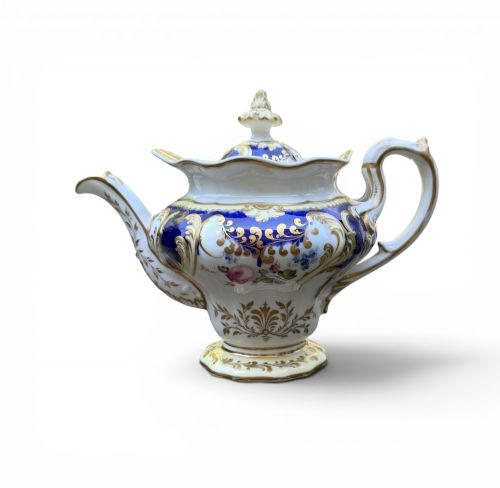
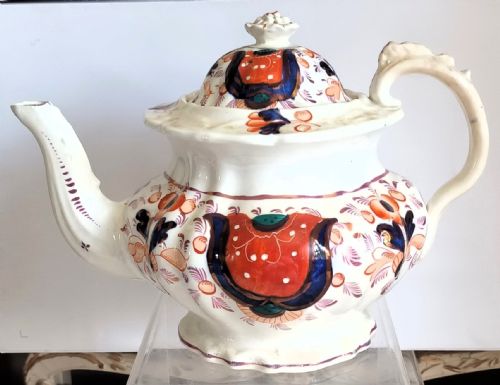
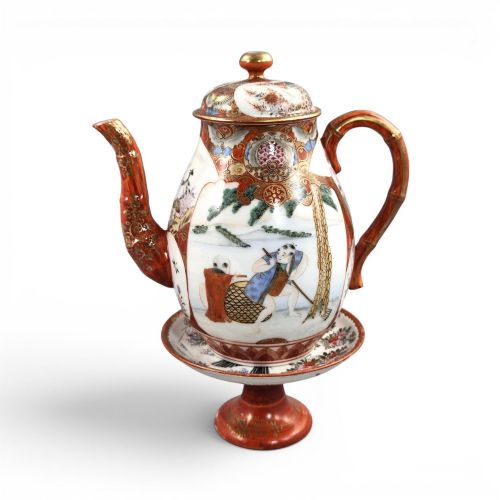
A 19th century porcelain teapot encompasses various regional and stylistic expressions from the era, ranging from English earthenware and ironstone to Japanese Kutani porcelain. Buyers encounter shapes spanning compact bachelor vessels and miniature teapots to components of larger tea sets and breakfast services.
The aesthetic vocabulary stretches across the hundred-year span, drawing on Georgian roots, Victorian neoclassical formality, and exuberant rococo revival curves. Makers also adopted foreign motifs, producing pieces influenced by Meiji period Japanese design and Chinese export traditions.
Most examples function as usable vessels or cabinet pieces, often accompanied by matching cups, saucers, and stands. Surviving items demonstrate the domestic rituals of the nineteenth century through diverse glazing and decorative schemes.
Materials and Craftsmanship
Potters shaped these vessels from fine porcelain, ironstone, jasperware, and stoneware, frequently finishing surfaces with lustre glaze or traditional white slips. Workshops utilised moulding and throwing techniques to achieve the characteristic body contours of each stylistic period.
Decoration relied heavily on hand-applied enamel painting, transfer printing, and delicate gold leaf or gilt highlights. Artisans fired these pigments onto the ceramic body to secure the colours and metallic details seen on the finished wares.
Listings feature 19th century examples in porcelain, ironstone, jasperware, and earthenware.
Assessing Quality and Execution
Quality rests in the crispness of the modelling and the precision of the hand-painted or transfer-printed decoration. Superior pieces display finely articulated spouts, handles, and lids that fit their bodies securely without awkward asymmetry.
The sophistication of the glaze and gilding further distinguishes finer productions from standard commercial output. Rich enamel palettes and cleanly preserved gold leaf indicate careful kiln work and skilled artisan execution.
Wedgwood·Royal Worcester·Royal Davenport·Masons Patent Ironstone·Spode·Meissen
The 19th Century Porcelain Teapot Glossary
- Jasperware
- A type of fine stoneware developed by Wedgwood, characterised by a matte unglazed surface and raised white neoclassical reliefs against a coloured body.
- Ironstone
- A dense, durable ceramic body patented in the nineteenth century to imitate Chinese porcelain while offering greater strength for daily domestic use.
- Lustre Glaze
- A metallic metallic-film glaze applied to ceramics to create an iridescent, reflective surface sheen reminiscent of copper, silver, or gold.
- Gilt
- A thin layer of gold applied to the surface of porcelain or metal details for ornamentation and accentuation.
- Rococo Revival
- A nineteenth-century design style that revived the asymmetrical scrolls, C-curves, and naturalistic floral motifs of the eighteenth-century French movement.
19th Century Porcelain Teapot: Frequently Asked Questions
How do I date a teapot?
Dating relies on stylistic markers, maker's marks stamped or painted on the base, and the specific composition of the ceramic body. Examining the type of glaze and decorative technique provides additional clues regarding the decade of manufacture.
Comparing known patterns and registration numbers helps narrow down the exact period of production. Documented archives from major potteries offer definitive verification for marked pieces.
Can I use these to pour tea?
Many nineteenth-century teapots remain structurally sound for serving tea, provided they are handled with care and washed by hand. Thermal shock should be avoided by warming the ceramic gently with warm water before pouring boiling water.
Fine antique porcelain and ironstone have delicate spouts and fragile gilt details that do not tolerate modern dishwashers. Gentle usage preserves both the structural integrity and the surface decoration.
What is a bachelor teapot?
A bachelor teapot is a smaller vessel designed to brew a single portion or two cups of tea, popular for private use or solitary breakfast settings. These compact pieces often form part of a matched set including a small cup and saucer.
Their reduced scale makes them distinct from standard family-sized teapots while retaining identical decorative treatments and material qualities. Collectors prize them for their charming proportions.