


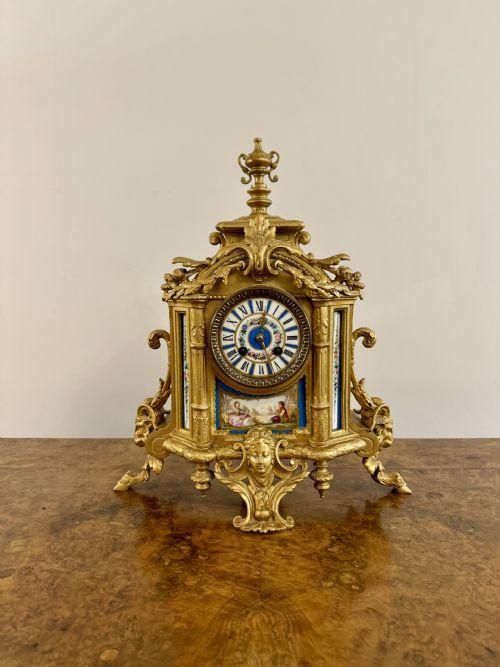


19th Century Porcelain Clock
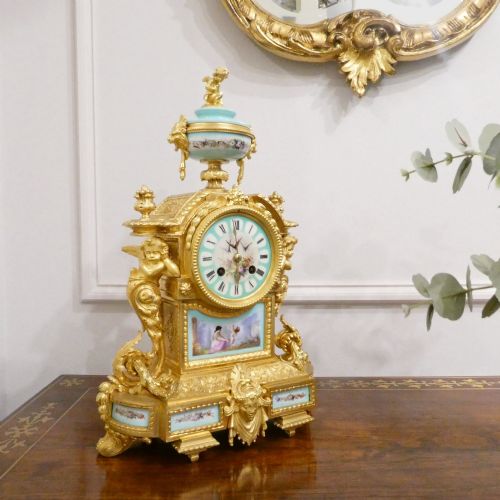
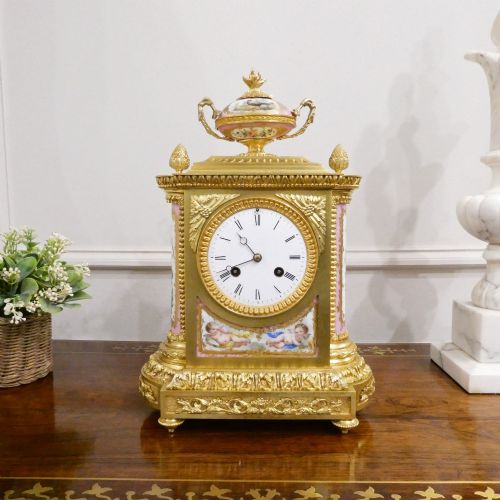
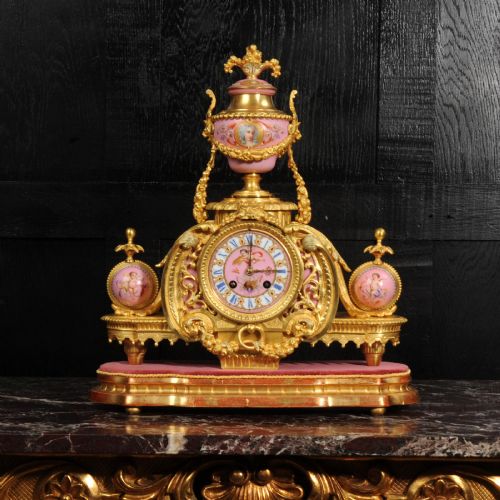
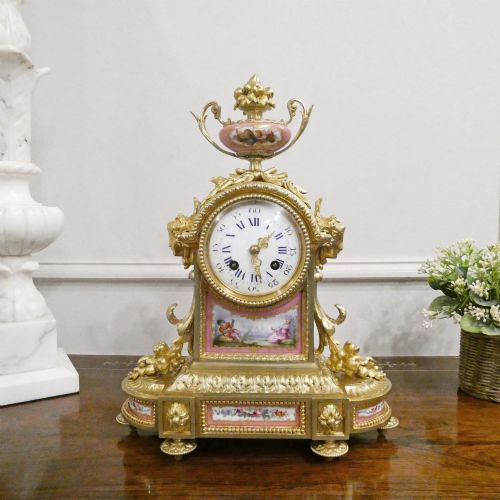
When you seek a 19th century porcelain clock, you look for domestic timepieces combining ceramic dials or painted panels with gilded metalwork.
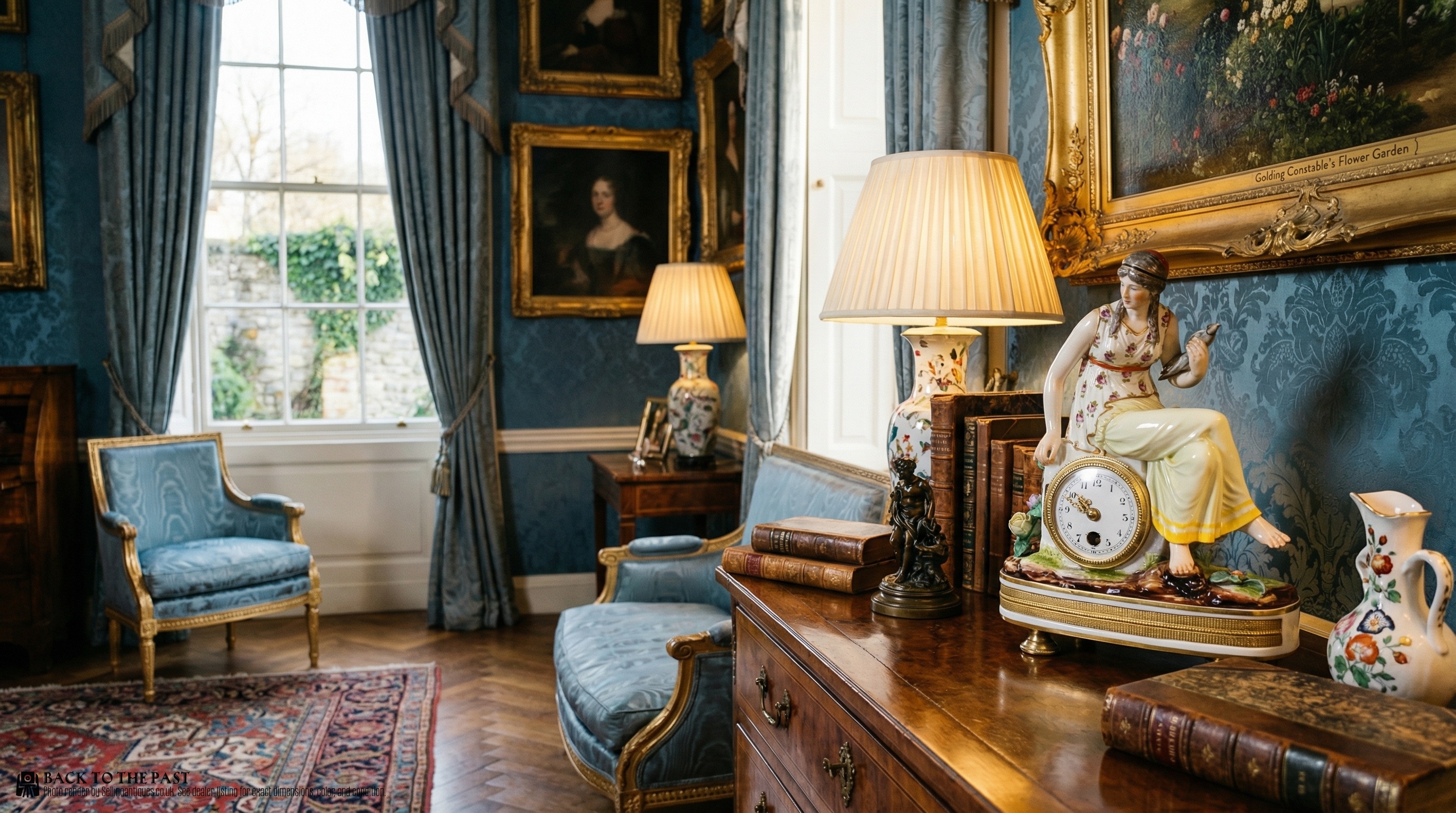
19th Century Porcelain Clock
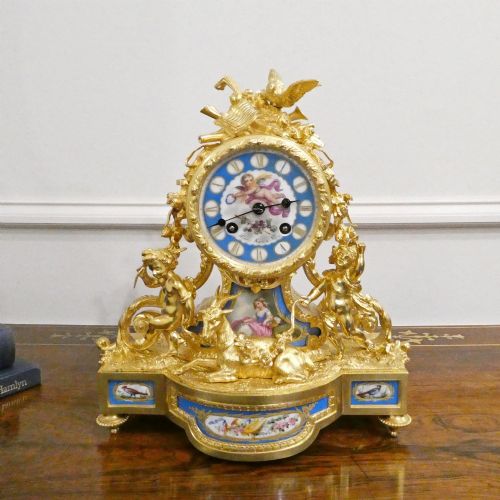
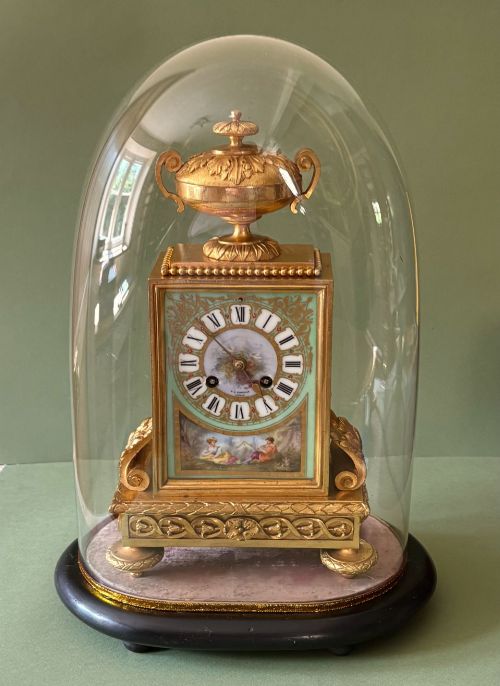
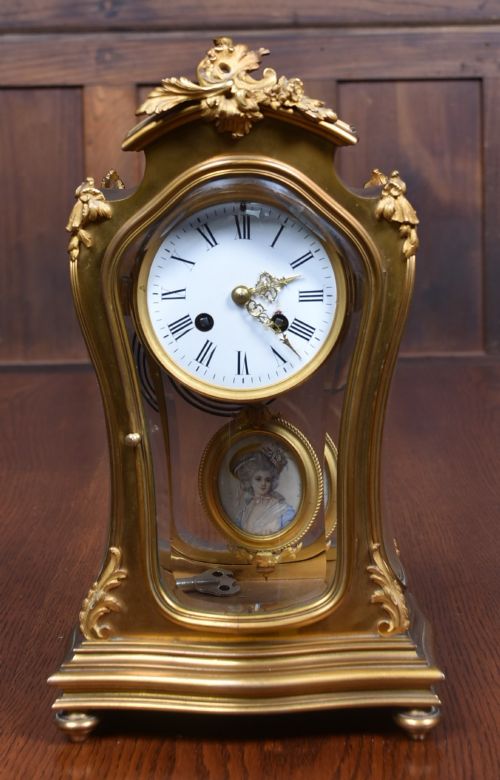
A 19th century porcelain clock typically takes the form of a mantel clock, often accompanied by garniture sets or housed beneath glass domes. These domestic timepieces originate predominantly from French workshops during the Victorian era, spanning decades such as the eighteen sixties, seventies, and eighties.
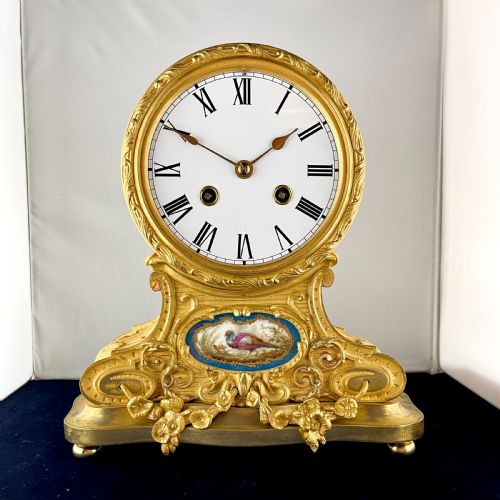
Makers frequently combined porcelain painted with pastoral or floral scenes alongside gilded bronze, ormolu, or brass frameworks. Buyers encounter styles ranging from French Rococo Revival and Louis XVI Revival to Napoleon III designs.
Materials and construction
The construction relies on combining fired ceramic components with cast metal frames. Porcelain panels, dials, and urns are integrated into gilt bronze, ormolu, or gilt metal chassis.
Enamel is utilised for clock faces alongside painted porcelain panels, while glass domes protect sensitive garniture sets and carriage clock movements from dust.
Distinctions in standard
The standard of a piece depends upon the crispness of the gilt bronze or ormolu casting and the finesse of the hand-painted porcelain panels. Named horological makers and porcelain factories elevate the standing of individual items.
The complexity of the movement, such as repeater mechanisms or striking capabilities, alongside complete restoration work, separates standard domestic examples from finer productions.
Jean Baptiste Delettrez·Achille Brocot·Japy Freres·Henry Marc·PH Mourey·Rodier·Drocourt·Le Roy Et Fils·Meissen·KPM Berlin
The 19th Century Porcelain Clock Glossary
- Ormolu
- A gilded bronze technique applied to metal mounts and clock cases. It provides a bright golden finish characteristic of French luxury goods.
- Garniture
- A set of matching decorative objects, typically comprising a central clock flanked by matching vases or candelabra. These sets were designed to sit on a mantelpiece.
- Carriage clock
- A small, portable spring-driven timepiece designed for travelling. Examples often feature enamel dials and brass cases with glass panels.
- Drumhead clock
- A timepiece featuring a circular clock case mounted on a base. The shape resembles a kettle drum.
- Cloisonne
- An ancient technique for decorating metalwork objects with coloured material held in place by metal strips. It appears on select clock garniture sets.
19th Century Porcelain Clock: Frequently Asked Questions
Where did these clocks sit?
These timepieces were designed principally for the mantelpiece of a Victorian drawing room or parlour. They served as both functional timekeepers and decorative centrepieces.
Larger examples often sat as part of a garniture set flanked by matching vases or urns upon marble or wooden fire surrounds.
How do I wind the clock?
Most mechanical versions utilise a key inserted into winding holes on the porcelain dial to tension the springs inside the movement. Eight day movements require winding at regular weekly intervals to maintain accurate timekeeping.
Care must be taken not to overwind the springs during this process to avoid damaging the internal mechanical components.
What is a glass dome used for?
Glass domes protected delicate gilt metal surfaces, painted porcelain panels, and exposed mechanical components from household dust and atmospheric moisture.
These protective covers sit upon wooden or velvet-lined bases, keeping carriage clocks and delicate garniture sets pristine.
How do I identify the period?
Stylistic indicators such as Louis XVI Revival symmetry or Rococo Revival asymmetry help date pieces to specific decades of the nineteenth century. Maker signatures stamped on the movement backplates provide definitive chronological markers.
Materials like Sèvres-style porcelain and fire-gilded ormolu further anchor pieces within the Victorian era.