
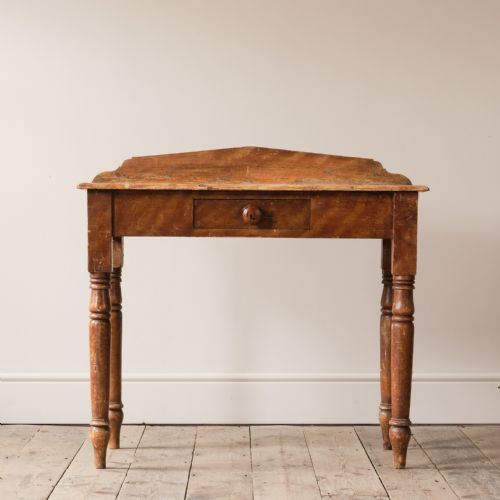
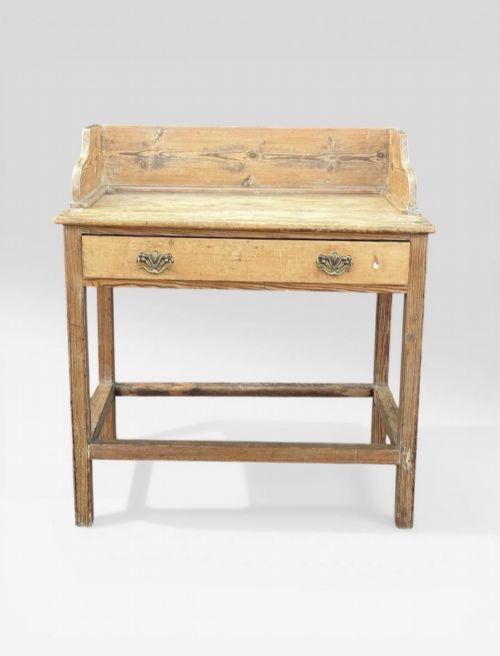

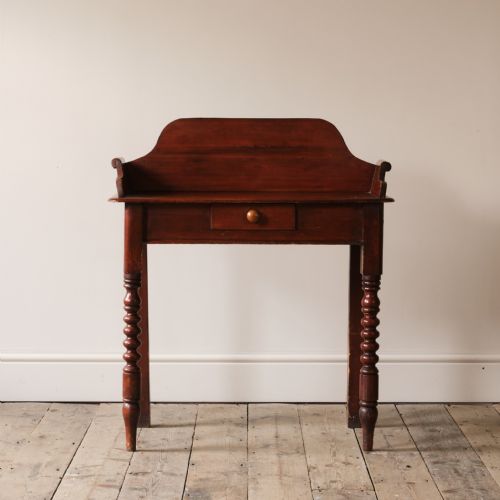
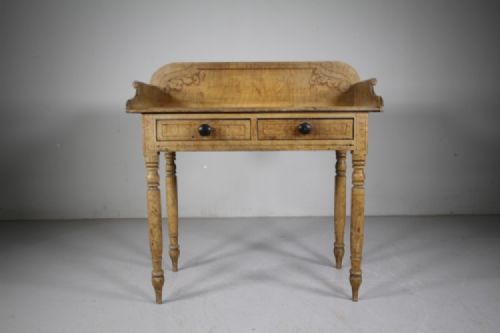


19th Century Pine Washstand
A 19th century pine washstand brings honest utility and vernacular charm to a modern interior.
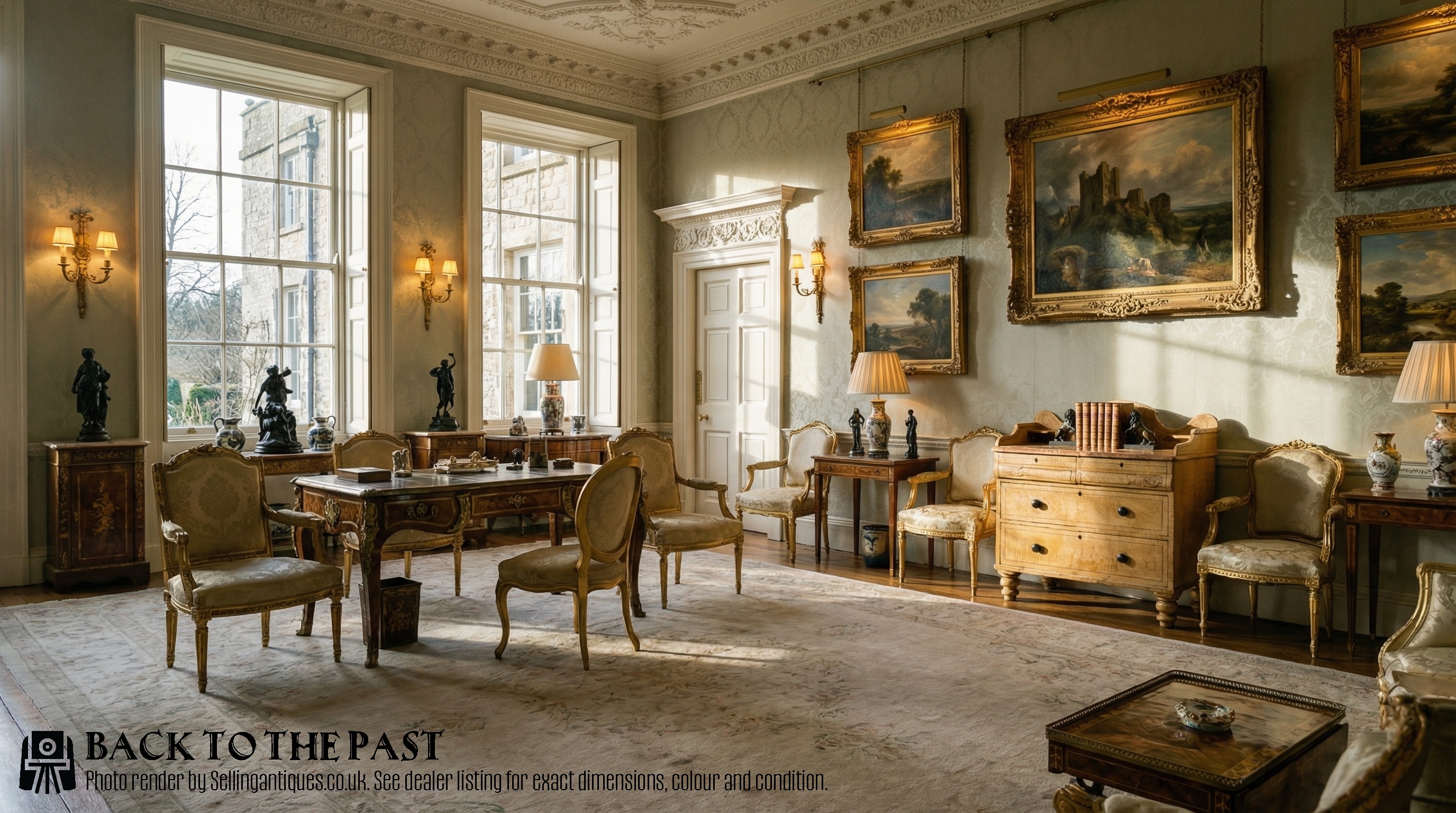
19th Century Pine Washstand
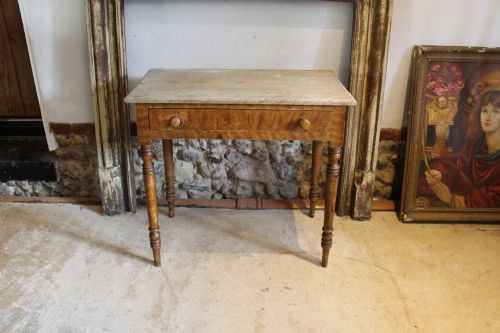
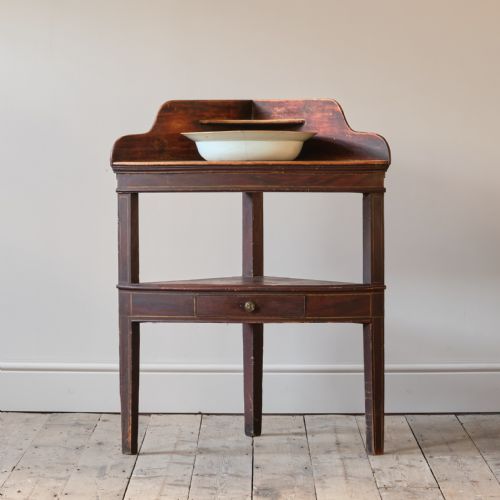
A 19th century pine washstand is a functional bedroom or dressing piece designed to hold a basin and jug for morning ablutions. These items emerge from various periods including Regency and Victorian decades, spanning styles from rustic farmhouse to gothic and faux bamboo.
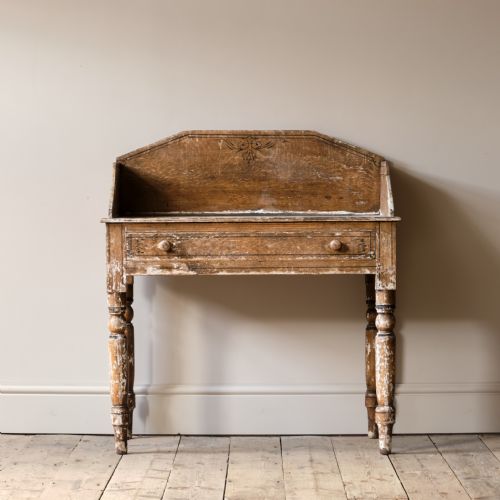
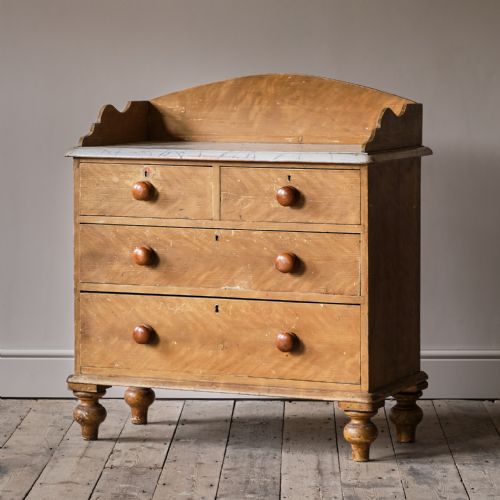
Buyers encounter forms ranging from simple side tables and wash tables with gallery backs to elaborate pieces combining chests of drawers, cupboards, and marble tops. The selection includes both dedicated washstands and related utility tables in painted or stripped finishes.
Originating in domestic settings across the nineteenth century, these objects served practical daily needs before indoor plumbing became universal. Today, they function as versatile side tables, console tables, or vanity units in contemporary homes.
How they were made
Makers utilised solid pine and pitch pine for the primary construction, relying on straightforward timber framing to build robust carcases and legs. Drawers often incorporate traditional dovetail joints, whilst gallery backs protect walls from splashing.
Surfaces frequently display scumble glaze, original paintwork, or later painted finishes applied to protect the softwood and add decorative character. Some sophisticated examples incorporate brass hardware, glass elements, or inset marble tops to resist water.
Early owners relied on these pine washstands for their morning splash, long before indoor plumbing turned daily routines into a flick of a wrist.
What varies in quality
Construction methods reveal the standard of craftsmanship, from simple rustic country carpentry to refined Victorian gothic joinery with fitted marble tops. Heavier pitch pine variants and pieces retaining original brass fittings represent the upper tier of production.
The 19th Century Pine Washstand Glossary
- Scumble glaze
- A decorative paint technique involving translucent layers dragged or combed over a base coat to imitate wood grain. This finish appears frequently on nineteenth-century country furniture.
- Pitch pine
- A dense, resinous softwood sourced mainly from North America, noted for its strong grain patterns and durability. Makers utilised this material for robust washstands and tables.
- Gallery back
- A raised timber barrier at the rear and sides of a washstand top designed to prevent water splashing against the wall. These additions often feature shaped or panelled detailing.
- Faux bamboo
- A decorative style where pine or other timbers are carved and painted to resemble natural bamboo stalks. This aesthetic gained popularity during the late Victorian period.
- Wash table
- A functional variant of the washstand providing a simple surface for a basin and washing accessories. These items often lack the drawers or cupboards found on larger washstand chests.
19th Century Pine Washstand: Frequently Asked Questions
How do I identify a Regency washstand?
Regency washstands date from the early nineteenth century and generally display cleaner, more restrained classical lines than later Victorian iterations. They often utilise painted pine finishes and simpler timber constructions appropriate for period country settings.
Examining the construction methods and the presence of early paint layers helps distinguish these pieces from later nineteenth-century equivalents. Their proportions tend to reflect the neoclassical influences popular during the Regency era.
Where should I place a washstand at home?
These versatile tables fit naturally into bathrooms as vanity units, hallways as console tables, or bedrooms as dressing surfaces. The flat top surface accommodates lamps, mirrors, and everyday objects while lower shelves or drawers provide storage.
Pieces with marble tops suit moisture-prone areas like bathrooms, whilst painted or scumble-glazed variants add warmth and texture to living spaces. Their modest depths make them suitable for narrow corridors and compact rooms.
Why do some washstands have marble tops?
Marble tops provided a durable, waterproof surface that resisted staining from spilled water during washing routines. Finer Victorian washstands incorporated marble alongside tiles to create a hygienic area for ablutions.
This material elevates the status of the piece, often pairing with pitch pine or ash carcases. Surviving marble slabs add significant weight and a cooler aesthetic compared to all-timber versions.
What is scumble glaze paint?
Scumble glaze is a semi-transparent tinted medium applied over a pale base coat and manipulated with combs or rags to simulate richer timber grains. Makers utilised this technique on pine furniture to achieve decorative visual effects.
Original scumble glaze provides an authentic nineteenth-century surface patina valued by collectors. It protects the softwood underneath while offering a distinctive patterned finish.