
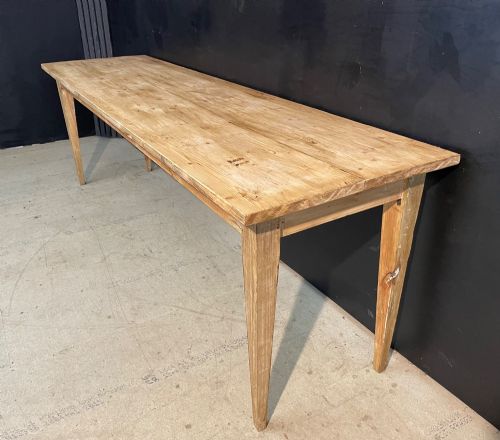
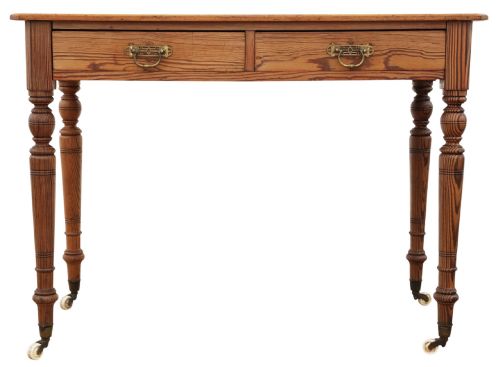
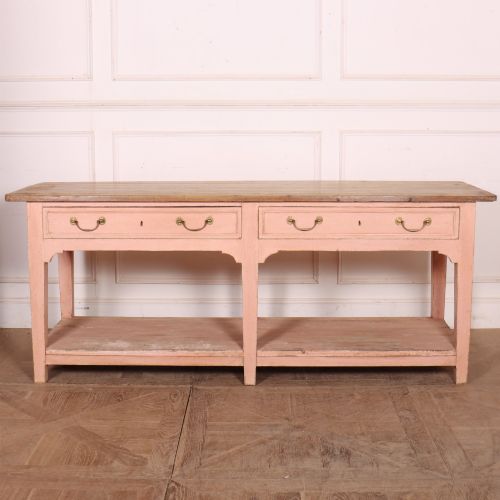
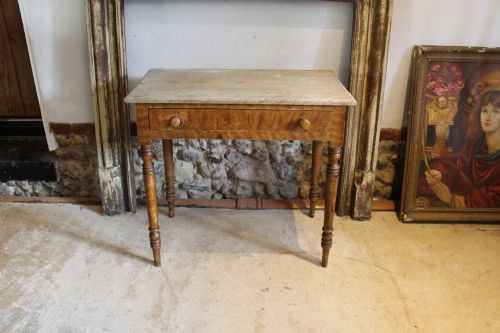
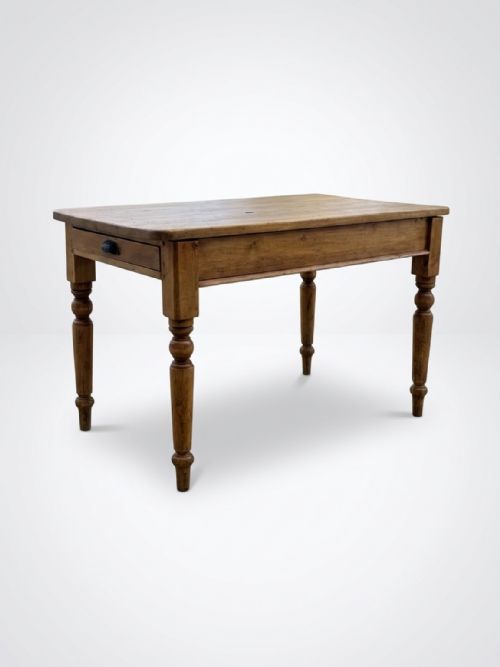
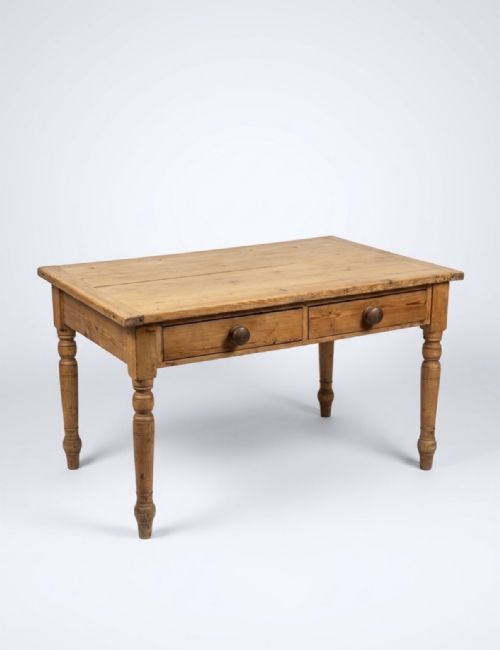
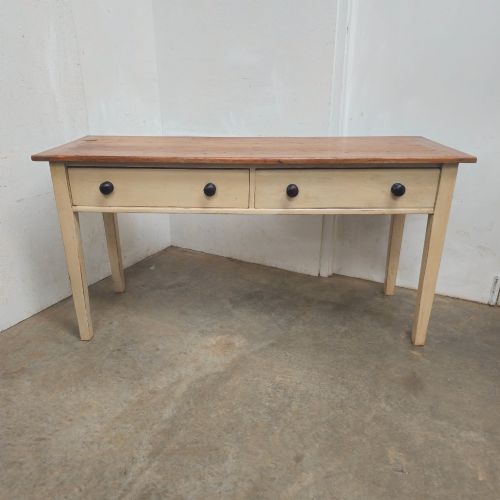
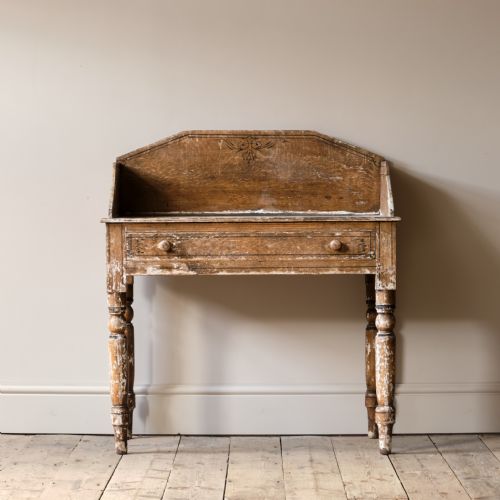
19th Century Pine Console
These pieces combine everyday utility with enduring character, offering durable timber surfaces and practical proportions for contemporary spaces.
19th Century Pine Console
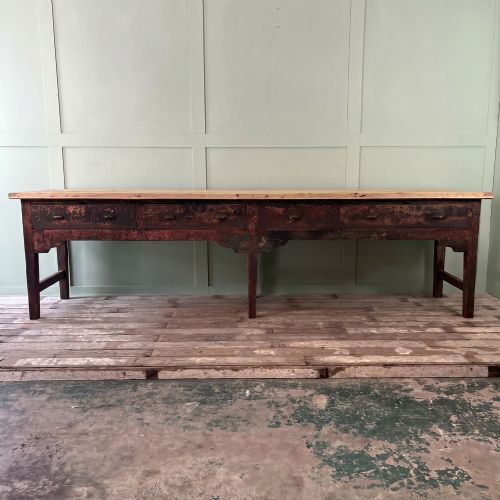
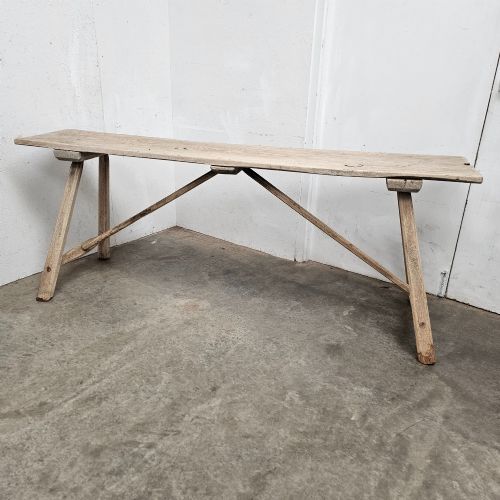
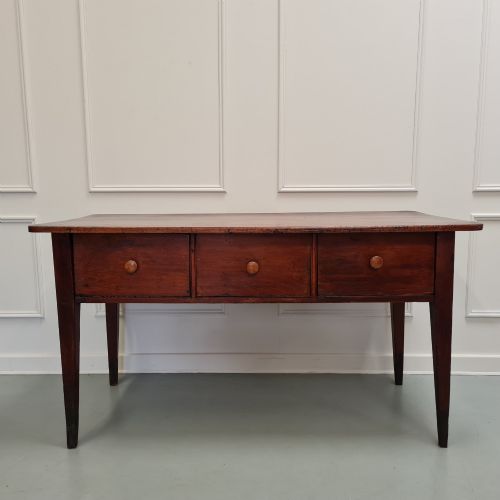
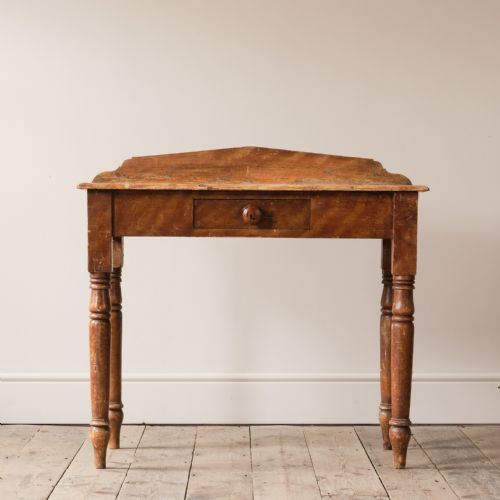
A 19th century pine console table serves as a functional surface typically placed against a wall, derived from utilitarian forms found in domestic and commercial interiors of the period. Buyers search for these items to introduce historic warmth and straightforward carpentry into modern rooms.
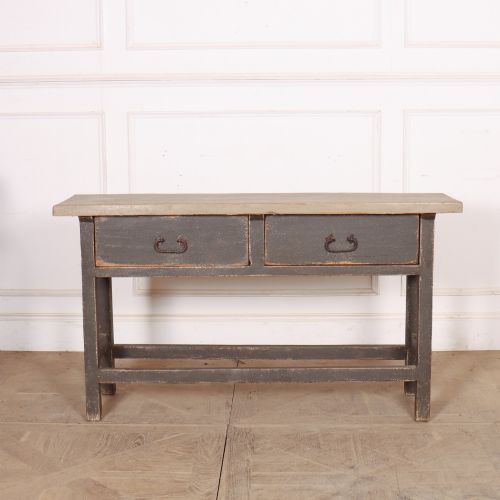
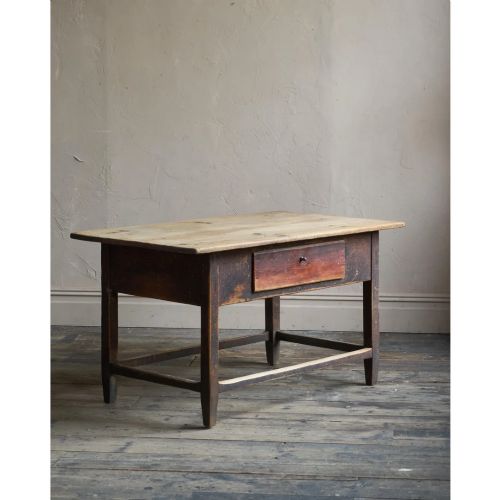
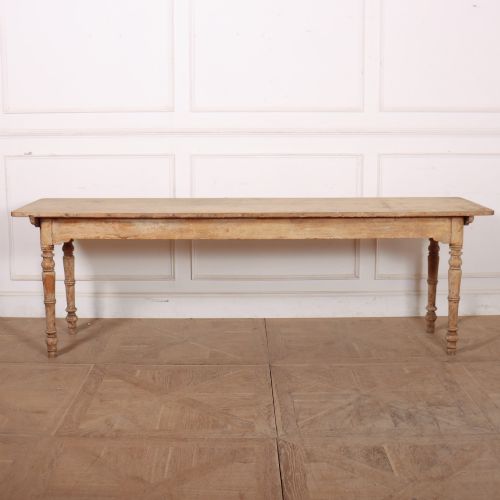
The selection ranges from simple scrubbed timber kitchen and drapers tables to painted servers, potboard dresser bases, and washstands originating across England, Scotland, Wales, France, Sweden, and Italy. Pieces from the Victorian era alongside Regency and later workshop examples dominate the available forms.
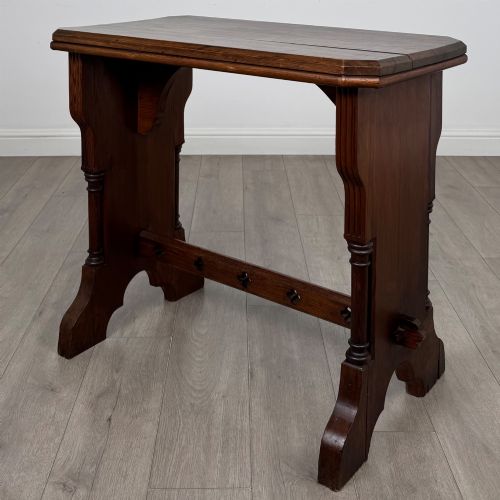
Regional variations appear in the construction and finish, encompassing Scandinavian painted surfaces, English dairy tables, and Gothic pitch pine side tables. These objects function successfully in hallways, dining rooms, and kitchens as practical serving or writing surfaces.
How They Were Made
Makers utilised softwoods primarily, selecting standard pine and denser pitch pine for structural stability and everyday use. Timber was frequently joined using traditional hand-cut methods, often incorporating box stretchers or pot shelves for additional rigidity.
Surfaces were either scrubbed clean through generations of domestic maintenance or coated in original paint layers, scumble glazes, and hand-applied pigments. Secondary metals such as brass and iron appeared in hardware, handles, and occasional structural braces.
Listings feature items built from standard pine, pitch pine, and sycamore, spanning the Regency period through the late Victorian era.
What Varies in Quality
The hierarchy of quality rests primarily on the survival of original surface treatments, such as early paintwork or untouched scrubbed patina, contrasted against later stripping or repainting. Structural integrity, uncompromised by extensive timber replacement or severe worm damage, distinguishes finer examples.
Proportion and regional detailing separate standard utility furniture from sophisticated provincial workshop pieces, where clever joinery, integrated drawers, or architectural elements like Gothic stylings elevate the form.
The 19th Century Pine Console Glossary
- Console table
- A table designed to stand against a wall, frequently supported by brackets or legs at the front. These pieces provide surface space in narrow hallways and living rooms.
- Pitch pine
- A dense, resinous variety of pine timber harvested for its durability and strong grain pattern. It appears often in Gothic and Victorian institutional furniture.
- Scumble
- A translucent or semi-opaque layer of paint applied over a lighter base colour to simulate wood grain or create textured depth. This decorative finish was popular during the Victorian period.
- Potboard
- A lower shelf fitted between the legs of a dresser base or console table for storing pots and domestic utensils. It adds structural bracing to the lower section of the frame.
- Drapers table
- A long, wide table historically utilised in fabric shops for measuring and cutting cloth. They feature generous proportions and sturdy timber construction suitable for heavy use.
19th Century Pine Console: Frequently Asked Questions
How were these tables originally used?
These tables served practical daily functions in domestic, commercial, and agricultural settings, acting as workspace for food preparation, laundry, or drapers. They also stood in halls and dining rooms for serving food or holding household objects.
Over time, many transitioned from utilitarian back-of-house environments into prominent display and serving furniture within the main rooms of the home.
How do I identify original paint?
Original paint exhibits natural wear, craquelure, and subtle variations in tone that correspond to age and heavy use. It sits firmly within the grain of the pine rather than masking the underlying texture.
Later overpainting often appears flat, hides underlying timber characteristics, or flakes away to reveal contrasting modern colours underneath.
Where were these tables made?
Workshop production spanned across Britain and continental Europe, including regional English, Scottish, and Welsh pieces alongside Swedish, French, and Italian examples. Local timbers and domestic traditions dictated the specific construction methods and decorative finishes used by regional makers.
Swedish and French workshops frequently favoured pale painted finishes, while British makers often utilised scrubbed deal or pitch pine.
How do I care for a pine table?
Maintenance requires avoiding excessive moisture and direct heat sources that can dry out historic softwood or lift delicate paint layers. Regular dusting with a dry or slightly damp cloth preserves the surface patina.
Unfinished scrubbed timber responds well to traditional wax treatments if nourishment is required, while painted surfaces should remain untreated by modern chemical polishes.