





19th Century Percussion Pistol
A 19th century percussion pistol represents the rapid technological shift in firearms design, offering collectors reliable mechanical ingenuity and robust military or civilian utility.
19th Century Percussion Pistol
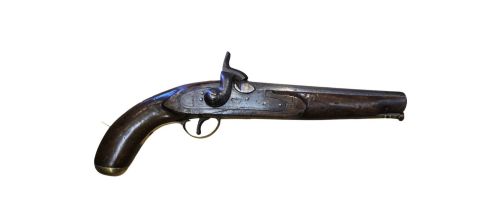
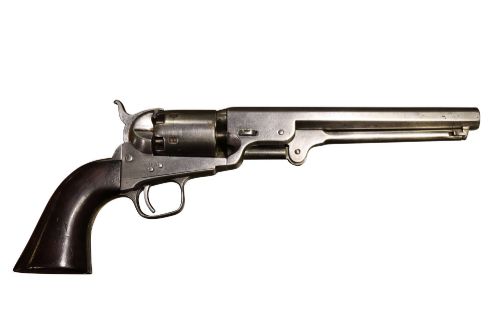
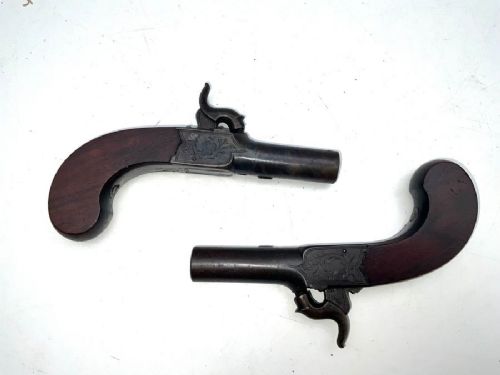
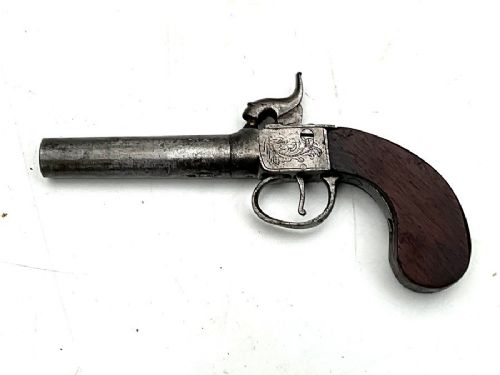
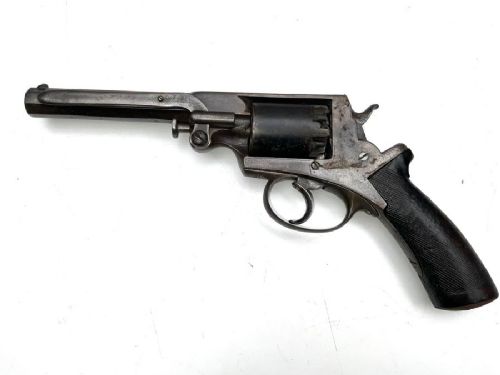
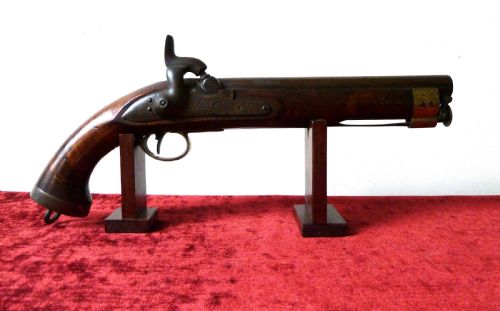
A 19th century percussion pistol encompasses a wide variety of firearms utilising the percussion cap ignition system, which superseded flintlock mechanisms during the Victorian and Regency periods. Buyers frequently encounter compact pocket variants, military belt pistols, and multi-shot revolvers originating from British, European, and American makers.
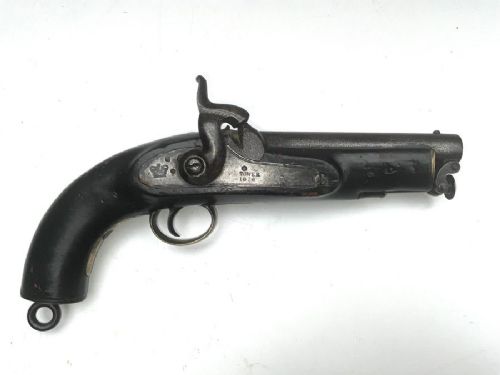
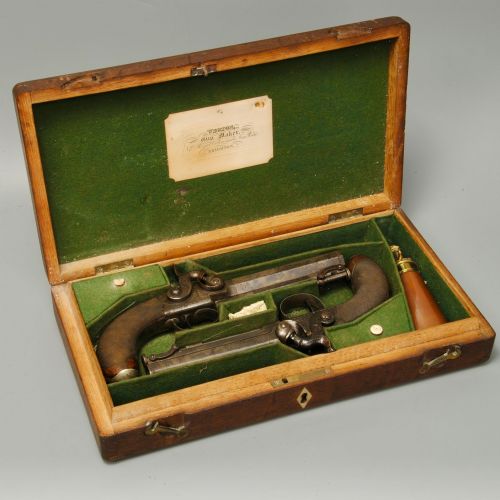
The selection ranges from mass-produced military contracts bearing Tower or East India Company markings to civilian gentleman's pocket pistols and cased sets complete with accessories like powder flasks. These pieces reflect specific operational contexts, spanning domestic self-defence, naval service, and cavalry deployment across the 1850s and 1860s.
How they were made
Makers constructed the stocks predominantly from dense hardwoods such as walnut and mahogany, shaped to fit the hand and occasionally inlaid or checkered for improved grip. Metal components, including barrels, frames, and locks, relied on forged steel and iron, frequently finished with brass furniture or decorative engraving.
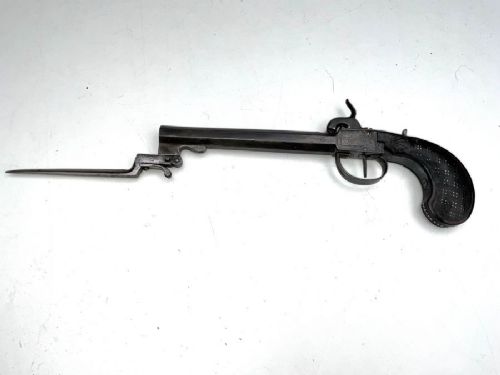
Internal lockwork required precise engineering to ensure the crisp fall of the hammer onto the percussion nipple, igniting the priming powder inside the cap. Many examples incorporated specialised mechanisms such as boxlock actions, flick bayonets, or revolving clusters of barrels.
19th Century Percussion Pistol Retail Price Guide 2026
Typical asking prices for 19th century percussion pistol among the pieces listed under this phrase on Sellingantiques today, from the lower quarter to the upper quarter. They describe what is for sale here now, not the wider market.
Some pocket pistols hid their triggers entirely until the hammer was cocked, ensuring the owner's pocket remained snag-free.
What varies in quality
The distinction between standard military issue and top-tier civilian pieces often lies in the crispness of the engraving, the grade of the timber stock, and the sophistication of the lock mechanism. Maker signatures, matched serial numbers, and complete original casing with accessories elevate the historical interest of a piece significantly.
Condition is dictated by the preservation of original metal surfaces, legible maker or proof stamps, and the smooth operation of the internal moving parts rather than mere cosmetic polish.
Colt·Deane, Adams and Deane·Auguste Francotte·George Sherwood·Alexander Martin
The 19th Century Percussion Pistol Glossary
- Percussion cap
- A small metal cup containing fulminate of mercury placed upon the nipple to ignite the powder charge when struck by the hammer. This innovation replaced earlier flintlock priming methods.
- Boxlock
- A firearm action where the hammer and lock mechanism are contained within an internal frame or directly integrated into the breech, commonly seen on pocket pistols.
- Smoothbore
- A barrel lacking internal rifling grooves, designed to fire lead balls without imparting spin. Many military and civilian pistols utilised this bore type throughout the period.
- Pepperpot
- A multi-barrelled firearm where the entire cluster of barrels rotates with each pull of the trigger, eliminating the need for a single rotating cylinder.
- Proof marks
- Official stamps applied by government testing houses, such as those in Birmingham or London, to verify that the barrel successfully withstood high-pressure test charges.
19th Century Percussion Pistol: Frequently Asked Questions
How do I identify a military percussion pistol?
Military pieces typically display government acceptance stamps, broad arrows, or specific depot marks such as Tower or East India Company engravings on the lock plate. They were built for robust service use with steel and brass mountings.
Civilian counterparts often feature finer finishing, private maker signatures, and decorative engraving suited for personal carriage rather than standard issue.
What is the difference between a pocket pistol and a belt pistol?
Pocket pistols were manufactured in smaller dimensions with shorter barrels to allow concealed carriage in a pocket or muff by civilians. They often incorporated folding triggers to prevent snagging.
Belt pistols possessed larger frames and were designed to be tucked into a waist belt or carried in a holster by officers, travellers, and cavalry units.
Why do some percussion pistols have bayonets?
Spring-loaded or flick bayonets were integrated beneath the barrel of certain self-defence pistols to provide close-quarters protection if the firearm could not be reloaded in time. This feature added versatility for travellers facing highwaymen or sudden skirmishes.
Such additions are typically found on mid-century urban pocket or belt pistols intended for serious civilian defence.
Were all 19th century percussion pistols single shot?
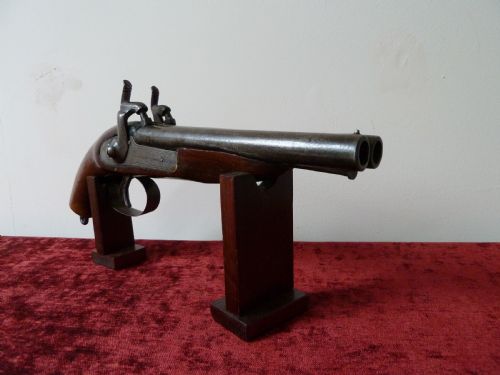
While many early examples discharged a single round, the period saw rapid innovation resulting in double-barrelled designs, pepperpot multi-shot configurations, and sophisticated revolving systems.
Revolvers by makers such as Colt and Beaumont-Adams allowed multiple successive shots without reloading, transforming personal firearm utility during the 1850s and 1860s.