


19th Century Paraffin Lamp
A 19th century paraffin lamp brings period warmth to a room, combining functional illumination with decorative brass, glass, and porcelain work.
19th Century Paraffin Lamp
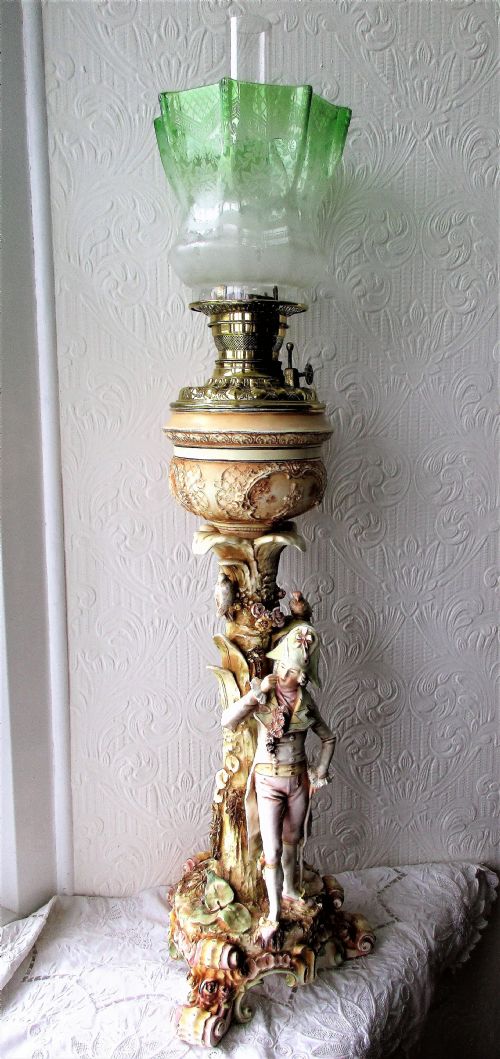
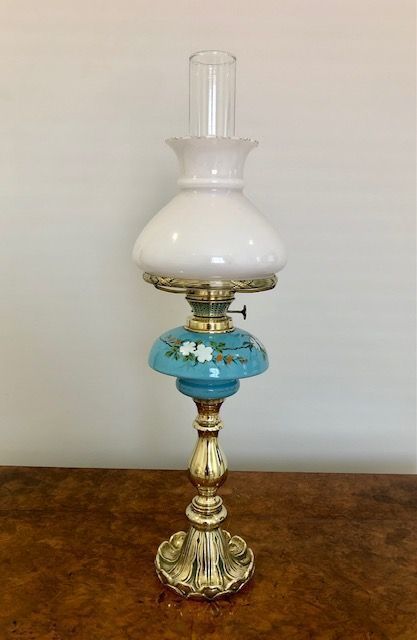
A 19th century paraffin lamp takes the form of an oil-burning table lamp, floor lamp, or peg lamp designed to sit within another vessel. These pieces date across the Victorian era from the mid-nineteenth century through to 1900, originating from British, French, Chinese Export, and German workshops. The versions most commonly met on this page combine brass bases with coloured glass fonts or feature figural porcelain bodies.
Makers and makers' marks occasionally identify specific manufacturing output, such as Wild and Wessel or Meissen porcelain workshops. Styles range from plain brass and Rococo Revival to Chinese Canton Famille Rose and Napoleon III faience. Buyers encounter both single table lights and matched pairs suited for symmetrical placement on sideboards or mantelpieces.
Judging quality and craftsmanship
The sophistication of the casting and the crispness of chased or embossed decoration separate standard utility lamps from finer display pieces. Quality shows in the weight of the brass, the depth of the repoussé work, and the hand-painted detail on porcelain figures or Canton vases. Matched pairs with original ruby or cranberry glass fonts and matching shades represent a higher tier of craftsmanship.
The integrity of the materials, such as heavy bronze mounts, fire-gilt ormolu, and undamaged coloured crystal glass, dictates the desirability of the piece. Standard brass table lights sit at the simpler end of the scale, whereas sculptural figural lamps involving Meissen porcelain or complex ceramic-and-bronze construction sit at the upper end.
Materials documented across these nineteenth-century listings include brass, gilt brass, silver-plated metal, bronze, ormolu, faience, porcelain, and various coloured glass types.
Wild and Wessel·Meissen
The 19th Century Paraffin Lamp Glossary
- Peg lamp
- A small oil lamp fitted with a narrow lower projection designed to drop directly into the socket of a candlestick or base. This clever design allowed existing candle holders to be utilised for oil lighting.
- Repoussé
- A metalworking technique where the artisan hammers the design from the reverse side to form raised decorative reliefs on the front. Brass lamps often utilise this method to create intricate surface patterns.
- Ormolu
- Gilded bronze mounts and decorative elements applied to nineteenth-century furnishings and lighting. The technique gives a rich gold appearance to bronze components.
19th Century Paraffin Lamp: Frequently Asked Questions
How do you use a 19th century paraffin lamp?
These lamps are intended primarily as decorative interior objects today rather than primary light sources. Many retain their original burners and mechanisms, though collectors often display them unlit.
Placing them on side tables or mantels allows the brass, cranberry glass, and porcelain details to catch the natural light of a room.
Were these lamps converted from oil to electricity?
Some pieces retain their original nineteenth-century oil-burning components, while others show later adaptations. Buyers find both untouched survival pieces and those modified for modern domestic use.
Examining the burner assembly reveals whether the original mechanisms remain intact.
How do I identify a Victorian oil lamp?
Victorian examples typically date between 1837 and 1901, spanning styles from classical revival to ornate Rococo and aesthetic movement brassware. Look for heavy brass bases, coloured satin or cranberry glass fonts, and characteristic burner designs.
Markings, registration numbers, or maker names stamped on the metalwork assist with precise dating.
How should I clean a brass and glass lamp?
Gentle dusting with a soft, dry cloth preserves the aged patina on brass and silver-plated surfaces without removing historical character. Glass components can be washed carefully with mild soapy water if detached from the metal frame.
Harsh chemical polishes should be avoided to protect original gilt layers and delicate hand-painted porcelain.