
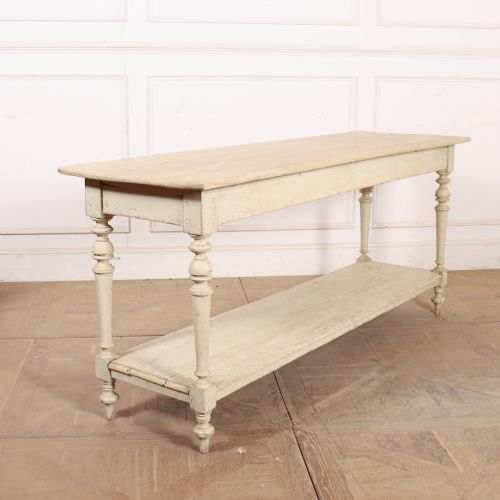
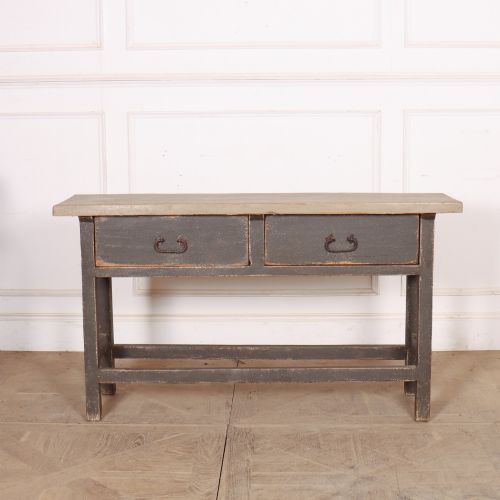
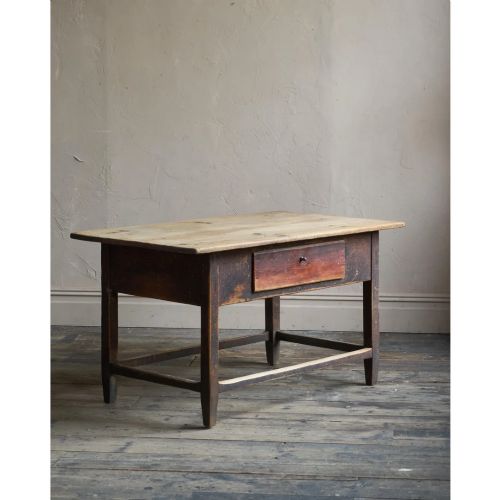
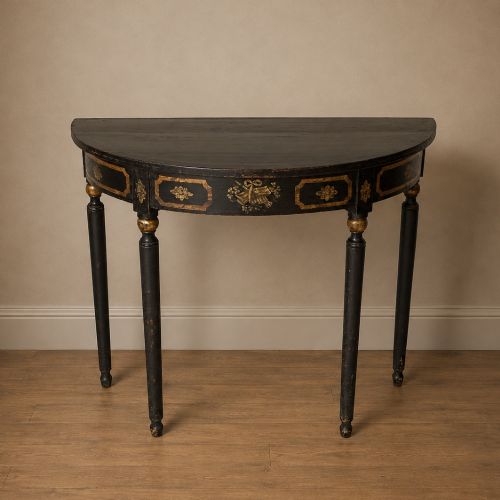

19th Century Painted Console
When you search for a 19th century painted console, you look for a surface that brings colour and architectural character to a hall or living space.
19th Century Painted Console
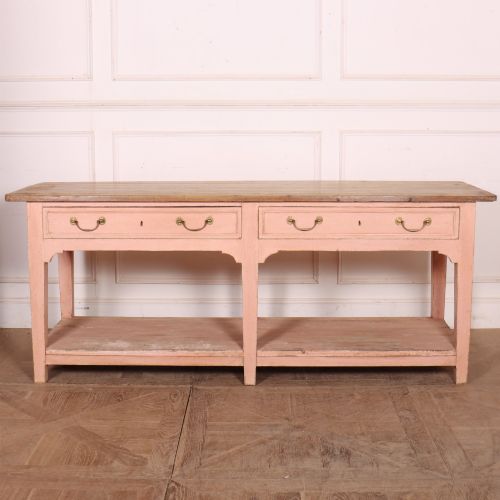
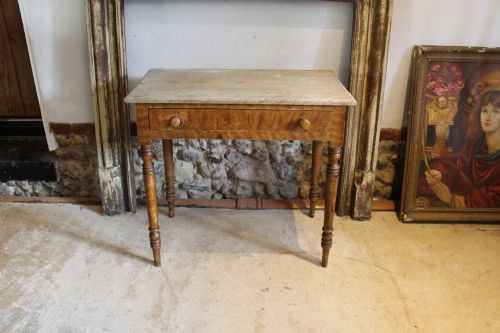
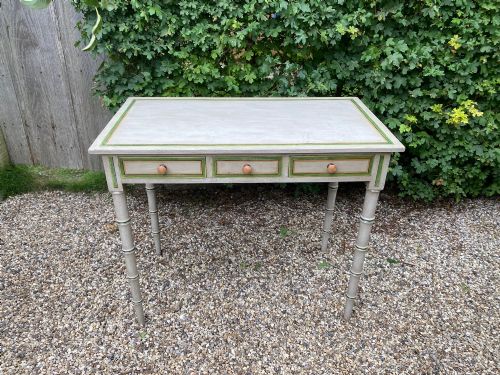
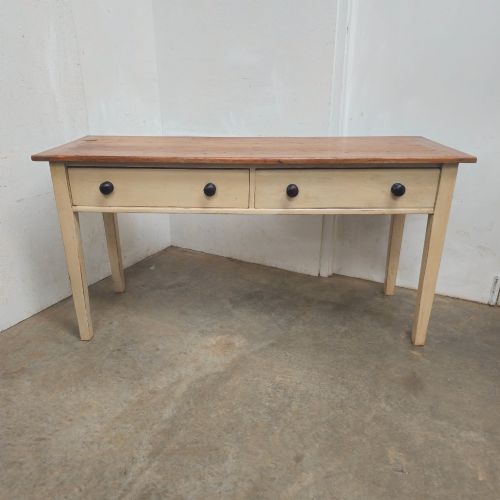
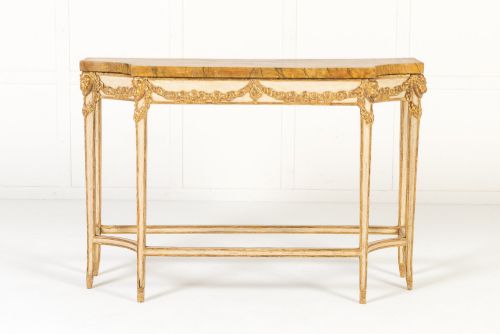
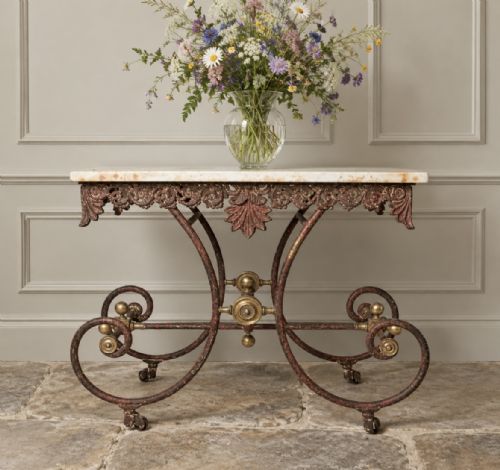
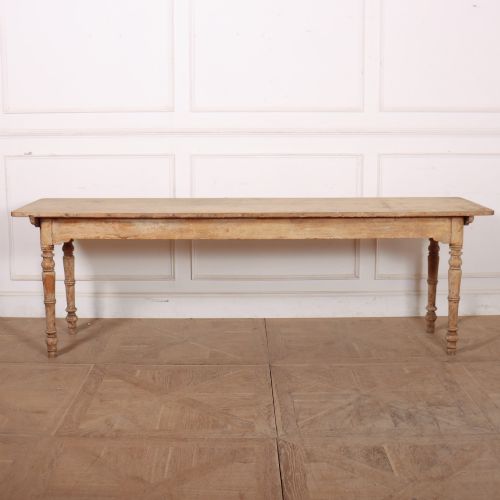
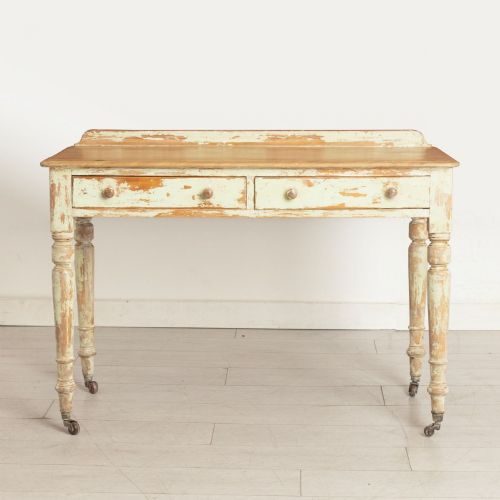
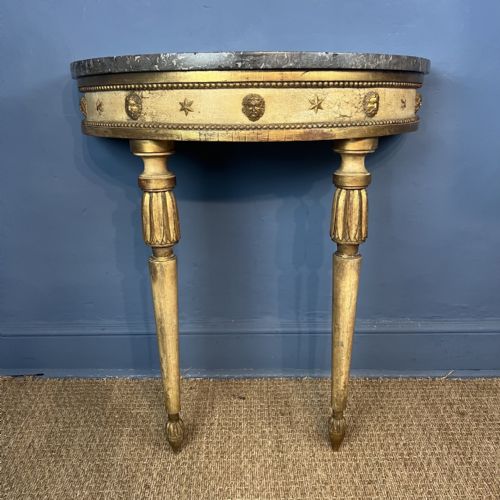
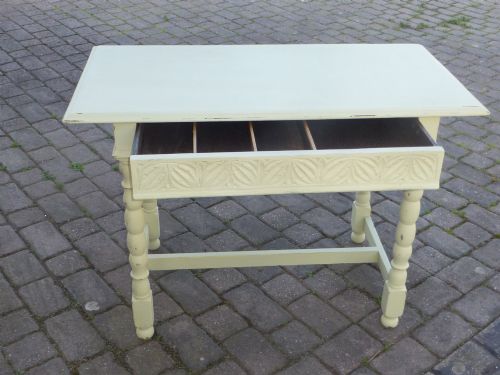
A 19th century painted console typically takes the form of a wall-mounted or freestanding table designed for a hallway, drawing room, or salon. These pieces range from simple pine side tables and rustic farmhouse bases to grand Italian and French tables featuring parcel gilding and marble tops.
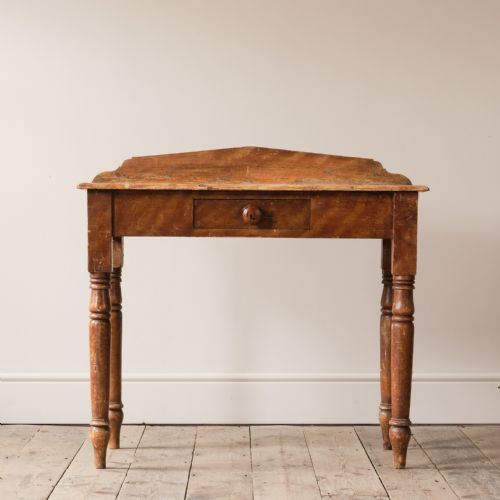
Buyers choose these tables to introduce original decorative surfaces, such as scumble finishes, faux bamboo turnings, or hand-painted geometric details. The diverse styles span from neoclassical restraint to regional rustic charm.
Materials and construction methods
Carpenters and cabinetmakers constructed the underlying carcase using timbers like pine, oak, birch, and satinwood, occasionally carving structural elements from solid wood or gesso. Many examples incorporate heavy marble slabs, including Carrara and breccia varieties, fitted directly to the upper frame.
Surface decoration relied on traditional pigment applications, ranging from flat oil paints and scumble glazes to delicate hand-painted motifs and parcel gilding. Artisans built up these decorative layers over softwood or hardwood substrates, often preserving the original patination beneath subsequent generations of wear.
Listings span multiple regions, including English, Scottish, Welsh, French, Italian, and Swedish workshops.
Distinctions in quality and execution
Quality separates pieces by the integrity of their original surface decoration and the sophistication of their carving. Tables retaining untouched, period paintwork with authentic craquelure command greater attention than those with later or unsympathetic overpainting.
Structural refinement also defines the upper tier, seen in balanced proportions, sophisticated edge moulding, and the integration of high-grade materials like inset marble tops, giltwood accents, or decorative Wedgwood plaques.
The 19th Century Painted Console Glossary
- Console table
- A side table designed to stand against a wall, frequently secured with brackets or supported by front legs. These tables often served decorative display purposes in formal reception rooms.
- Demi-lune
- A half-moon shape used for table tops and frames that sits flush against a wall. This profile allowed furniture makers to save floor space in narrower hallways.
- Scumble
- A translucent or semi-opaque layer of dark paint manipulated over a lighter base colour to simulate wood grain or texture. It creates an aged, mottled finish popular on nineteenth-century country pieces.
19th Century Painted Console: Frequently Asked Questions
Where should I place a console table?
These tables suit narrow entrance halls, living room perimeters, or beneath large wall mirrors where surface space is limited. Their shallow depths allow them to anchor a wall without obstructing foot traffic.
Freestanding continental versions also function effectively as serving surfaces in dining areas or as writing desks in studies.
How do I care for original painted finishes?
Original painted surfaces require gentle dusting with a dry, soft cloth to prevent abrasive particles from scratching the pigment layers. Avoid modern liquid polishes, solvents, or damp cloths that might lift fragile historic paint.
Keep the furniture away from direct sunlight and severe radiator heat to prevent the underlying wood from shrinking and the paint from flaking.
What is a marble top console used for?
Marble top consoles provided a durable, stain-resistant surface for placing heavy decorative objects, vases, or serving items in formal rooms. The stone adds substantial weight, which helps anchor wall-mounted or narrow-legged console bases.
French and Italian interiors frequently utilised white or breccia marble slabs to contrast with painted or gilded wooden frames.
How do I distinguish regional styles?
Swedish and French examples often display lighter cream, grey, or ochre palettes with refined neoclassical carvings or simplified country curves. English and Scottish pieces tend to utilise heavier pine or oak structures with utilitarian potboards or scrubbed wooden tops.
Examining the underlying timber species and the specific formulation of the paint layer reveals the likely country of origin.