




19th Century Painted Armchair
A 19th century painted armchair brings colour and period character to a room through traditional craft and decorative surface finishes.
19th Century Painted Armchair
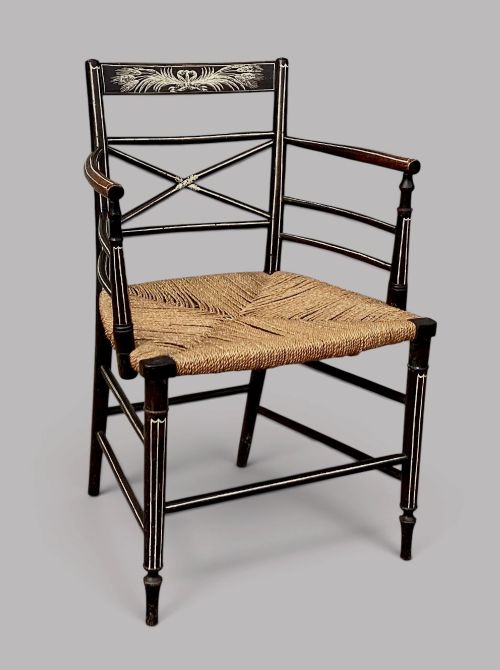
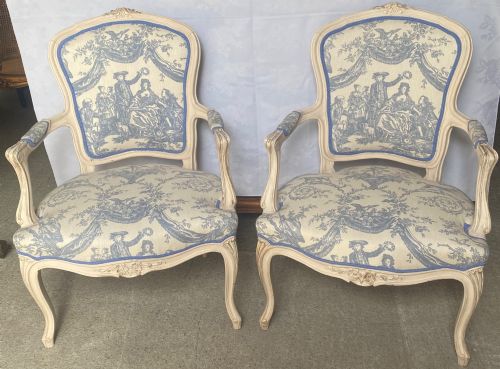
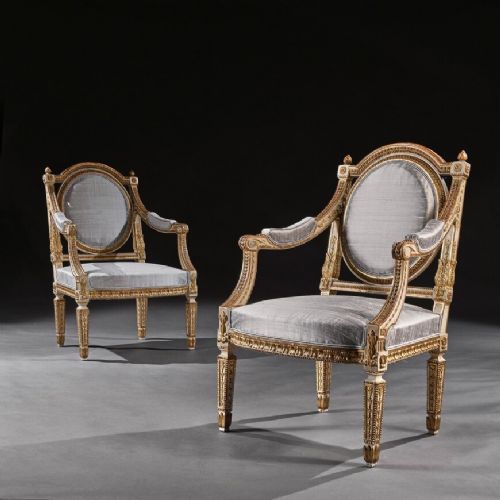
A 19th century painted armchair encompasses a diverse range of seating forms from French salon chairs to Scandinavian country chairs. Buyers frequently encounter French models adhering to Louis XV and Louis XVI revivals, alongside English Regency designs and rustic Swedish country seating.
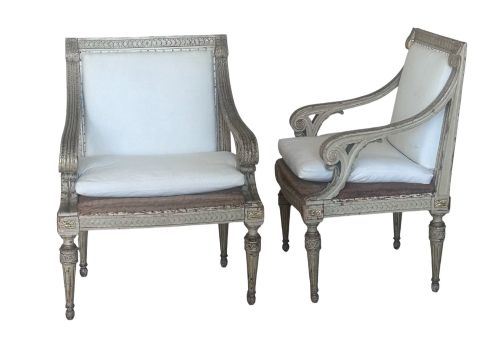
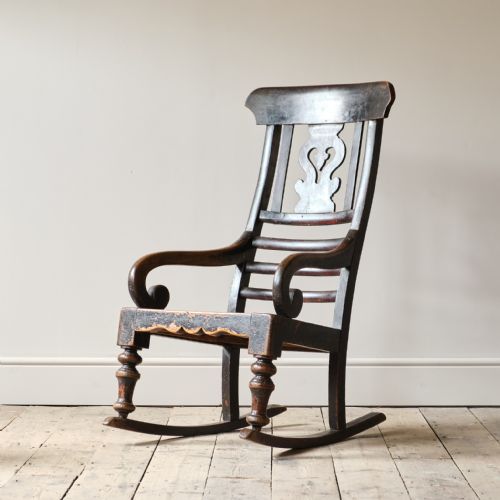
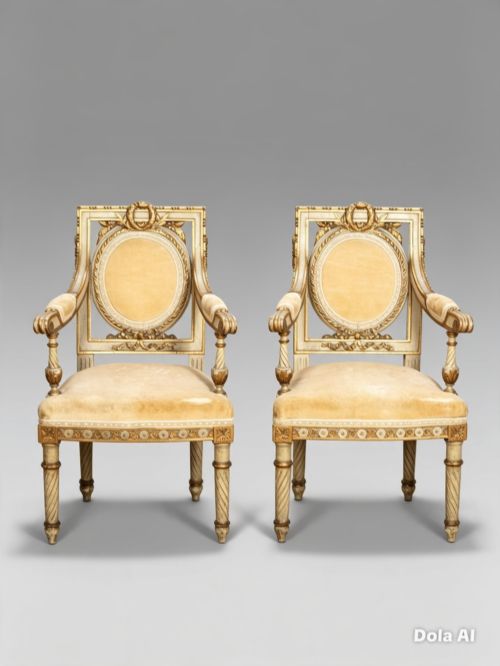
The selection ranges from grand gilt library chairs and bergères to simpler rocking chairs, Windsor chairs, and turned bobbin armchairs. Many pieces survive in pairs, particularly those intended for salons, drawing rooms, and formal parlours.
Makers and designers of the period drew upon historical styles such as Neoclassical, Rococo Revival, and Gothic Revival. These influences manifest in carved show frames, shield backs, and structural details executed in beech and other woods before receiving a painted or parcel gilt finish.
Evaluating the Pieces
Quality rests upon the crispness of the original carving in the wooden frame and the precision of the painted or gilded decoration. Pieces retaining their original surface treatment command greater interest than those subjected to later repainting.
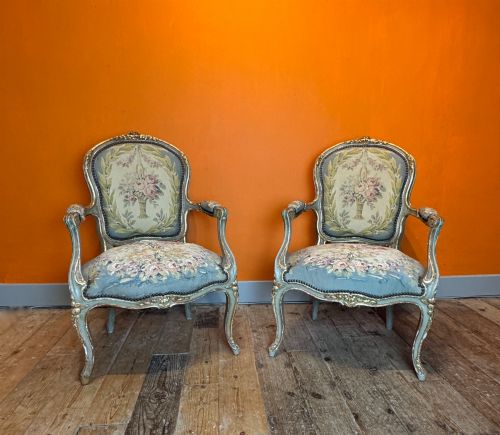
The integrity of the structural joinery and the survival of period upholstery fabrics, such as early needlepoint or tapestry panels, determine the overall execution. Proportion and balance between the show frame and the decorative motifs separate standard output from finer workshop productions.
The inventory includes several pairs of salon chairs and armchairs alongside single rocking chairs and porcelain figurines.
Morris and Co·Liberty of London·Vion et Baury Paris
The 19th Century Painted Armchair Glossary
- Bergère
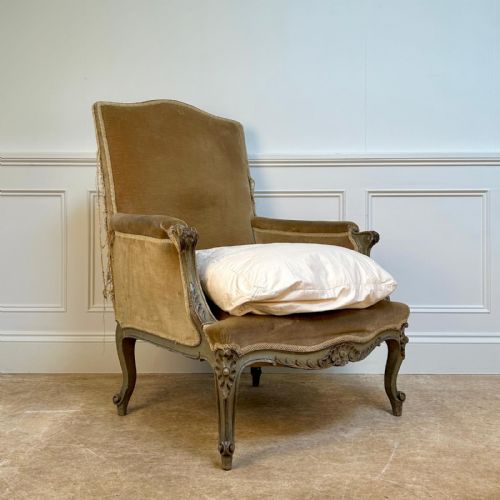
- An enclosed upholstered armchair with wooden sides and a padded back, originating in France. This form provides a deep, comfortable seat often finished with a loose cushion.
- Parcel gilt
- A decorative technique where specific carved elements or mouldings are highlighted with gold leaf against a painted ground. This treatment accentuates the architectural lines of the chair.
- Simulated satinwood
- A painted finish designed to imitate the appearance of expensive figured timber through graining techniques. Artisans applied this to create an illusion of luxury on standard woods.
- Bobbin chair
- A type of seating constructed from turned wooden components resembling reels or spools threaded together. Popular in country and vernacular furniture traditions.
- Dug out chair
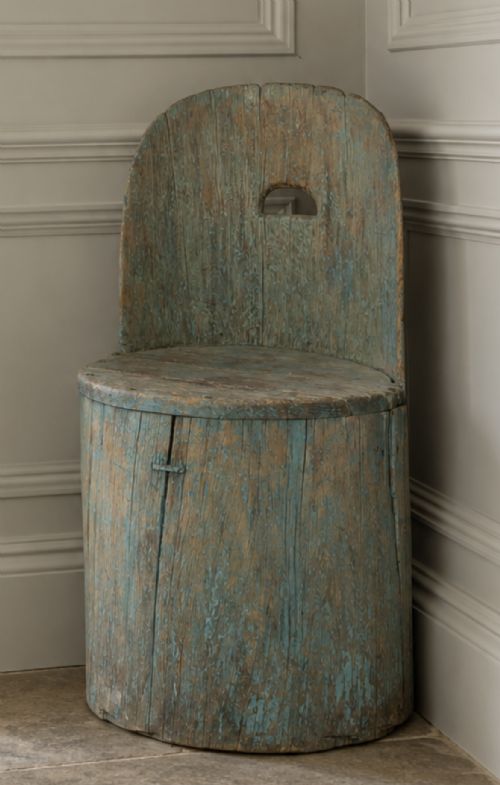
- A primitive form of seating carved directly from a single solid block of wood. These rustic pieces demonstrate heavy construction and early vernacular methods.
19th Century Painted Armchair: Frequently Asked Questions
What is a 19th century painted armchair?
A 19th century painted armchair is a seated piece of furniture constructed from wood with a decorative painted, gilded, or ebonised surface finish. These chairs span various stylistic revivals from French salon models to rustic Scandinavian country seating.
Craftsmen produced them in numerous forms including open armchairs, bergères, rocking chairs, and library chairs. They served both functional and decorative roles in period interiors.
How do I identify French styles?
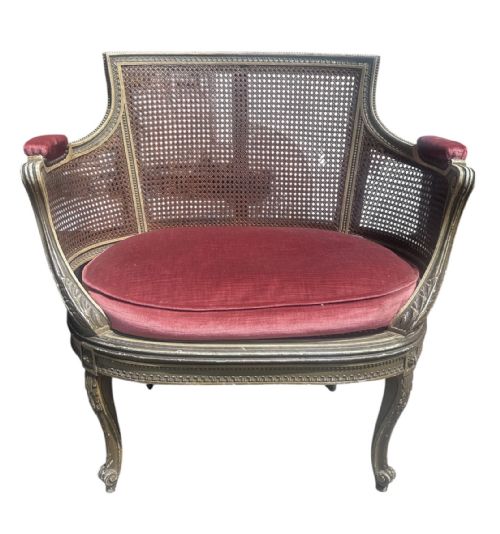
French styles of this period are identified by curved cabriole legs, carved show frames, and symmetrical ornamentation drawn from Louis XV and Louis XVI designs. Fauteuils and salon chairs often exhibit refined carving on the crest rail and arm supports.
Upholstery frequently includes needlepoint panels or tapestry, reflecting formal European traditions. The woodwork may feature gilt highlights or traditional painted finishes.
What is country painted furniture?
Country painted furniture comprises vernacular pieces made outside urban workshops, including Swedish thrones, Windsor chairs, and turned bobbin designs. These items prioritise sturdy construction and practical utility using local timbers like beech.
Surfaces often display original paintwork, rustic patination, and simpler seating materials such as rush or solid wood. They bring a relaxed, unpretentious aesthetic to domestic spaces.
How should I care for painted surfaces?
Caring for painted and gilded surfaces requires gentle dusting with a soft, dry cloth without chemical polishes or abrasive cleaners. Keeping the furniture away from direct sunlight and moisture preserves the original paint and prevents wood movement.
Upholstery should be vacuumed lightly using a low suction attachment with a brush guard. Regular, careful maintenance protects the historical integrity of the finish.