



19th Century Oak Press
A 19th century oak press brings substantial storage and honest vernacular craftsmanship to a room.
19th Century Oak Press
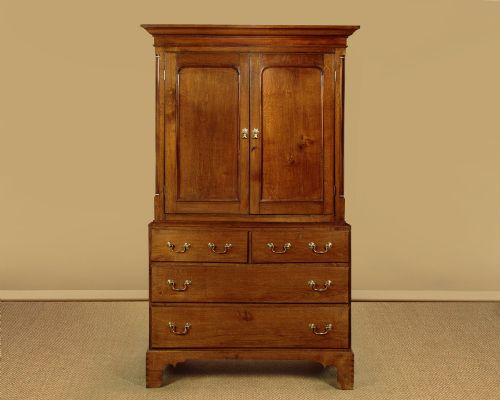
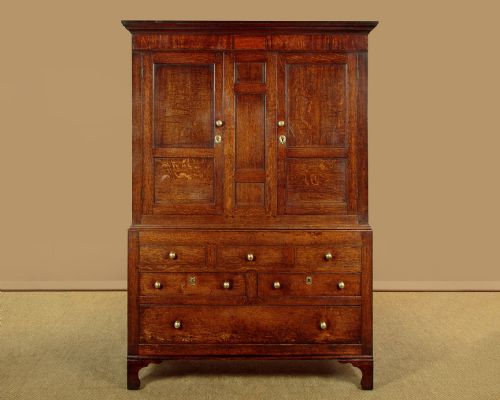
A 19th century oak press comprises heavy timber storage furniture designed for textiles, household provisions, or books, emerging across regional workshops in Britain and France during the Georgian and Victorian eras. These pieces range from tall linen presses with sliding trays above drawers to regional Welsh country cupboards and compactum wardrobes.
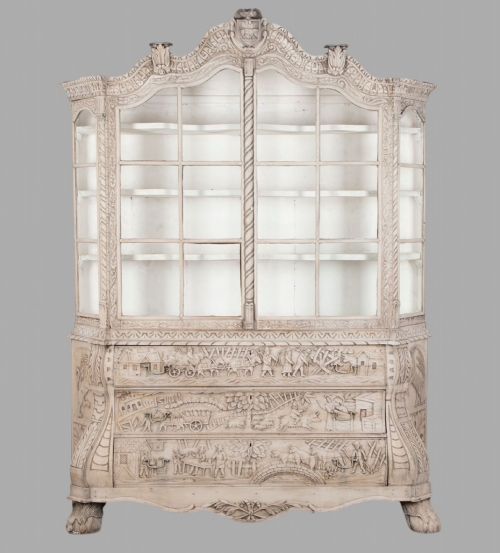
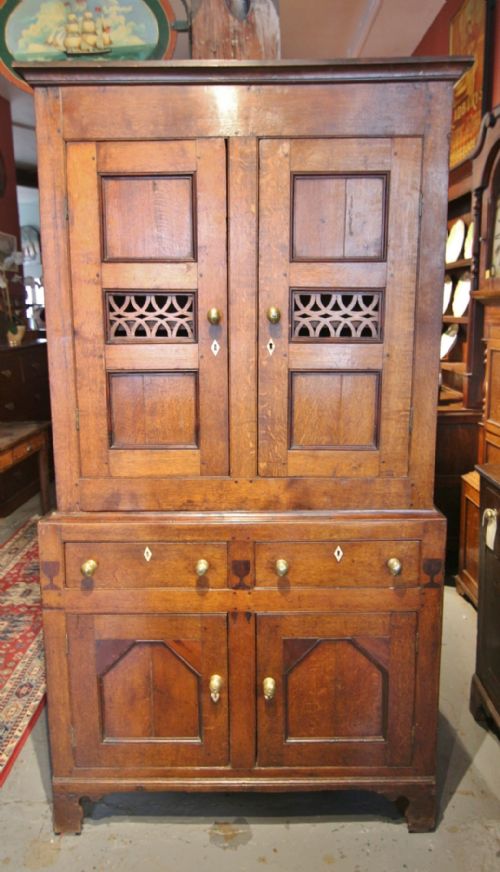
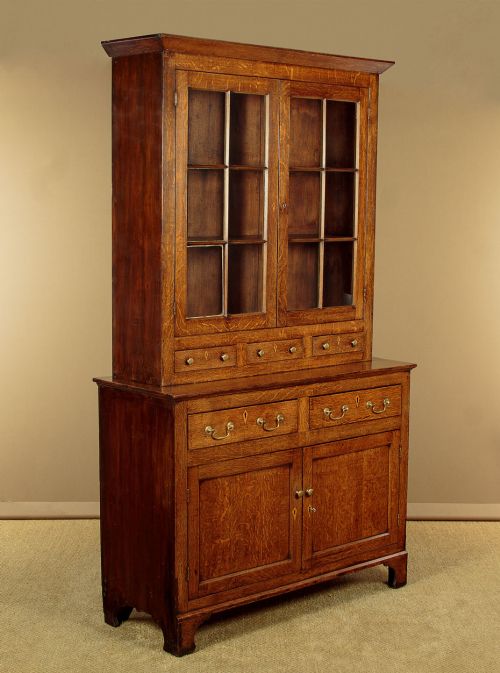
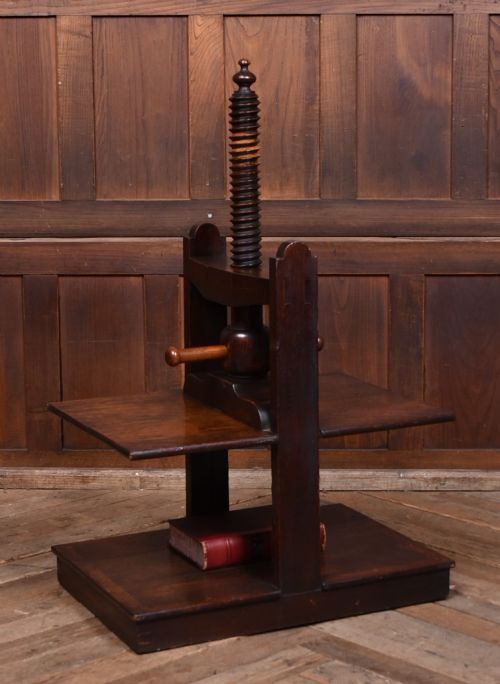
The selection here frequently highlights Welsh vernacular forms such as the cwpwrdd gwydr, deuddarn, and food cupboards alongside French armoires and specialised book or cheese presses. Buyers encounter multi-stage constructions, panelled doors, and carved details that reflect local domestic requirements of the period.
Regional variations dominate the stock, showing distinct construction methods from rural Welsh makers alongside continental European influences such as Dutch rococo revival or French provincial styling. The primary function remains domestic storage, adapted through centuries for modern interiors seeking architectural presence.
Materials and construction methods
Solid oak serves as the fundamental structural material, often paired with secondary woods like pine for internal shelving, drawer linings, and backboards. Artisans utilised traditional mortise and tenon joinery to construct robust carcasses capable of supporting heavy loads of linen and provisions.
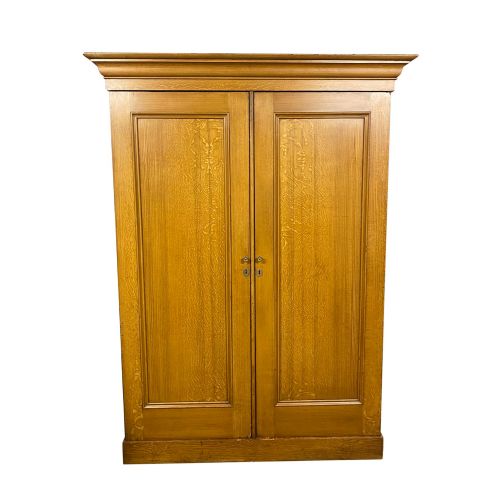
Surface treatments vary from polished natural grain and Pollard oak veneers to scumble faux paintwork, applied to mimic finer timbers or protect the underlying softwood. Iron hinges, brass handles, and glass panels integrate into the heavy framework depending on whether the piece functions as a display cabinet, wardrobe, or utility press.
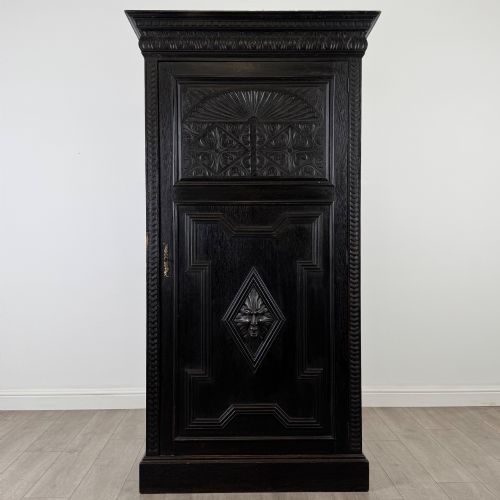
Listings feature 19th century oak presses alongside related forms like Gothic revival display stands, housekeeper's cupboards, and specialised book or cheese presses.
What separates grades of quality
Quality rests in the architectural integrity of the timber selection, such as the use of figured oak or Pollard oak versus plain utility boards. Superior examples maintain original panelled doors, brass hardware, and uncompromised internal configurations like sliding linen trays.
The articulation of carving and regional joinery distinguishes standard workshop production from ambitious vernacular pieces or revival styles. Well-preserved original surface finishes, whether unpolished wax or scumble paint, carry greater integrity than stripped and heavily refinished surfaces.
The 19th Century Oak Press Glossary
- Linen Press
- A large two-part cupboard featuring sliding trays or shelves in the upper section for storing folded textiles, set above a chest of drawers.
- Deuddarn
- A traditional Welsh two-stage cupboard characterised by enclosed upper and lower compartments, frequently bearing panelled doors and regional decorative carving.
- Cwpwrdd Gwydr
- A Welsh term for a glazed cupboard or display cabinet, designed to showcase household china and books behind glass panels.
- Scumble Paint
- A decorative translucent paint technique applied over a base coat to imitate the grain pattern of more expensive timber such as oak.
- Compactum Wardrobe
- A fitted wardrobe divided internally into dedicated compartments for hanging clothes, shelves, and drawers to maximise storage efficiency.
19th Century Oak Press: Frequently Asked Questions
What is a 19th century oak press used for?
These pieces functioned primarily for storing household linens, woollens, and dried provisions within domestic settings. Modern homes utilise them as substantial wardrobes, linen closets, or display cabinets for books and kitchenware.
Their deep internal shelves and drawer configurations provide versatile storage capacity that suits contemporary bedrooms and living spaces alike.
How do I tell a Welsh press from a French one?
Welsh vernacular pieces typically exhibit sturdy, unpretentious proportions built from local oak, often featuring distinctive panelled construction and regional cupboard forms like the deuddarn. French armoires and presses tend to display softer provincial styling with subtle carved motifs or painted finishes.
Examining the secondary woods inside, such as pine or chestnut, and the style of hinges often clarifies the geographic origin of the workshop.
Did these pieces always have linen trays?
Many traditional linen presses contained internal sliding trays or pull-out shelves designed to keep folded textiles flat and organised. Some examples were later converted by removing the trays to insert hanging rails for modern wardrobe use.
Original internal configurations remain valued by collectors who appreciate the historical functionality of the furniture.
How should I care for an antique oak press?
Maintain a stable indoor environment away from direct heat sources and extreme humidity fluctuations to prevent the solid oak panels from splitting. Apply a traditional beeswax polish occasionally to nourish the timber grain and preserve the surface sheen.
Avoid using modern chemical sprays that can strip or soften historic wax and oil finishes.