


19th Century Milk Pitcher
These 19th century milk pitcher examples bring functional charm to the table, offering tactile earthenware, porcelain, and glass vessels from the Georgian and Victorian eras.
19th Century Milk Pitcher
A 19th century milk pitcher serves as a practical vessel for the table, appearing in forms ranging from small creamers to larger jugs designed for milk and water. When exploring this selection, buyers encounter diverse regional earthenware, transfer-printed pottery, and hand-decorated porcelain made across the Georgian and Victorian periods.
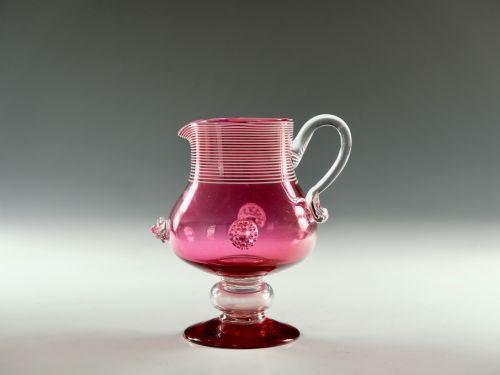
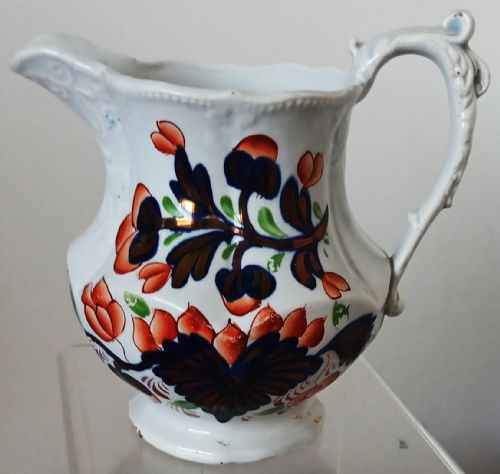
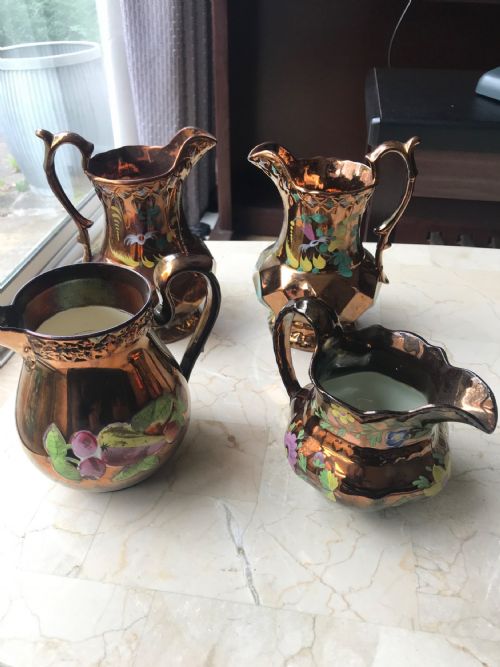
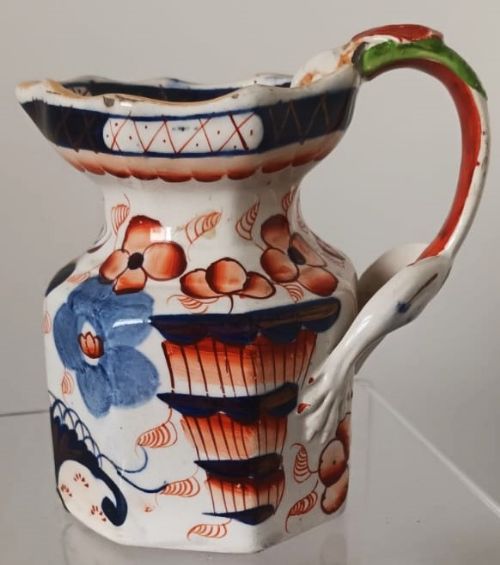
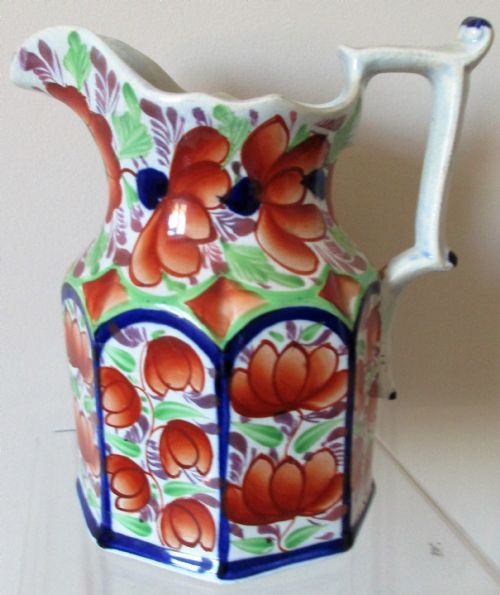
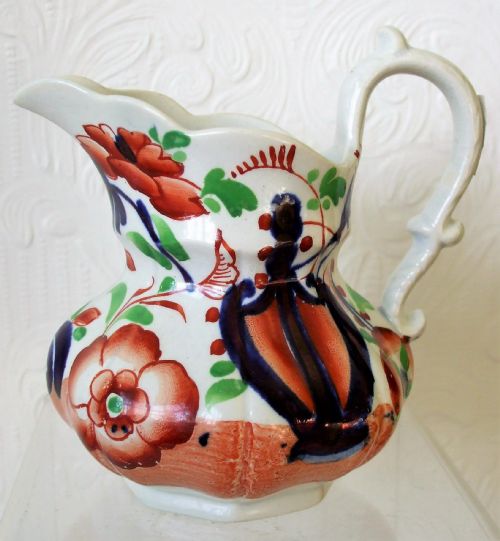
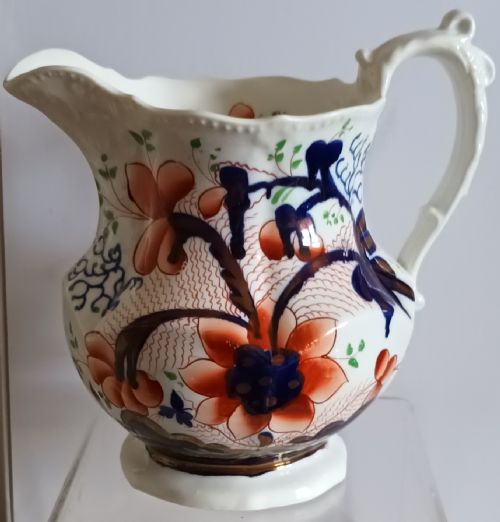
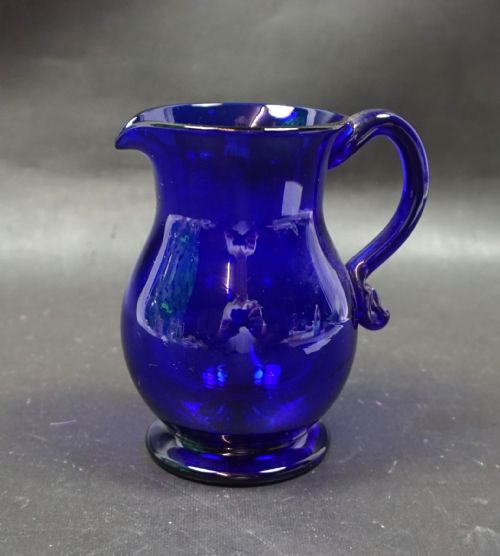
The most common versions on this page include Gaudy Welsh pottery jugs featuring colourful patterns like Grape, Pagoda, and Gwent, alongside Staffordshire copper lustre pieces and English folk art items. Alongside earthenware, specimens in cranberry glass, Bristol blue glass, and solid silver expand the forms available from makers active through the eighteen-hundreds.
Materials and methods
Potters shaped these pieces using earthenware, ceramic, and porcelain bodies, often applying tin or lead glazes to seal the porous clay. Decoration relied on hand-painted enamel pigments, transfer printing in distinct patterns, and metallic finishes such as copper lustre applied to create a reflective surface.
Glass vessels required blowing techniques, utilising minerals to achieve deep cranberry and Bristol blue tones. Silver items involved smithing and hallmarking, while ceramic pieces frequently combined moulded details, such as hound handles and animal forms, with gilt accents.
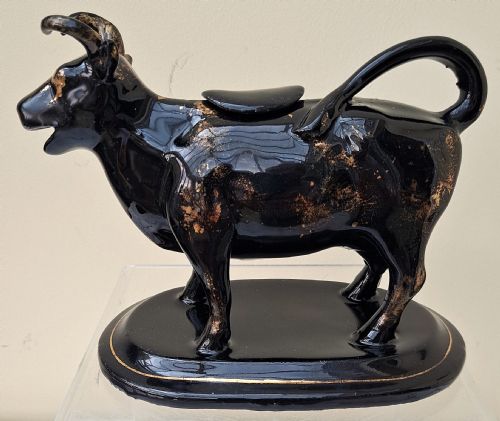
Cow creamers transform morning tea into a whimsical experience by requiring you to pour milk directly from a bovine's mouth.
Quality factors in period jugs
Quality rests upon the crispness of the moulding and the skill evident in hand-painted or transfer-printed decoration. Pieces with well-defined details, vibrant enamel colours, and intact gilding represent the higher tier of production.
The sophistication of the form, such as specialised shapes like pouch jugs or sculptural cow creamers, distinguishes standard domestic output from finer examples. Preservation of the glaze and minimal wear to surface decoration also mark the better-surviving items.
Phillips and Bagster·Robert Hennell·Meissen·Copeland Spode·Rockingham
The 19th Century Milk Pitcher Glossary
- Copper lustre
- A pottery finish incorporating a thin layer of copper metallic glaze that produces a reflective, coppery sheen. This technique was popular in nineteenth-century Staffordshire production.
- Gaudy Welsh
- A style of brightly coloured pottery featuring cobalt blue, iron-red, copper lustre, and green, typically produced in the Welsh border potteries for domestic use. Patterns often include botanical and architectural motifs.
- Pratt-ware
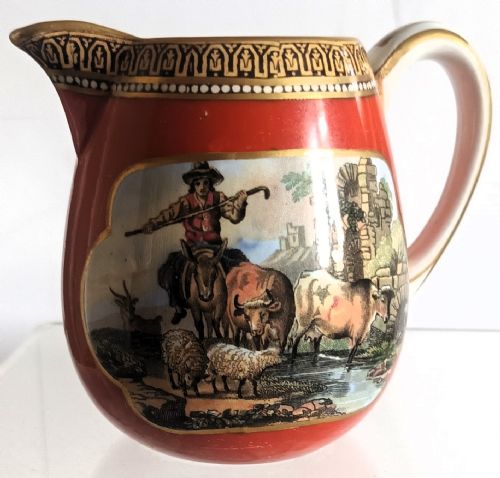
- Earthenware decorated with low-relief moulding and specific underglaze colours, notably blue, ochre, brown, and green. It flourished during the late eighteenth and early nineteenth centuries.
- Cow creamer
- A milk jug modelled in the shape of a cow, often with a lid on the back and the tail forming the handle. These humorous pieces date back to Georgian and Victorian Staffordshire workshops.
- Jackfield
- A type of glossy black earthenware named after the Shropshire pottery village. These pieces feature dark lead glazes, sometimes highlighted with gold decoration.
19th Century Milk Pitcher: Frequently Asked Questions
What is a 19th century milk pitcher?
A 19th century milk pitcher is a domestic ceramic, glass, or silver vessel used for holding and pouring milk or cream at the table. These items encompass regional earthenware, Staffordshire lustre, and porcelain jugs.
They reflect the domestic habits and ceramic manufacturing techniques of the Georgian and Victorian eras, combining everyday utility with decorative painted or moulded surfaces.
How do I date a milk pitcher?
Dating relies on identifying material composition, stylistic traits like Rococo Revival or Regency forms, and any visible factory marks or silver hallmarks. Ceramic bodies and glazing styles change noticeably across the decades from eighteen hundred to nineteen hundred.
Comparing decorative patterns, such as named Gaudy Welsh motifs, helps narrow down the period of manufacture when formal makers' marks are absent.
Were these pitchers used daily?
Most of these vessels were produced for functional daily use in homes, serving cream and milk alongside tea and coffee. Their durable earthenware and porcelain construction made them suitable for regular service on the dining table.
Over time, many transitioned from utilitarian kitchenware to decorative display items collected for their regional patterns and hand-painted details.
How should I clean my antique jug?
Antique jugs require gentle hand washing using lukewarm water and mild soap to protect fragile glazes and hand-painted enamels. A soft cloth helps remove dust without risking abrasion to the ceramic or glass surface.
Harsh chemical cleaners, dishwashers, and abrasive scrubbing pads must be avoided entirely to preserve the original finish and any delicate gilding.