



19th Century Military Painting
A 19th century military painting records officers, campaigns and battles through the direct observation of contemporary artists or later historical reconstructions.
19th Century Military Painting
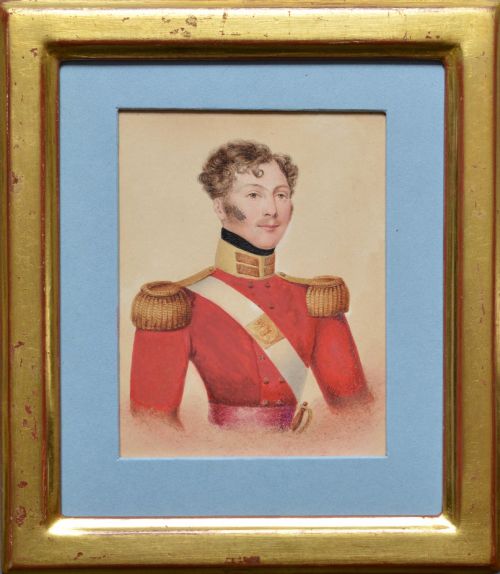
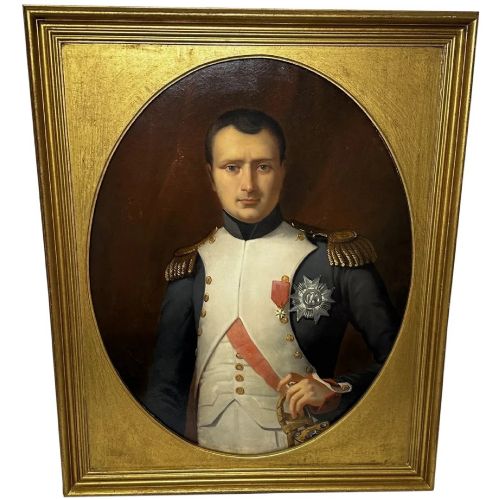
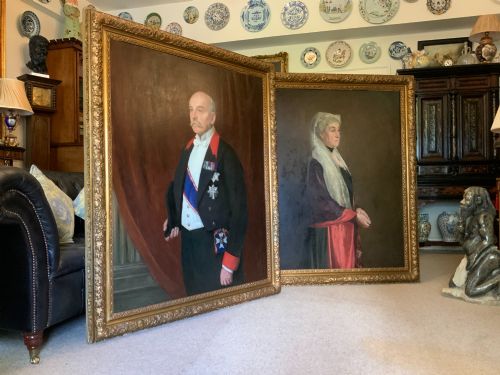
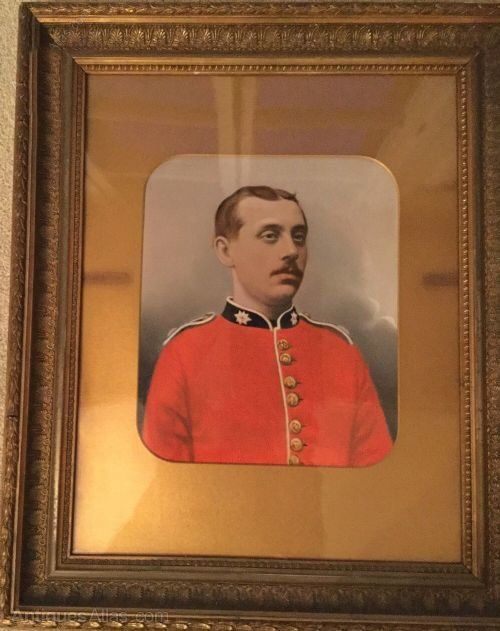
A 19th century military painting encompasses framed works that record the likenesses of officers, regiments and historical campaigns. These pieces document figures such as hussars, red coat officers and generals in service across international stations.
The selection on this page relies primarily on works executed in oil on canvas and delicate watercolours on paper. Portraits of individual soldiers and cavalrymen appear alongside larger narrative battle scenes and campaign depictions.
Materials and techniques
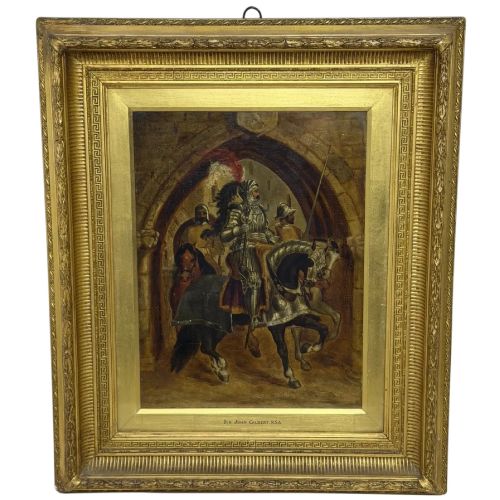
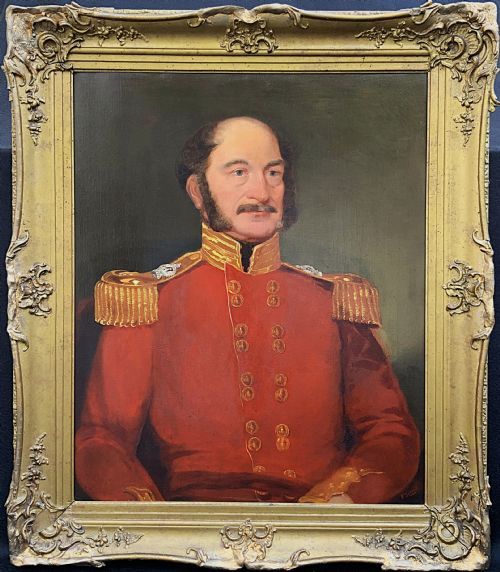
Artists of the period utilised oil paint on canvas or prepared wood panels to build rich portraits and detailed battle compositions. Pigments were applied to capture the precise scarlet uniforms, gold braid and dark accoutrements of specific regiments.
Watercolour on paper remained a favoured medium for field sketches and finished military watercolours alike. These works often received protection behind glass within wooden or giltwood frames.
Several watercolours thoughtfully record soldiers and sailors supporting their wooden legs with admirable composure.
Separating the ordinary from the exceptional
Quality rests upon the artist's command of anatomy, uniform detail and the psychological weight given to the sitter or the chaos of the battlefield. Works executed by listed artists or academic painters display a superior grasp of perspective and historical accuracy.
Framing and preservation dictate much of a painting's visual impact over time. Retaining the original giltwood frame or maintaining the stability of the canvas without excessive restoration elevates the standing of the piece.
Paul Leon Jazet·Ernest Crofts·Francis Russell Flint·John A. Houston·Frank Dadd
The 19th Century Military Painting Glossary
- Watercolour
- A paint consisting of colour suspended in a water-soluble vehicle, typically applied to paper for detailed military sketches and finished portraits.
- Oil on Canvas
- A painting medium utilising pigments mixed with a drying oil, stretched across a wooden frame to create durable portraits and battle scenes.
- Giltwood
- Wood carved and coated with a thin layer of gold leaf, frequently utilised for decorative 19th century picture frames.
- Hussar
- A member of a European light cavalry unit originating in the 15th century, identifiable in 19th century art by distinctive braided jackets and pelisses.
- Reverse Glass
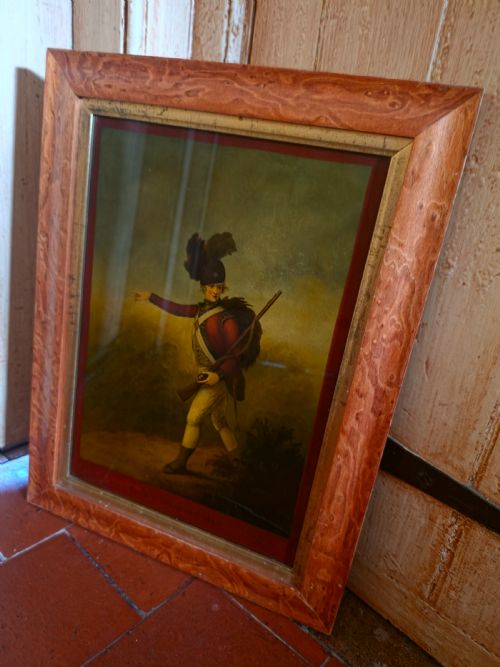
- A technique where the painting is applied directly to the rear of a glass panel so the image is viewed through the front.
19th Century Military Painting: Frequently Asked Questions
How do I identify a genuine period piece?
Examine the materials, pigments and framing methods against known 19th century standards. Age-related craquelure in oil paints and period paper discoloration offer reliable indicators.
Inspect the stretcher bars behind canvases and any inscriptions left by artists or previous owners on the reverse.
Were these painted from life?
Many portraits were painted from direct sittings with officers or commissioned shortly after specific campaigns. Battle scenes often combined eyewitness sketches with subsequent studio reconstructions.
Artists frequently travelled with regiments or relied on official accounts to maintain uniform accuracy.
How should I display these paintings?
Hang oil paintings and watercolours away from direct sunlight and damp environments to protect the pigments and paper. Maintaining stable indoor temperatures prevents warping in wooden frames and canvas degradation.
Ensure wall fixings safely support the weight of heavy giltwood frames.
What do uniform details tell us?
Regimental facings, badges and headwear reveal the exact unit, rank and service period of the depicted soldier. Researching these insignia helps date the work and identify historical contexts.
Changes in military dress regulations provide precise chronological markers for undated portraits.