




19th Century Military Desk
A 19th century military desk brings robust portability and ingenious storage into a modern interior.
19th Century Military Desk
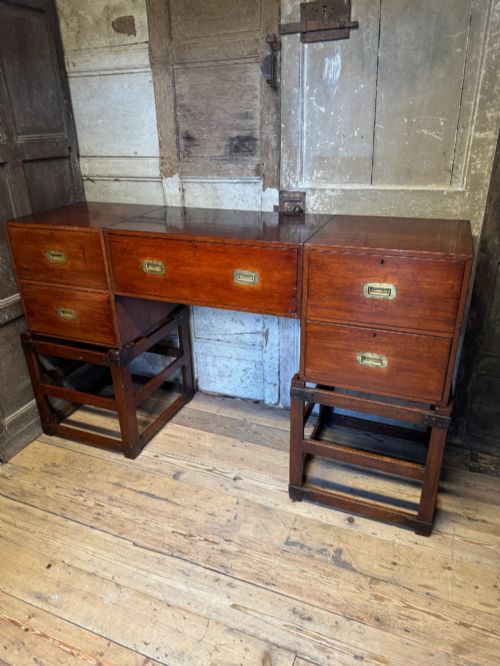
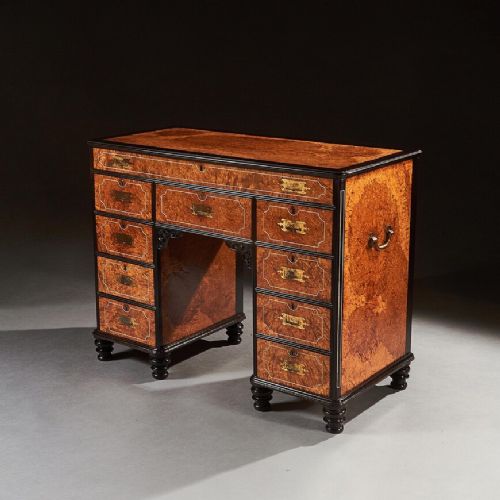
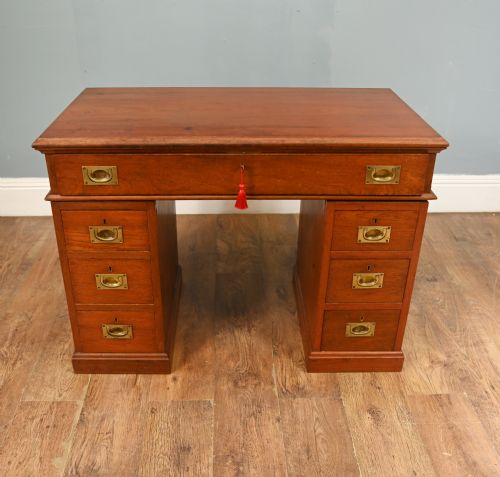
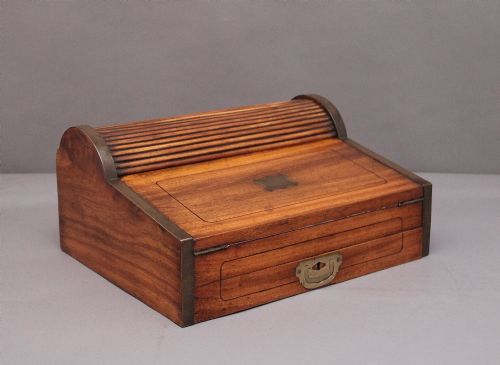
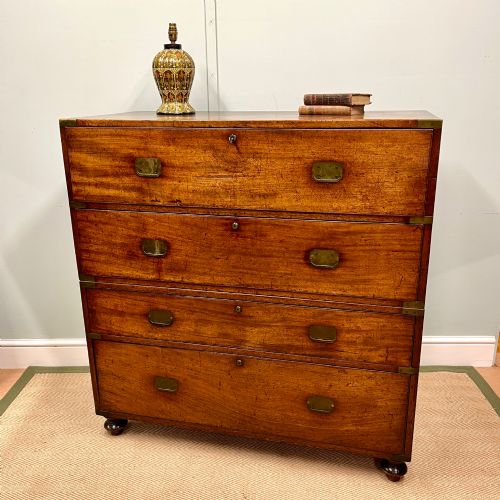
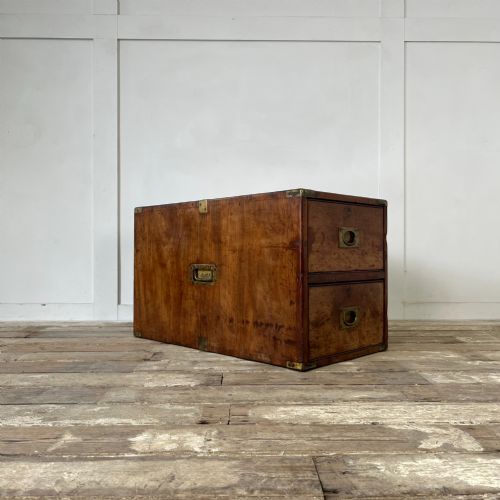
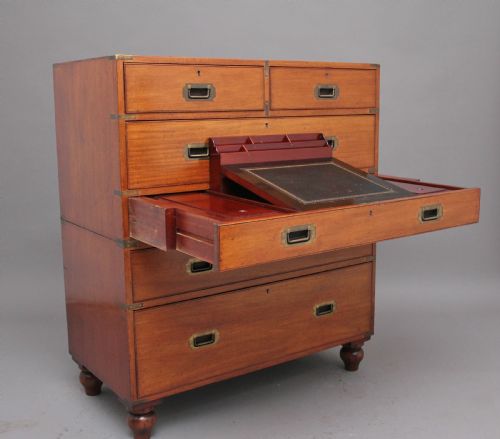
A 19th century military desk encompasses compact writing furniture designed for officers on active service, including folding desks, writing slopes and fitted secretaire chests. These pieces typically divide into sections for transport, fitted with flush brass handles and protective corner brackets to withstand rugged travel.
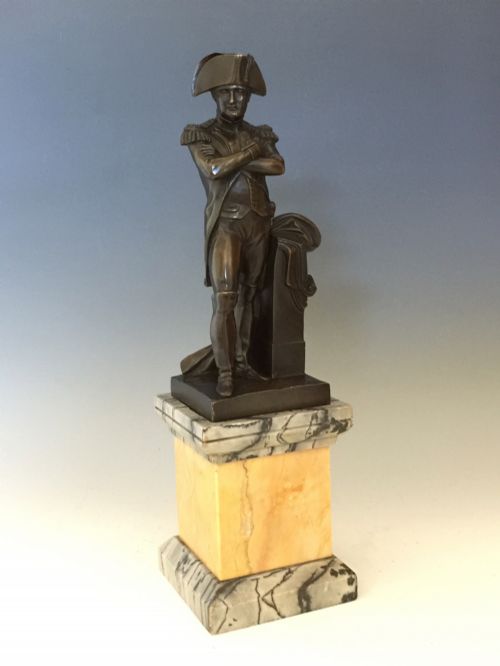
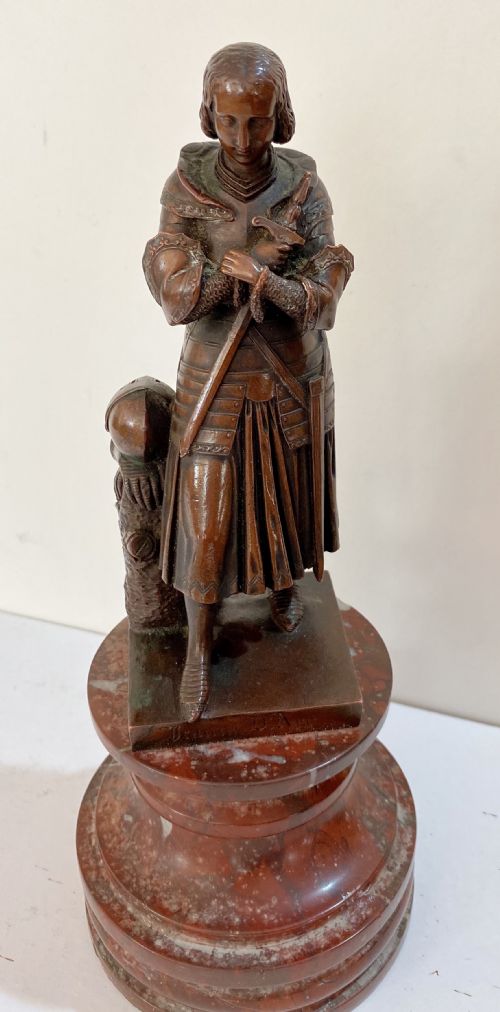
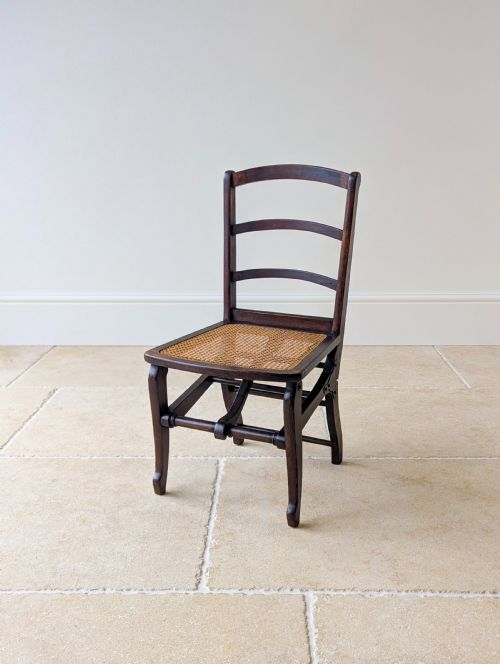
The most common iterations on this page are mahogany and camphor wood secretaire chests, alongside portable writing slopes with internal compartments. Alongside these structural desks appear occasional bronze sculptures, French campaign items and folding chairs that share the utilitarian aesthetic.
Originating from British, French and Anglo-Indian contexts, these pieces reflect the practical demands of nineteenth-century military campaigns. Their enduring appeal lies in modular construction and clever internal mechanisms suited to organised workspaces.
Materials and Construction
Cabinet makers utilised dense, stable timbers such as mahogany, camphor wood, teak and padouk to resist warping in fluctuating climates. These woods were often polished to a deep lustre, highlighting natural grain patterns while maintaining structural resilience.
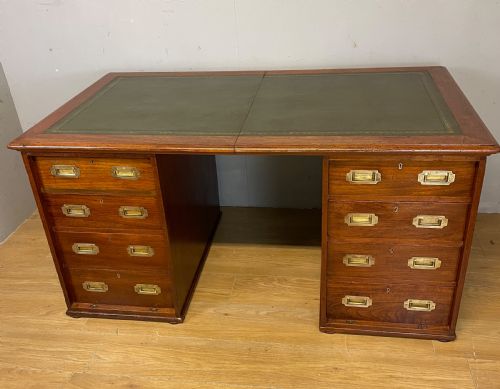
Metal hardware played a crucial structural role, with brass corners, straps and flush-fitting pull handles countersunk into the timber to prevent snagging during transit. Leather writing surfaces, sometimes tooled or inset, provided a durable medium for correspondence and paperwork.
Internal engineering defined these items, incorporating secret drawers, fold-out writing surfaces and removable legs designed for rapid packing. Dovetail joints and secure locking mechanisms ensured that portable components remained stable during movement.
Evaluating Craftsmanship
Quality in a 19th century military desk rests on the precision of its dismantling mechanism and the tightness of its joints. Superior examples maintain structural integrity across separable sections without wobble or misalignment.
The grade of timber selection and the integration of brass mounts distinguish finer pieces from standard utilitarian output. Hand-cut dovetailing and sophisticated internal compartments with functioning secret drawers indicate superior workshop origin.
James Pradier
The 19th Century Military Desk Glossary
- Secretaire chest
- A chest of drawers featuring a dedicated fall-front top drawer that opens to reveal a fitted writing interior with pigeonholes and small drawers.
- Campaign furniture
- Modular furnishings engineered for easy disassembly and transport by officers during military campaigns.
- Writing slope
- A portable box with a hinged, slanted lid that folds flat to provide a writing surface and internal stationery storage.
- Flush mount
- Hardware such as a handle or bracket countersunk level with the timber surface so it creates no protrusion.
- Dovetail joint
- A traditional interlocking woodworking joint prized for tensile strength and resistance to being pulled apart.
19th Century Military Desk: Frequently Asked Questions
What is a 19th century military desk?
A 19th century military desk is a portable piece of campaign furniture designed for officers on the move. These items divide into sections or fold flat for transport.
They combine practical storage compartments with durable timbers like mahogany and camphor wood, reinforced with brass corners and flush handles.
How were these desks used?
Officers utilised these pieces in campaign tents and temporary quarters to write dispatches and manage official documents. The internal compartments kept stationery and ink secure during travel.
Many incorporate secret drawers for valuables and fold-out surfaces to maximise limited workspace.
How do I style a campaign desk at home?
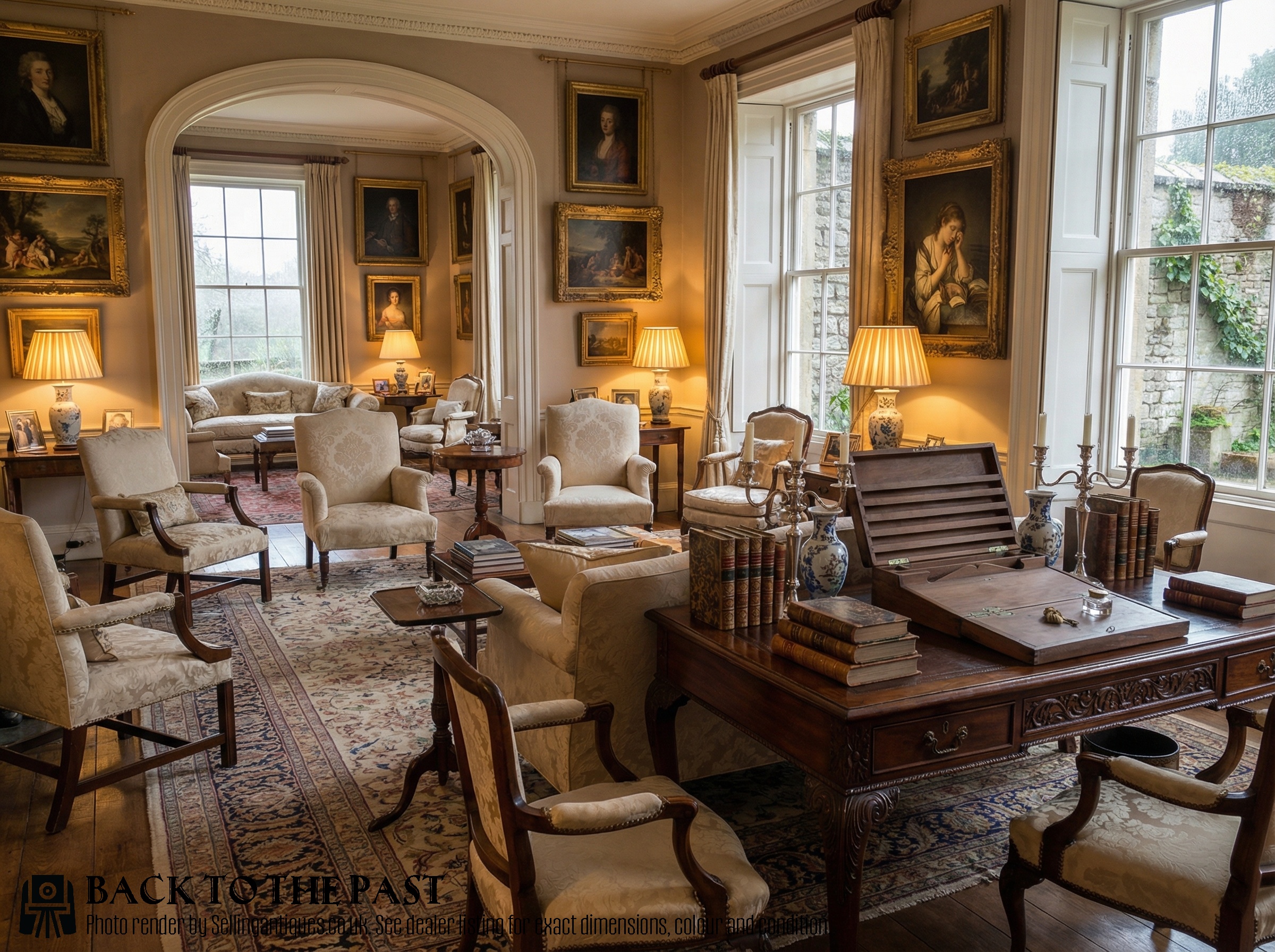
A campaign desk works well as a compact writing station in a study, bedroom or living room. Its warm timber tones and brass details pair naturally with both traditional and contemporary interiors.
Allow enough clearance around the piece to appreciate its brass mounts and modular construction without crowding the room.
How do I identify a Victorian campaign piece?
Look for structural markers such as separable sections, recessed brass handles and protective corner brackets. Timbers like camphor wood, teak and mahogany are standard indicators of period manufacture.
Internal fitted drawers and secret compartments further confirm the intended portable function of the piece.