
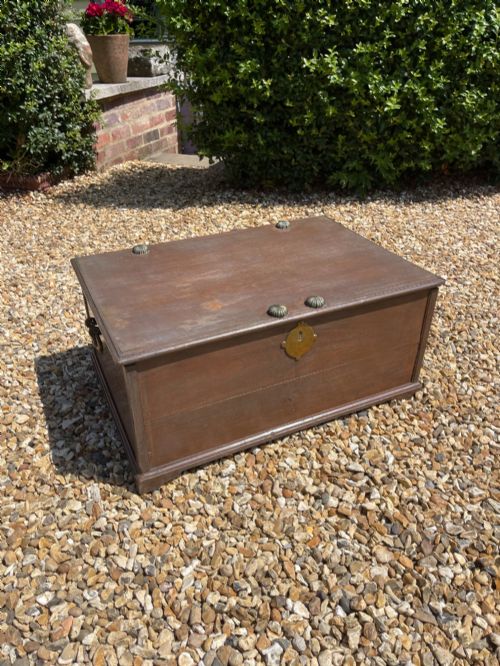


Anglo Indian Teak Box
An anglo indian teak box brings dense tropical timber and disciplined metalwork together, built for travel across distant colonies.
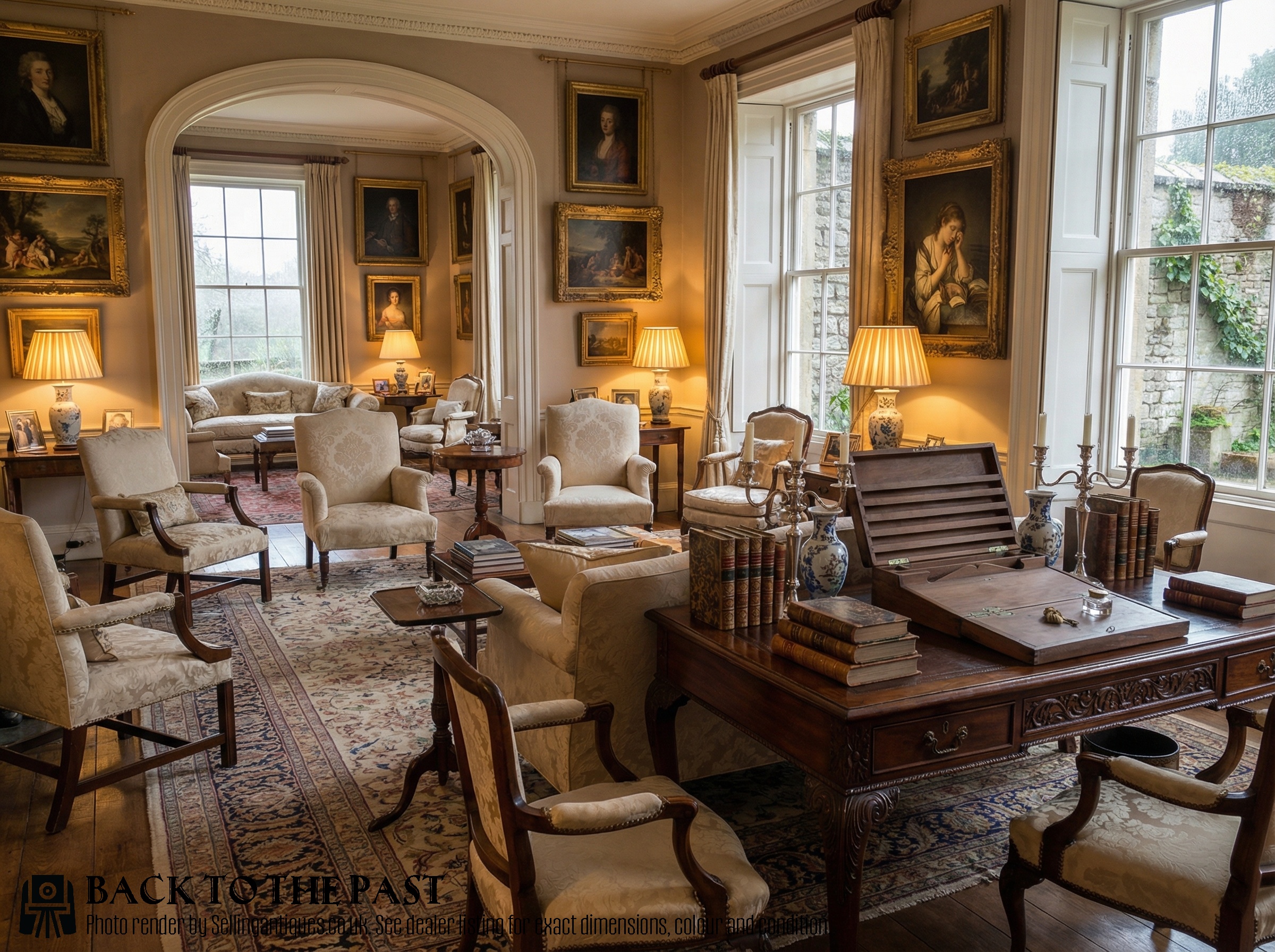
Anglo Indian Teak Box
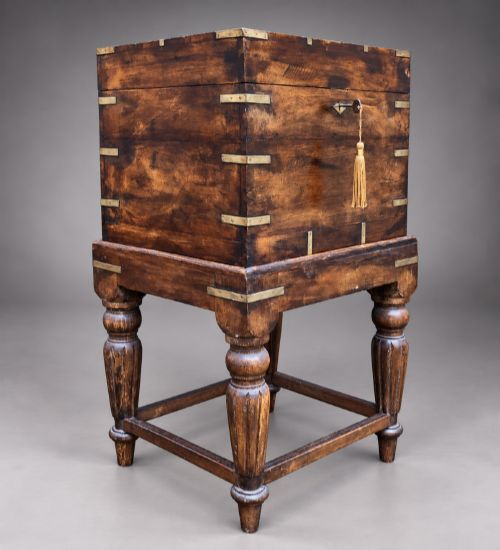
An anglo indian teak box covers a range of utilitarian vessels built in the nineteenth century, from small stationery writing boxes to massive dowry chests and campaign trunks. These objects combine indigenous carving traditions with British military requirements for travel and colonial administration.
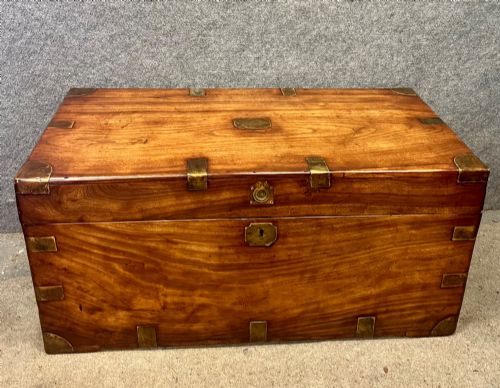
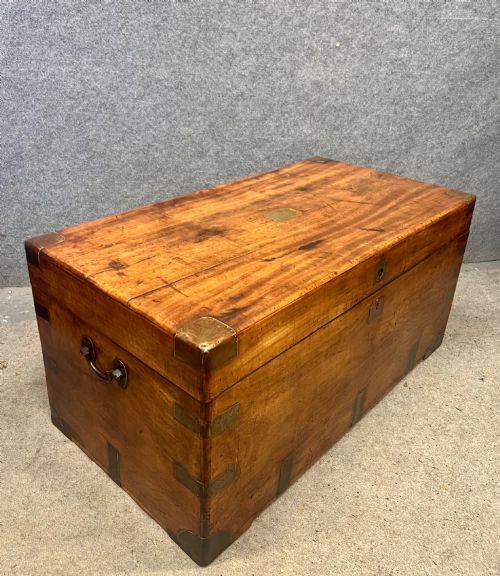
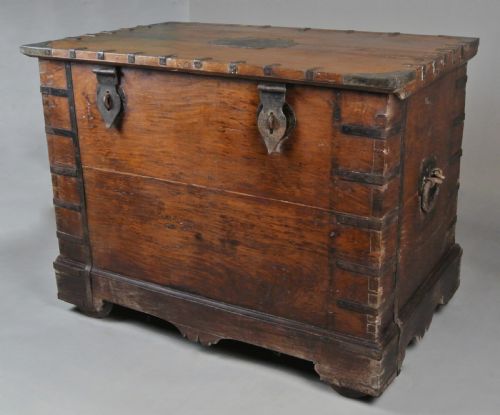
The most common examples on this page are sturdy trunks and chests banded in brass or iron, alongside smaller desktop correspondence boxes and cellarettes. Pieces span the Victorian era back to the late eighteenth century, reflecting British trade routes and domestic life in the colonies.
Materials and technique
Makers utilised dense teak and various hardwoods, chosen for durability against humidity and transport wear. Timber bodies receive structural reinforcement from brass corners, straps, and corner brackets, secured with iron or brass fixings.
Surface detailing ranges from heavy metal banding and flush-fitting inset handles to intricate carved motifs and occasional lacquer finishes. Smaller desk boxes often incorporate internal compartments, secret drawers, and inlaid decoration such as bone or sadeli work.
Some correspondence boxes include secret compartments cunningly disguised behind sliding panels for confidential colonial dispatches.
Quality variations
Quality rests in the precision of the joinery and the integration of the metal mounts, where flush fittings and neat dovetailing signal superior workshop standards. The crispness of carved elements and the complexity of internal compartments separate utilitarian storage from finer decorative pieces.
Condition relies on the integrity of the original hardwood and the completeness of the metal mounts rather than surface polish. Retaining original brass hinges, handles, and internal fittings elevates the standing of any box or trunk.
The Anglo Indian Teak Box Glossary
- Teak
- A dense, oily tropical hardwood native to South and Southeast Asia, prized for its resistance to moisture and warping.
- Campaign trunk
- A portable storage chest designed for military officers or colonial administrators, featuring recessed handles and reinforced corners for frequent travel.
- Cellarette
- A specialised cabinet or box used to store bottles of wine or spirits securely, often fitted with internal dividers.
- Sadeli work
- A micro-mosaic technique utilising geometric patterns formed from materials such as bone, horn, and metal, seen on decorative boxes.
- Dowry chest
- A large storage coffer traditionally created to hold household goods and textiles for a bride's new home.
Anglo Indian Teak Box: Frequently Asked Questions
What is an anglo indian teak box?
These pieces are utilitarian or decorative storage vessels created in nineteenth-century Asia under British colonial influence. They range from massive floor-standing trunks to small tabletop writing desks.
The construction combines dense tropical timber with robust metal bindings designed for long-distance transport. Every example reflects a blend of local craftsmanship and British utility.
How were campaign trunks used?
Campaign trunks served as portable wardrobes and storage for British officers and administrators on the move. Their robust construction protected belongings from sea air and rough overland journeys.
Fittings like recessed brass handles allowed the chests to pack tightly into baggage carts or ships' holds. Many continue to function as coffee tables or living room storage today.
How do I date a teak chest?
Dating relies on construction methods, metalwork styles, and specific design cues from the nineteenth century. Earlier pieces from around 1800 often feature heavier hand-forged iron bindings, while Victorian examples frequently use precise brass mounts.
Examining the interior fittings and secondary timbers provides further clues to the decade of manufacture. Documentation or family provenance can also help narrow down the origins.
Are these boxes waterproof?
While teak possesses natural oils that resist moisture and decay, these historical boxes are not fully waterproof by modern standards. Their tight-fitting lids and robust construction protected contents from dust and tropical downpours during travel.
Today, they suit indoor storage use where humidity remains relatively stable. Placing them away from direct heat sources preserves the timber and metal fittings.
How should I clean teak wood?
Maintenance requires only a soft, dry cloth to remove dust from the carved surfaces and metal mounts. Avoid harsh chemical cleaners or modern polishes that can strip the natural oils from the hardwood.
Applying a light coat of traditional beeswax occasionally will help nourish the timber. Keeping the piece out of direct sunlight prevents the wood from drying out.