





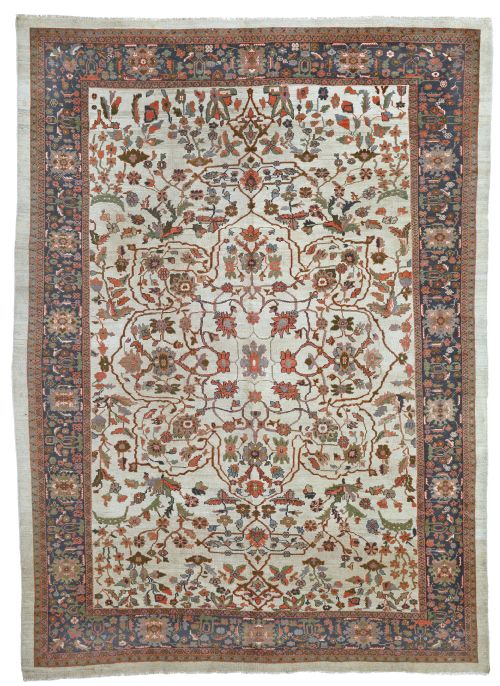
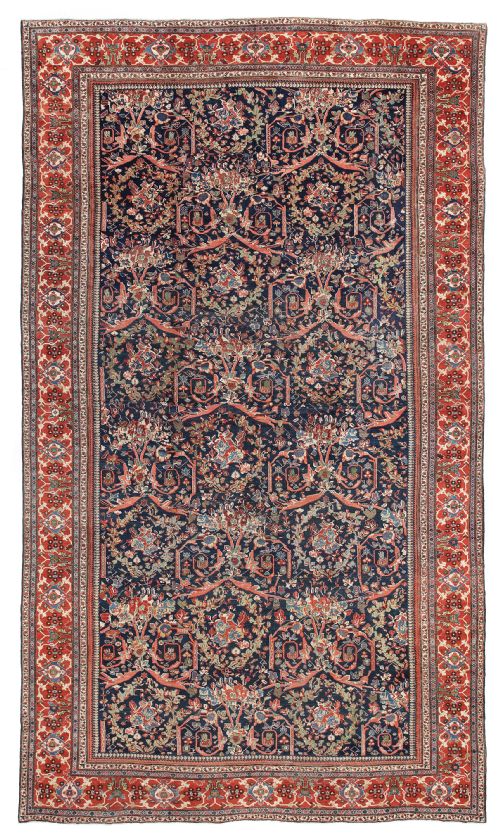
19th Century Mahal Carpet
A 19th century mahal carpet brings understated Persian elegance to a room with muted palettes and oversized floral patterns.
19th Century Mahal Carpet
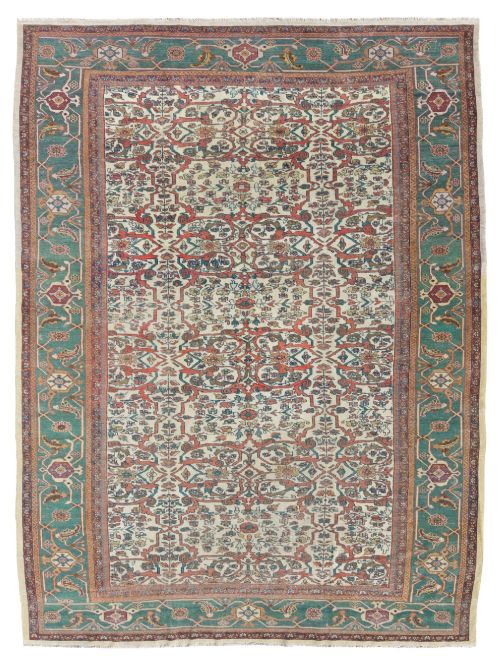
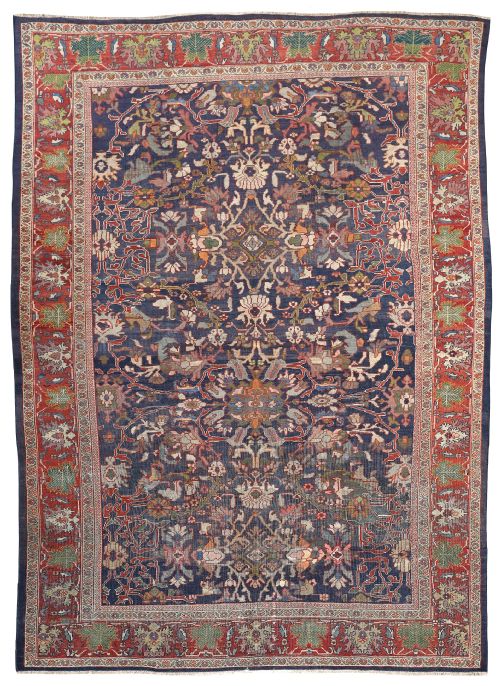
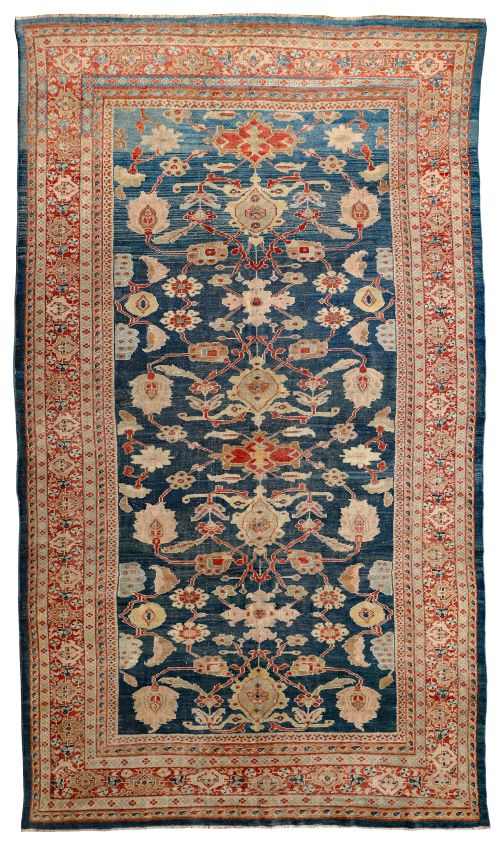
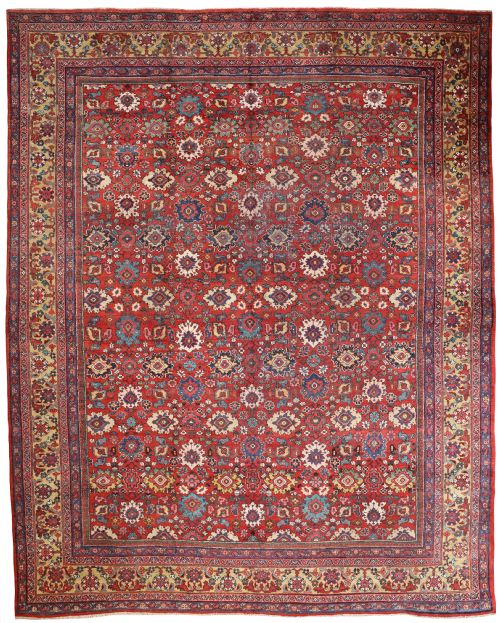
When you search for a 19th century mahal carpet, you encounter large-scale Persian floor coverings originating from the region around Sultanabad and Mahal, often woven to suit Western decorative tastes of the Victorian period. These rugs and carpets typically present traditional Persian designs adapted with more open, spacious motifs and softer colour palettes than standard village weavings.
On this page, the pieces you are most likely to meet span the late nineteenth century through to the early decades of the twentieth century. The inventory showcases varied scales, ranging from room-size formats down to smaller area rugs, all reflecting the signature aesthetic of the Persian Ziegler and Sultanabad workshops.
How they were made
The construction of these carpets relies on durable natural materials, combining wool pile knotted onto cotton foundations to ensure structural stability across large dimensions. Artisans employed hand-spun yarns dyed with traditional vegetal colourants, which accounts for the subtle patination and gentle fading seen across ivory grounds and field designs.
Weavers utilised standard symmetrical or asymmetrical knotting techniques depending on the specific workshop traditions of the Persian region. The dense knot count supports the generous dimensions seen in oversize country house carpets without compromising flexibility.
What varies in quality
The distinction between ordinary and superior examples rests primarily on the handling of the wool and the sophistication of the dye palette. Finer grades display greater clarity in the botanical motifs and a more harmonious integration of secondary tones against the primary field.
Structural integrity and the preservation of original edge finishes also divide the standard examples from the finest survivals. Carpets retaining their original proportions and uncompromised pile depth demonstrate the enduring standard of nineteenth-century production.
The 19th Century Mahal Carpet Glossary
- Mahal
- A type of Persian carpet originating from the district surrounding Sultanabad, known for large-scale, open floral patterns. These pieces were frequently exported to European and American markets.
- Ziegler
- A specific classification of nineteenth-century Persian carpets produced under the supervision of Manchester-based firm Ziegler and Co. They typically feature muted palettes tailored to Western interior design.
- Sultanabad
- A regional designation for nineteenth-century Persian carpets woven in and around the city of the same name. They share stylistic traits with Mahals through bold, spaced-out floral compositions.
- Fereghan
- A style of Persian weaving associated with finer knot densities and intricate all-over design structures. Pieces bearing this attribution often exhibit exceptional structural refinement.
- Ivory ground
- The light-coloured background hue that dominates the central field of certain Persian carpets. This pale backdrop allows botanical motifs to stand out with distinct clarity.
19th Century Mahal Carpet: Frequently Asked Questions
Where were 19th century mahal carpets woven?
These carpets were woven in the central Persian district surrounding Sultanabad, which served as a major hub for carpet production during the Qajar dynasty. Many of these workshops operated specifically to supply European and American trading houses.
The regional weavers adapted traditional Persian motifs to suit Western aesthetic preferences, resulting in the characteristic open designs and subdued colour schemes found in nineteenth-century examples.
How do I care for a large antique carpet?
Protecting a large nineteenth-century carpet involves placing a quality underlay beneath it to prevent slipping and reduce friction between the wool pile and the hard floor. This simple addition absorbs foot traffic impact and extends the lifespan of the cotton foundation.
Regular, gentle vacuuming without a beater bar removes trapped dust particles before they can cut into the wool fibres. Professional cleaning should be undertaken sparingly and only by specialists experienced in antique vegetable-dyed textiles.
What is an oversize country house carpet?
An oversize country house carpet refers to exceptionally large formats, often exceeding four or five metres in length, designed for substantial reception rooms and drawing rooms. These grand pieces anchored large interior spaces during the Victorian and Edwardian periods.
Because of their scale, they required significant time and multiple weavers to produce on large upright looms using sturdy cotton warps.
How do Mahal and Ziegler styles differ?
While both styles originate from the same region around Sultanabad, Ziegler carpets generally reflect specific commission standards set by European firms for Western drawing rooms. They often feature softer, more subdued palettes and slightly more spaced-out floral patterns.
Mahal carpets encompass a broader range of village and workshop production from the same district, sharing similar large-scale motifs but occasionally displaying more varied local colour combinations.