


19th Century Loo Table
A 19th century loo table is a versatile circular or oval pedestal piece designed for family card games and large dining rooms.
19th Century Loo Table
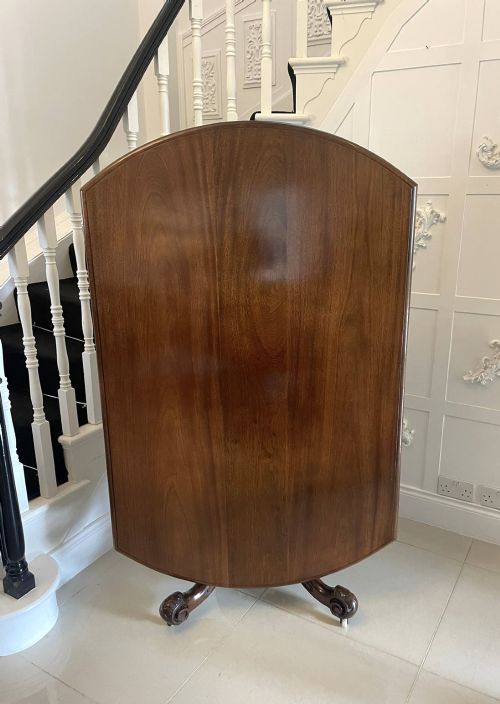
A 19th century loo table is primarily defined by its pivoting top, which tilts vertically on a heavy central pedestal base when not in use. This clever mechanism allowed large tables to be stored against the wall of a drawing room or parlour without blocking the space.
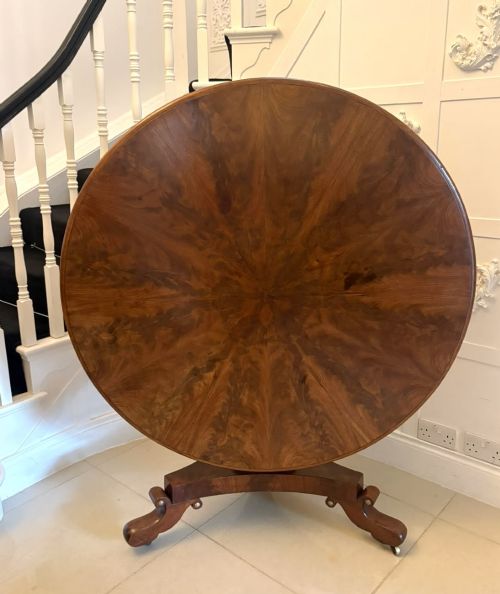
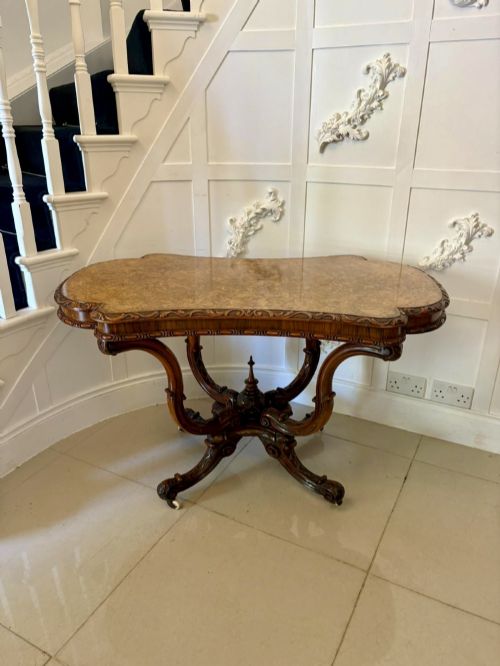
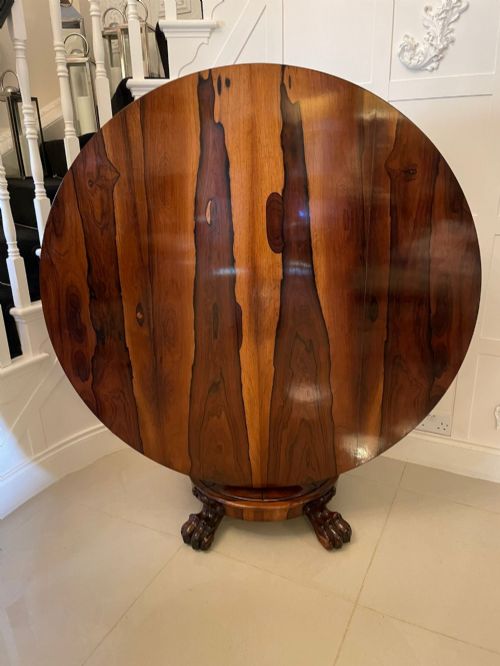
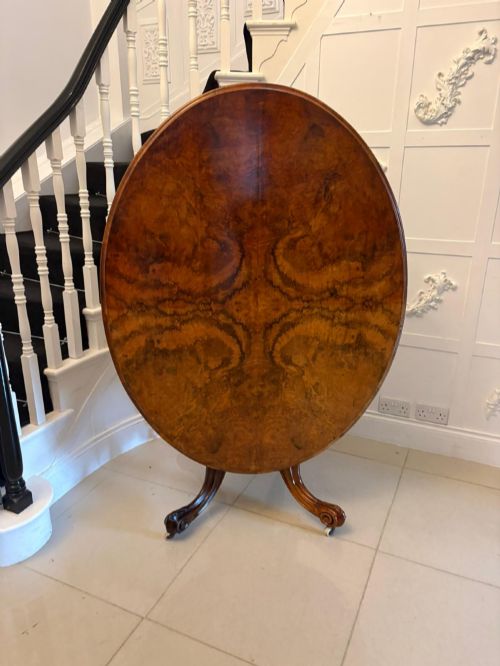
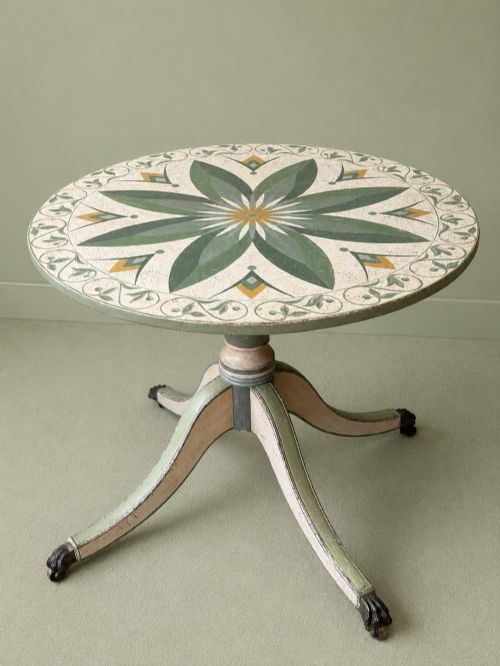
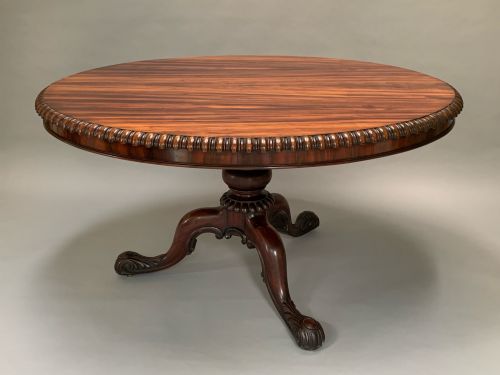
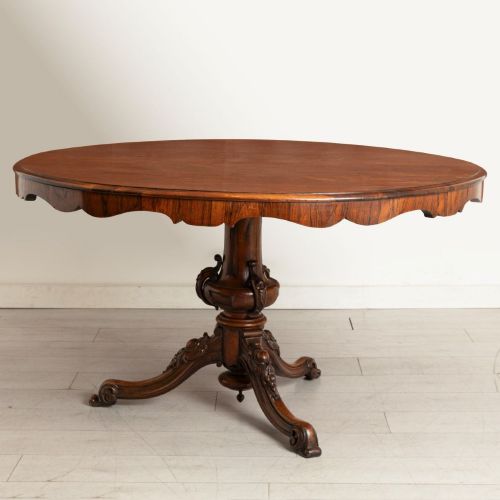
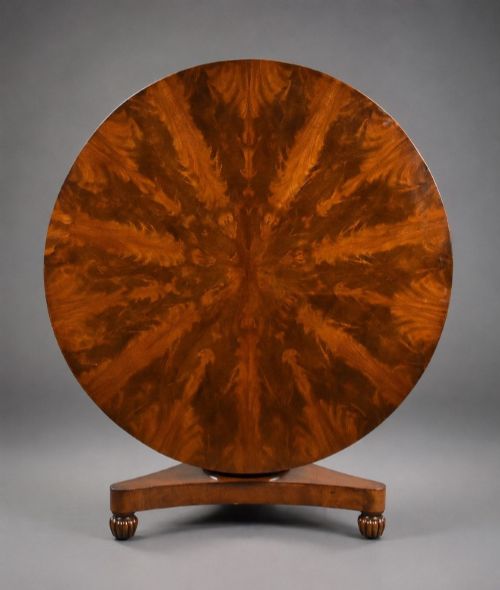
Alongside the common Victorian walnut variations, earlier Regency and William IV iterations appear in figured mahogany, rosewood, and amboyna. These earlier forms often feature circular tops supported by substantial carved pedestals and quadrapod or tripod feet.
Materials and construction methods
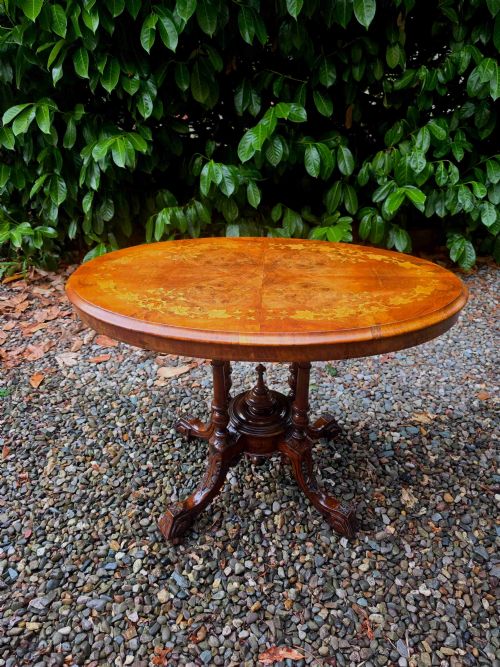
Cabinetmakers utilised dense tropical timbers like mahogany and rosewood for structural stability, frequently applying highly figured veneers such as burr walnut and flame mahogany to the expansive table tops. These veneers were carefully laid over solid secondary wood cores to create striking geometric and grain patterns.
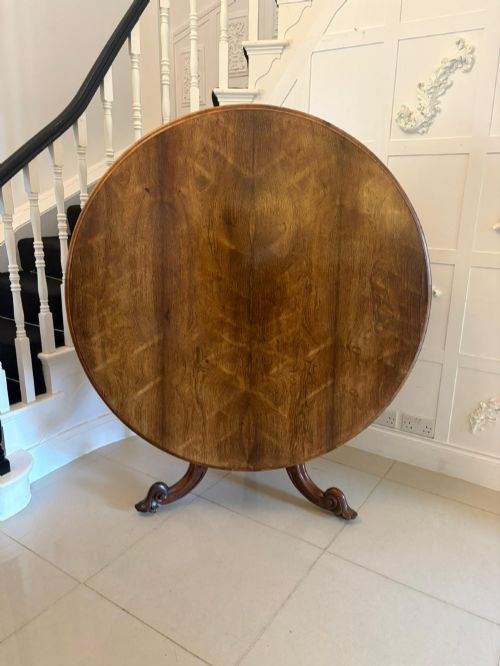
The tilting mechanism relies on a sturdy brass or iron catch integrated into a robust wooden box beneath the top, allowing the surface to release and lock securely. This assembly sits atop a heavy central pillar, which frequently terminates in carved scroll feet or a solid quadrapod base fitted with castors.
19th Century Loo Table Retail Price Guide 2026
Typical asking prices for 19th century loo table among the pieces listed under this phrase on Sellingantiques today, from the lower quarter to the upper quarter. They describe what is for sale here now, not the wider market.
Listings feature pieces spanning the nineteenth century, including Regency, William IV, and Victorian periods executed in rosewood, mahogany, and burr walnut.
Assessing craftsmanship and design
The distinction between standard examples and the finest pieces rests upon the choice of timber and the ambition of the carving. Superior tables display richly figured burr walnut or meticulously matched flame mahogany veneers that wrap seamlessly across the entire surface.
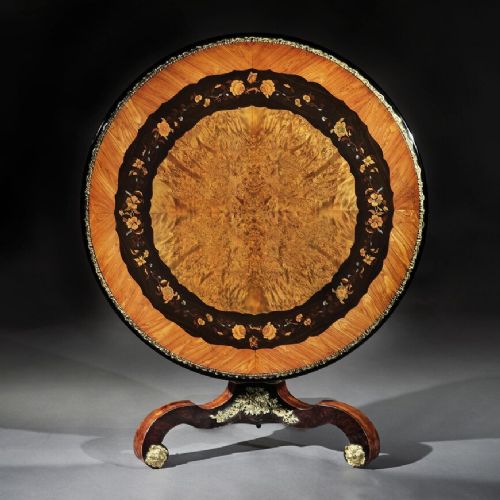
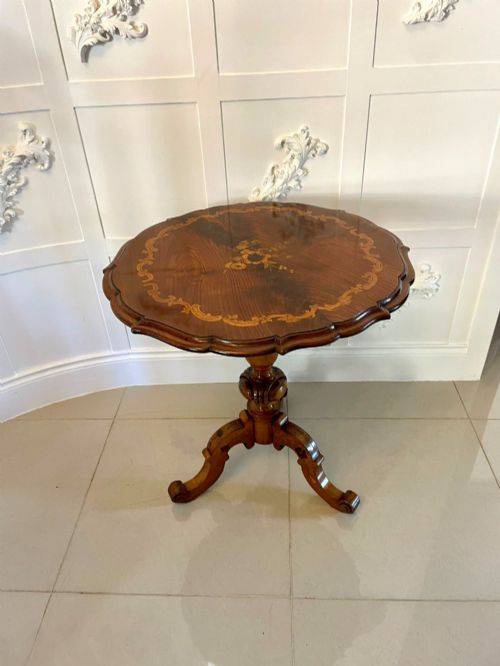
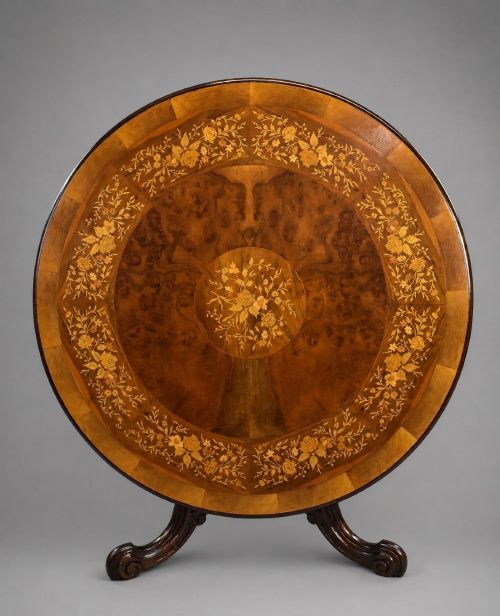
Execution of detail further separates the output of accomplished workshops from ordinary production. Finely carved pedestal bases, crisp marquetry work, and integrated secret drawers or complex pivoting hinges demonstrate the higher tier of nineteenth-century cabinet making.
Edward Holmes Baldock·Gillows·Peters of Genoa
The 19th Century Loo Table Glossary
- Tilt-top table
- A table equipped with a hinge mechanism that allows the top to pivot into a vertical position. This design saves floor space when the furniture is not in active use.
- Burr walnut
- A highly prized wood veneer harvested from the knot growths of walnut trees. It yields complex, swirling grain patterns full of small eye formations.
- Pedestal base
- A single central support column replacing traditional four-corner legs. This pillar usually flares outwards at the floor into a tripod or quadrapod configuration.
- Marquetry
- The art of applying decorative pieces of wood veneer to a structural structure to form intricate pictures or geometric patterns. It often incorporates contrasting lighter and darker timbers.
- Quadrapod base
- A furniture support featuring four radiating feet extending from the central column. These are frequently fitted with castors to assist movement.
19th Century Loo Table: Frequently Asked Questions
What is a loo table used for?
These large tables were originally designed for the popular nineteenth-century card game called loo, as well as general parlor gatherings and family dining. The tilting top allowed servants to clear the room quickly by folding the surface flat against the wall.
Today, they function brilliantly as large centre tables in entrance halls or as striking dining tables in period homes. Their expansive timber surfaces make them ideal for daily use while retaining a strong decorative presence.
How do I tell Regency from Victorian pieces?
Regency tables, dating from the early nineteenth century, frequently feature straight lines, brass inlay, and dark figured mahogany or rosewood surfaces. They often lean towards classical architectural proportions and restrained ornamentation.
Victorian pieces, emerging strongly after eighteen-fifty, embrace warmer burr walnut timbers, elaborate marquetry inlay, and heavier, deeply carved pedestal bases. Oval formats become especially common during the later Victorian decades.
How do I live with a tilt top table?
Living with these tables is straightforward if you respect their age and the mechanics of the pivot mechanism. Keep the brass release catch lightly oiled and avoid placing extremely heavy items directly on the outer edges when the top is locked horizontally.
Position the table where natural light can strike the burr walnut or mahogany grain without exposing the timber to direct sunlight. When entertaining, the generous surface comfortably seats multiple guests for dinner.
Why do some tables have secret drawers?
Certain high-end nineteenth-century examples incorporate hidden compartments or secret drawers built into the frieze beneath the table top. These were used to store card decks, gaming counters, and small valuables out of sight.
Finding hidden compartments usually indicates a piece of superior quality commissioned from a skilled workshop. They add an element of interactive craftsmanship that collectors particularly appreciate.