


19th Century Leather Desk
When you search for a 19th century leather desk, you enter a world of heavy timbers and tactile writing surfaces designed for formal correspondence.
19th Century Leather Desk
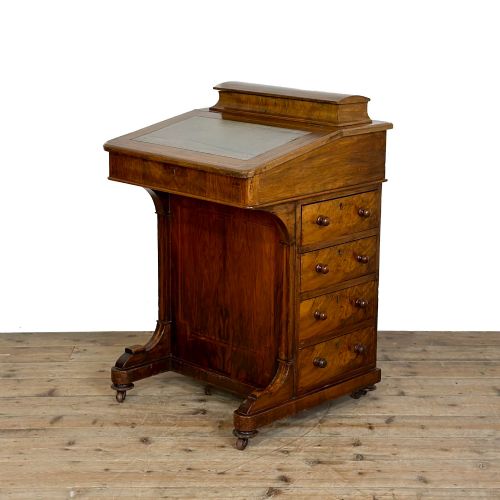
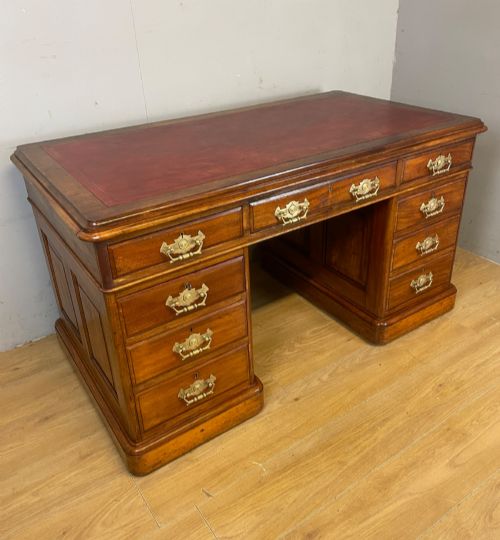
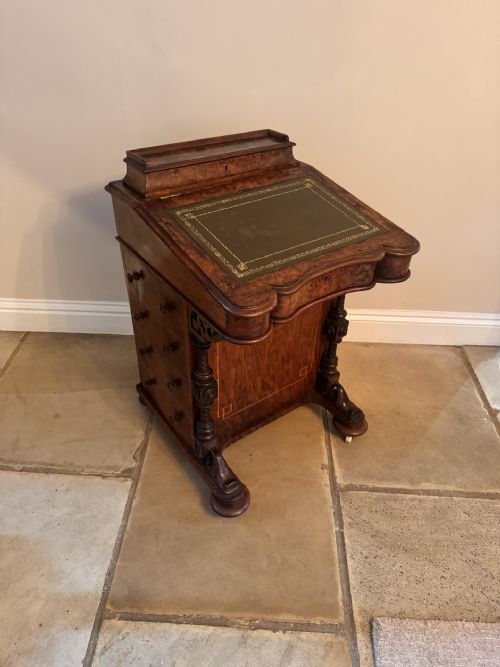
A 19th century leather desk comprises writing furniture produced across the Victorian, Regency and William IV periods, built primarily for domestic libraries, studies and offices. These pieces range from compact davenports and cylinder desks to substantial partners desks and pedestal writing tables designed to sit in the centre of a room.
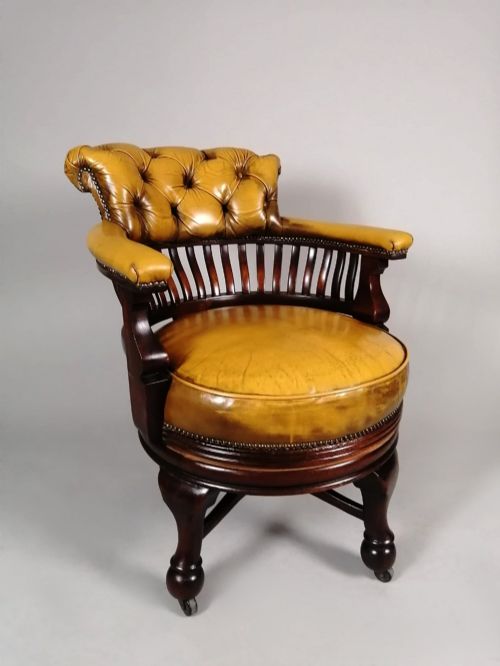
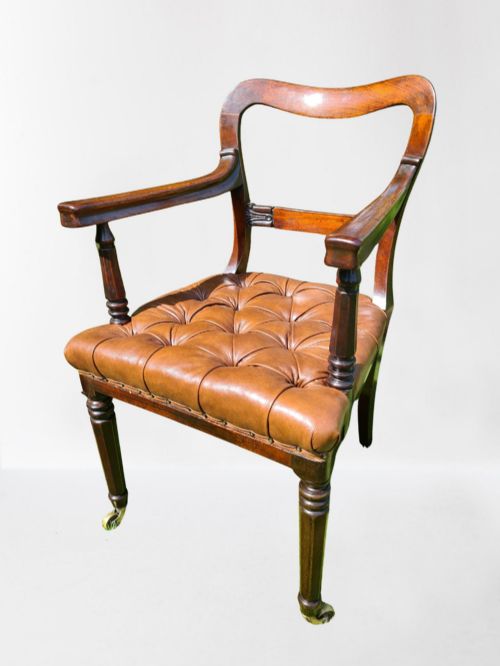
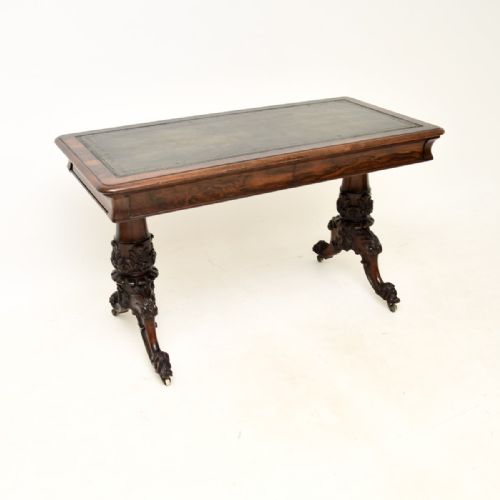
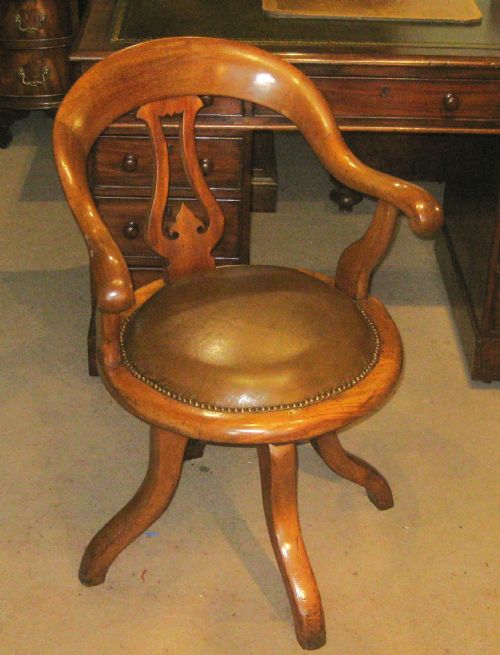
The most common forms encountered on this page are mahogany and oak pedestal desks alongside free-standing writing tables fitted with inset leather writing surfaces. Alongside these desks, the selection frequently incorporates matching leather-upholstered library armchairs and revolving desk chairs from the same eras.
How they were made
Cabinet makers built these pieces using dense hardwoods such as mahogany, oak, walnut and rosewood, often applying veneers like burr walnut or kingwood to prominent surfaces. Structural integrity relied on traditional joinery methods, while decorative elements incorporated carved details, brass hardware and gilt bronze ormolu mounts.
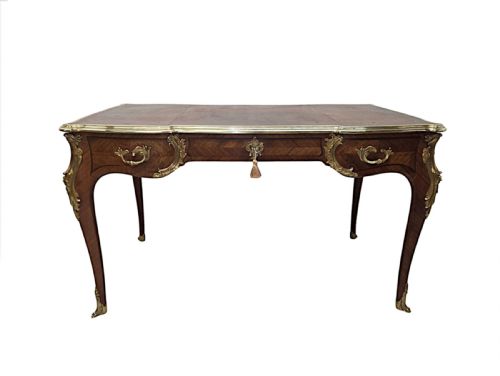
Writing surfaces were inset with cattle hide leather, which was typically secured to the timber bed and finished with blind or gilt tooling along the perimeter borders. For French examples, such as the bureau plat, specialised ebonising and marquetry techniques defined the exterior finish.
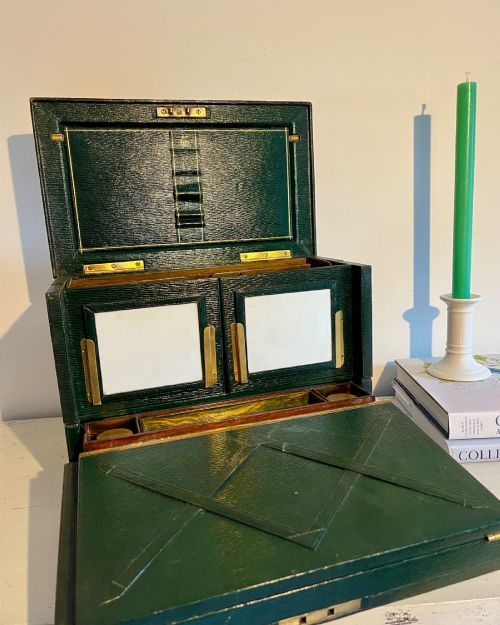
Keep an eye out for inkwells disguised as leather-bound books, ready to hide the writer's secrets on the desktop.
What varies in quality
Quality in a 19th century leather desk depends on the selection of timber and the precision of the cabinet work, such as the housing of drawer linings and the retention of original handles and locks. Pieces produced by documented workshops demonstrate superior secondary woods and more refined carving.
The treatment of the leather insert also separates standard examples from exceptional ones, with finely tooled gilt borders and well-preserved patination indicating superior grade. Free-standing execution, where the back of the desk is finished to the same standard as the front, marks a higher tier of production.
Trollope & Sons·Henri Jacot·Charles Andrea Nosotti·Edwards & Roberts·CH. Jeanselme & Co·Holland & Sons
The 19th Century Leather Desk Glossary
- Skiver
- The panel of leather inset into the top of a desk to provide a smooth writing surface. It is frequently decorated with gold tooling along the edges.
- Partners desk
- A large pedestal desk designed with drawers and cupboards on both sides, allowing two people to work opposite one another.
- Bureau plat
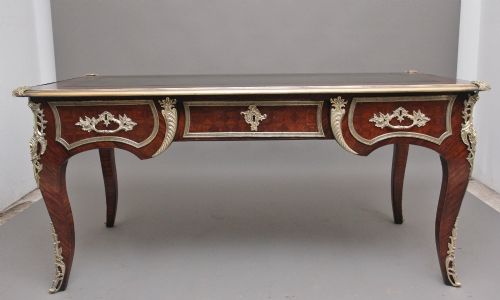
- A freestanding French writing table featuring a rectangular top inset with leather and one or more drawers in the frieze.
- Davenport
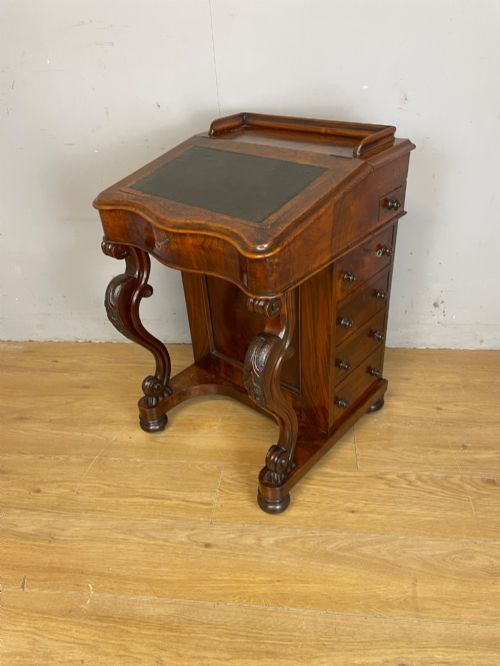
- A compact Victorian desk featuring a sloping, leather-lined writing lid above a bank of side drawers.
- Pedestal desk
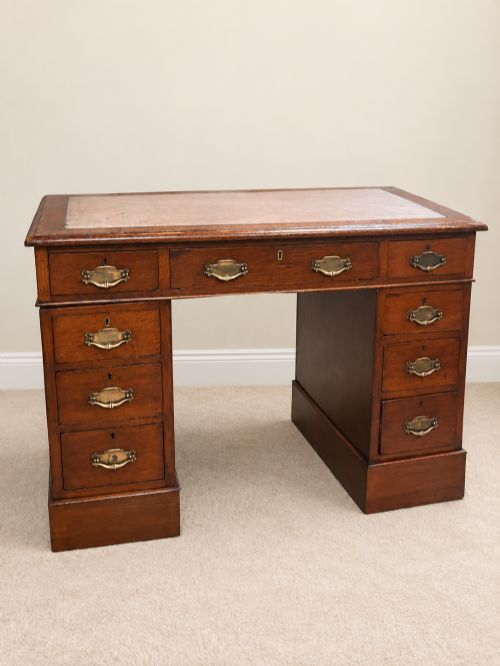
- A heavy piece of furniture comprising two pedestals of drawers supporting a single top box, usually bridged by a kneehole space.
19th Century Leather Desk: Frequently Asked Questions
What is a partners desk?
A partners desk is a large, double-sided writing table featuring drawers and cupboards on both long elevations. This configuration allowed two individuals to sit opposite each other and work at the same time.
These pieces were traditionally utilised in large estate libraries, banks and administrative offices during the Victorian and Regency eras. Their finished backs make them ideal for positioning in the centre of a room rather than against a wall.
How do I care for antique leather?
Antique leather requires gentle cleaning with a slightly damp cloth followed by periodic treatment with specialist leather balms or waxes. This prevents the hide from drying out and preserves the suppleness of the material.
Avoid placing these desks in direct sunlight or near heat sources, as extreme temperatures cause the leather and underlying timber to warp and crack. Careful maintenance protects the original tooling and historical patination.
What is a Davenport desk?
A Davenport desk is a small, upright form of writing furniture popular throughout the Victorian period. It typically incorporates a sloping, leather-lined writing surface that lifts to reveal a fitted interior.
The body houses a bank of small drawers opening to the side, often balanced by false drawers on the opposite flank. Their compact proportions made them suitable for drawing rooms and smaller studies.
Are these desks freestanding?
Many 19th century pedestal desks and writing tables are finished on all four sides, allowing them to sit prominently in the middle of a study. However, standard pedestal desks were historically designed with plain backs to stand directly against a wall.
When examining a desk intended to sit in open space, cabinet makers ensured the rear panels matched the quality of the front elevation. This distinction is particularly evident in library tables and partners desks from the period.