

19th Century Kitchen Server
A 19th century kitchen server provides sturdy utility and rustic charm, holding heavy prep work and daily service with genuine period character.
19th Century Kitchen Server
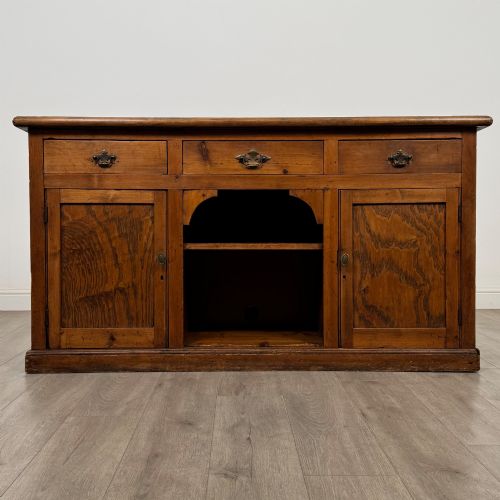
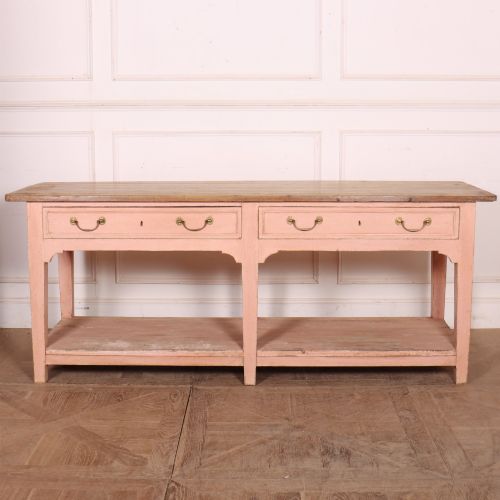
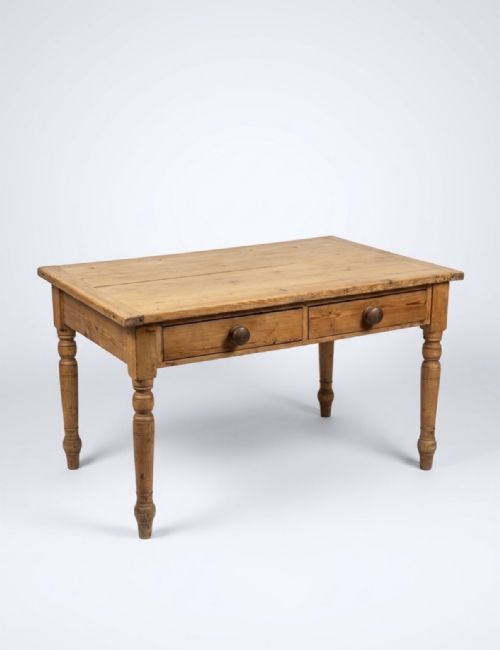
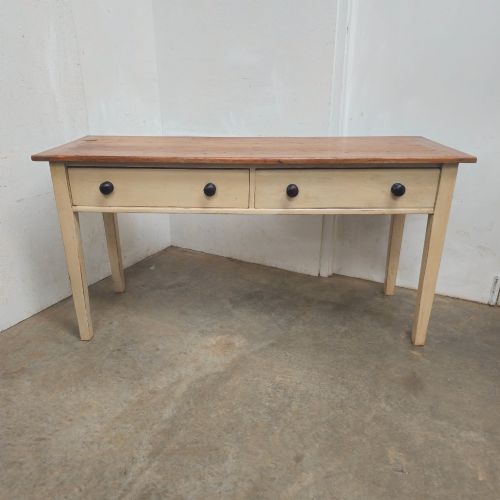
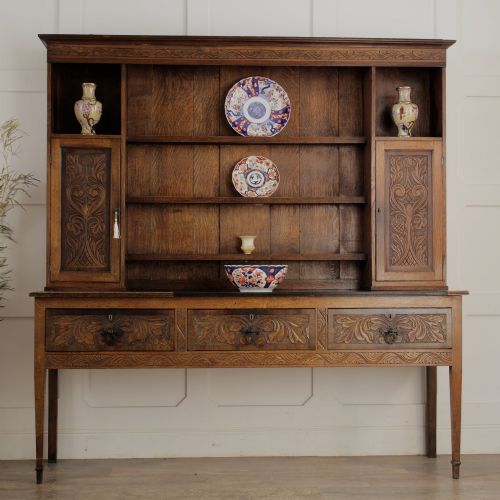
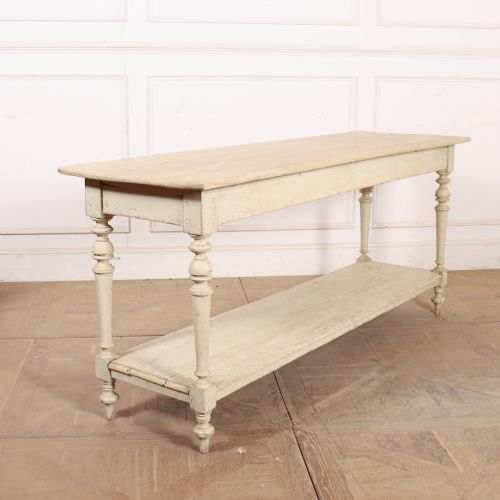
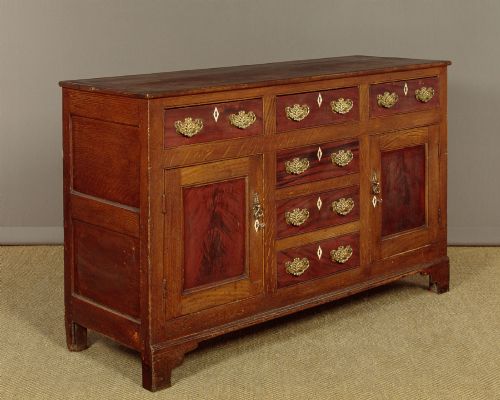
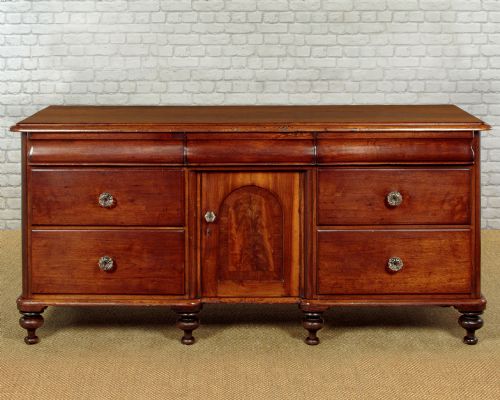
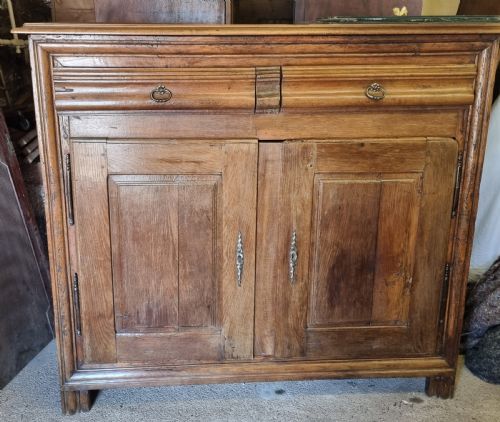
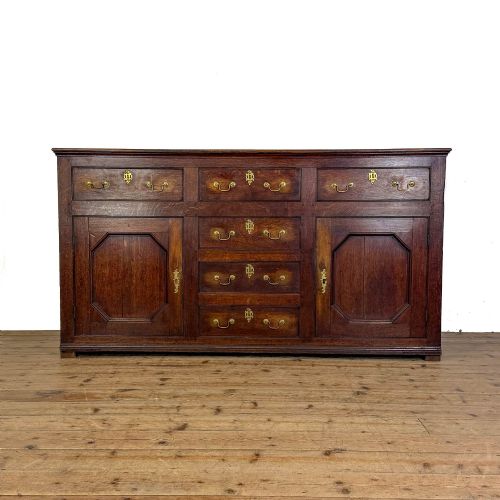
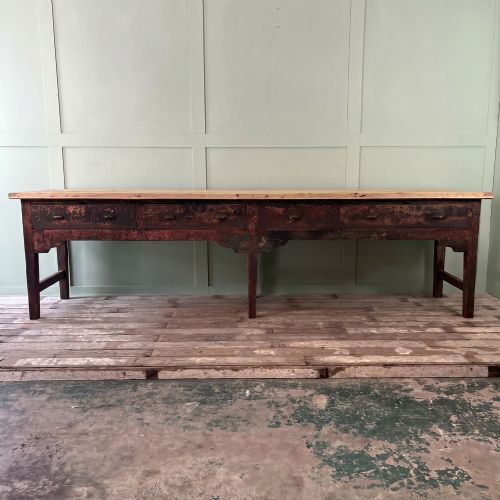
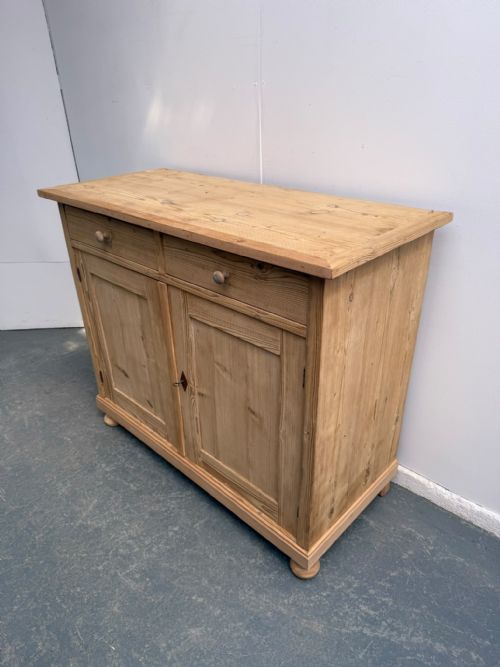
A 19th century kitchen server encompasses hardworking domestic furniture such as dresser bases, serving tables, drapers tables, and preparation benches designed for rigorous daily use in country houses, dairies, and farmhouses.
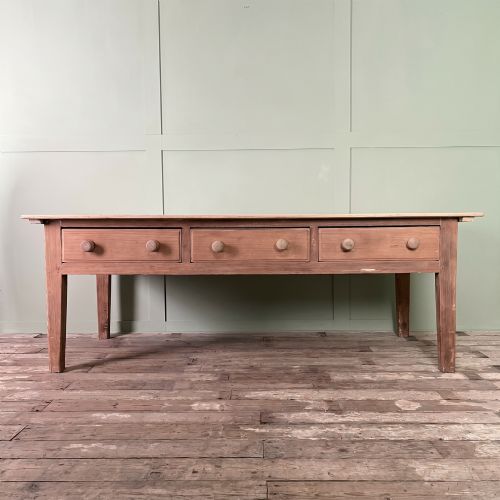
The pieces appearing most frequently on this page are pine and oak dresser bases, often featuring pot shelves, drawers, and scrubbed tops that reflect their origins in English, Welsh, Scottish, and French rural kitchens.
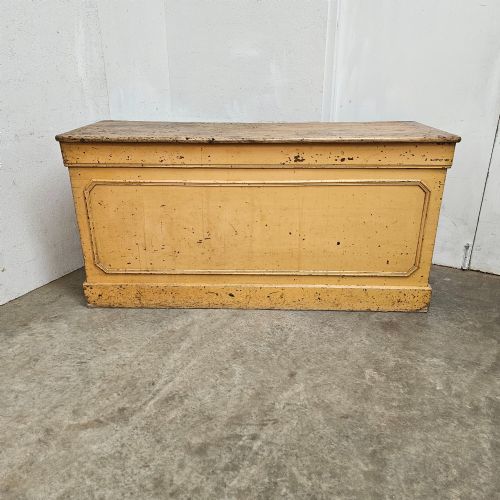
Beyond standard dressers, the selection broadens to include French shop counters, patisserie display tables, and dairy prep tables, showing how utilitarian furniture adapted to various food preparation and storage tasks across Europe.
How they were made
Makers relied primarily on native timbers like pine, oak, fruitwood, and sycamore, selecting durable woods that could withstand constant scrubbing and heavy loads in busy working environments.
Construction techniques prioritised practical strength over delicate ornament, utilising thick tabletops, sturdy mortise and tenon joints, and functional drawer configurations designed to endure decades of domestic or commercial service.
Surfaces frequently show the legacy of their working lives, retaining layers of original paint, bleached patinas from daily scrubbing, or natural wax finishes acquired through generations of handling.
Listings span pine, oak, fruitwood, and sycamore, reflecting both British regional workshop traditions and French provincial kitchen utility.
What varies in quality
The distinction between ordinary and exceptional pieces often lies in the integrity of the timber and the honesty of the surface, where untouched original paint or deep, unbleached patinas elevate a piece well above heavily restored examples.
Proportion and scale play a crucial role in quality, as servers with balanced drawer counts, well-defined pot boards, and original brass or iron hardware demonstrate thoughtful regional craftsmanship rather than hasty utility work.
The 19th Century Kitchen Server Glossary
- Dresser base
- The lower section of a kitchen dresser, typically comprising a flat top for preparation above cupboards or drawers and occasionally an open pot shelf below.
- Potboard
- An open slatted lower shelf fitted between the legs of a dresser base, historically used for storing heavy pots and pans off the damp stone floor.
- Drapers table
- A long, wide table featuring multiple narrow drawers beneath the top, originally utilised in fabric shops or large manor houses for folding cloth and food preparation.
- Bread slide
- A pull-out wooden shelf integrated into the framework of a dresser base, designed for cooling loaves of bread or expanding prep space.
- Dairy table
- A functional work table, frequently constructed with scrubbed sycamore or pine tops, designed to resist moisture in milk and cheese processing areas.
19th Century Kitchen Server: Frequently Asked Questions
What is a 19th century kitchen server used for?
These pieces served as heavy-duty work surfaces for food preparation, baking, and storing utensils in historic country kitchens and farmhouses.
Today, they function as kitchen islands, sideboards, or console tables in modern homes, providing generous surface area and practical storage.
How do I care for a pine dresser base?
Maintain wooden surfaces by dusting regularly and applying a traditional beeswax or natural oil finish to nourish the historic timber.
Avoid placing untreated wooden tops in direct sunlight or near excessive moisture to preserve the original patina and prevent warping.
Are these servers made from solid wood?
Makers constructed these utility items entirely from solid native timbers such as pine, oak, fruitwood, and sycamore, reflecting the practical demands of nineteenth-century domestic life.
Solid construction ensures each piece maintains structural integrity and withstands heavy daily use across generations.
How do I identify French regional styles?
French provincial servers often utilise fruitwood, cherry, or oak, displaying distinct regional proportions and lighter framing compared to heavier British country furniture.
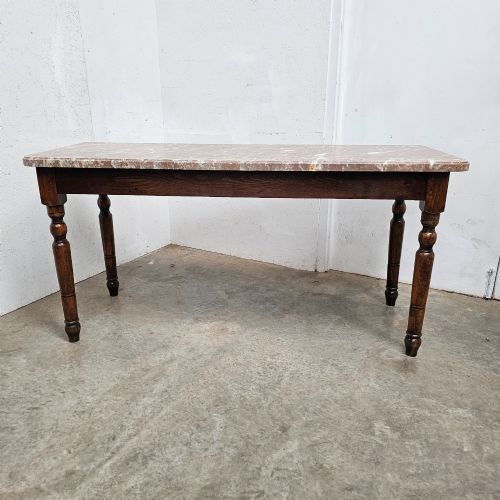
Details such as original shop paint, marble inserts, or specific moulding profiles help pinpoint pieces from areas like Bresse or rural farming provinces.