




Large Work Table
A large antique work table is a robust utilitarian surface built for trade or domestic labour, prized today for generous proportions and honest construction.
Large Work Table
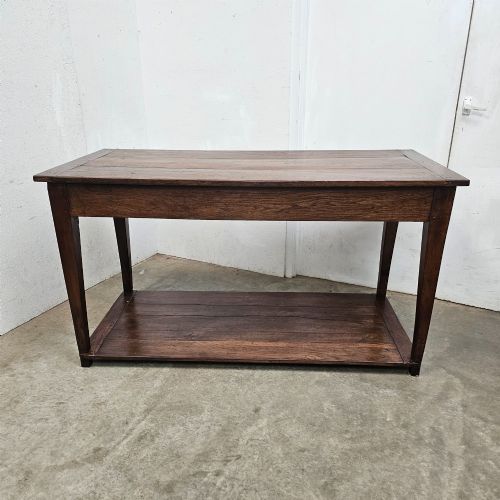
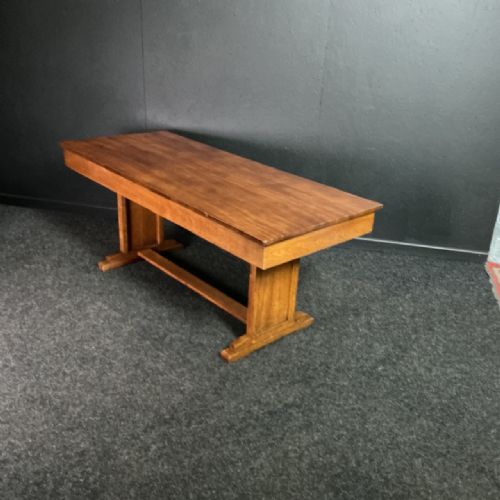
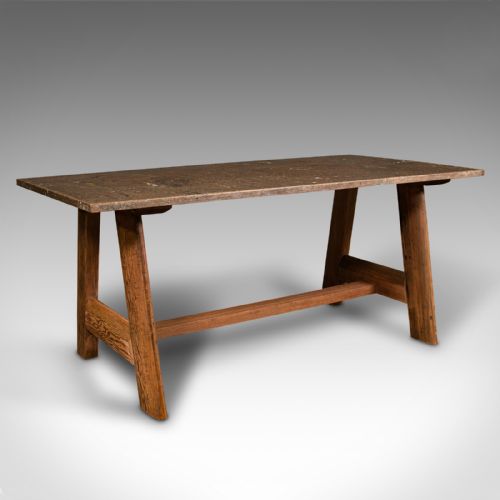
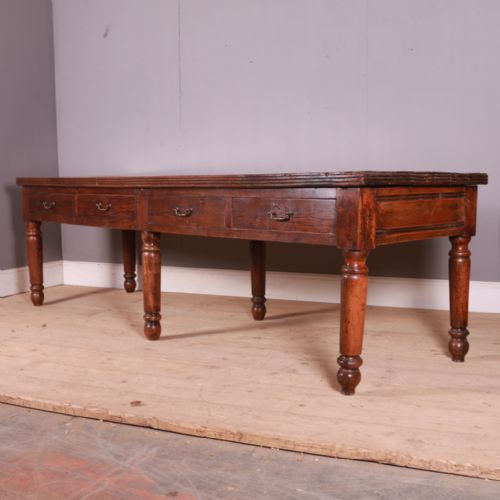
When you search for a large antique work table, you encounter substantial furniture originally built for practical tasks in kitchens, shops, schools, and mills. The examples seen on this page span the eighteenth, nineteenth, and twentieth centuries, taking the form of drapers tables, bread prep tables, and farmhouse surfaces.
The version you are most likely to meet on this page is a nineteenth century French or English pine work table, often featuring scrubbed tops and simple underframes. Oak and fruitwood variants also appear, alongside specialised forms like library tables and industrial benches.
How they were made
These tables were constructed from solid timbers like pine, oak, fruitwood, and mahogany, selected for durability under heavy daily use. Joinery relied on sturdy pegged mortise and tenon frames designed to withstand significant downward pressure without wobbling.
Metal components such as wrought iron and brass appear in supporting braces, brackets, and fittings, adding structural rigidity. Surfaces show the marks of hand planing and tool work accumulated through decades of utilitarian service.
Listings feature periods from the eighteenth century through to nineteen-sixty, constructed in pine, oak, wrought iron, and fruitwood.
What varies in quality
The distinction between tiers of quality rests upon the integrity of the original timber and the degree of structural modification over time. Tables retaining their unreduced height and original tops command greater interest than those altered to suit modern domestic proportions.
Proportion and scale dictate the hierarchy of these pieces, with monumental lengths and balanced underframes setting the finer examples apart from standard utility furniture. The depth of patination on the scrubbed wooden surfaces further distinguishes superior survivals from later reproductions.
The Large Work Table Glossary
- Drapers table
- A long, narrow table traditionally used in fabric shops for measuring and cutting textiles. They often feature multiple tiers or deep drawers beneath the main surface.
- Prep table
- A heavy utilitarian table utilised in kitchens, bakeries, or country houses for food preparation. These pieces typically display hard-wearing wooden tops shaped by centuries of use.
- Refectory table
- A long dining table historically used in communal dining halls and monasteries. Their sturdy legs and stretcher bases provide exceptional stability across large spans.
- Patina
- The surface sheen and colour acquired by wood and metal through age, handling, and wear. It serves as a visual record of the object's history.
- Trestle table
- A table supported by two or more upright frames connected by a horizontal beam. This design maximises legroom along the length of the surface.
Large Work Table: Frequently Asked Questions
What is a large antique work table used for today?
These large surfaces serve well as kitchen islands, dining tables, or generous desks in contemporary homes. Their robust construction handles daily family life while providing historic character.
Buyers often place them in open-plan spaces where a commanding focal point is required. The deep tops accommodate cooking, working, and gathering with ease.
How do I clean a pine work table?
Regular maintenance requires only a damp cloth and mild soap to remove dust and everyday marks. Avoid harsh chemical cleaners that strip the aged character from the wood.
Many owners apply natural beeswax periodically to nourish dry timber. This preserves the historic patina without creating an artificial gloss.
Were these tables made in specific regions?
The listings show origins spanning English country houses, French provincial workshops, and industrial mills. Regional differences appear in the timber choices and underframe designs.
French examples frequently utilise fruitwood or oak with subtle provincial framing. English pieces lean towards sturdy pine and mahogany configurations.
How do I tell an 18th century table from a 19th century one?
Dating relies on examining the joinery marks, nail types, and timber seasoning visible beneath and inside the frame. Earlier pieces often display hand-sawn board markings and pegged joints.
Nineteenth-century examples show more standardised manufacturing methods while retaining handmade characteristics. Comparing the wear patterns on the feet and stretcher base also clarifies the age.