




19th Century Japanese Lamps
These 19th century japanese lamps bring together Meiji period craftsmanship and European mounting, offering decorative presence for any interior.
19th Century Japanese Lamps
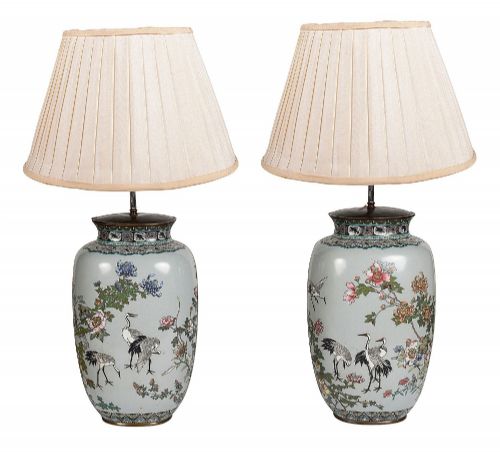
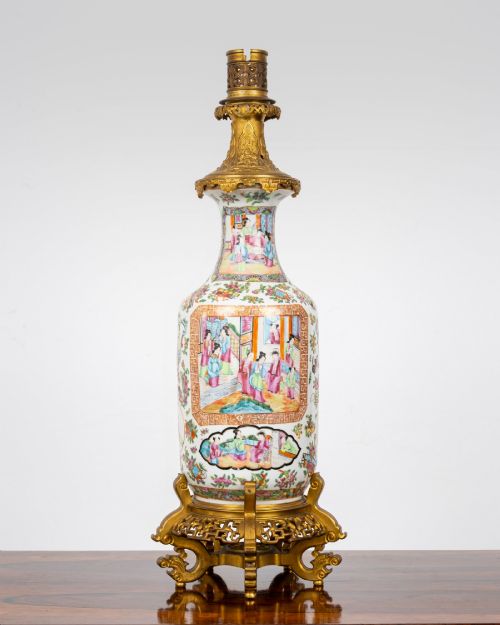
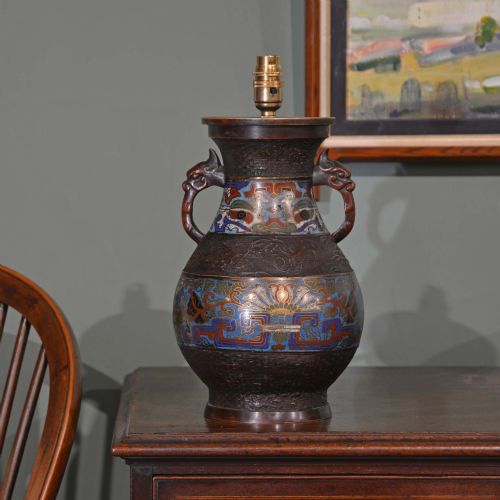
When buyers search for 19th century japanese lamps, they encounter a diverse group of objects that span porcelain, bronze, and cloisonné enamel. Many of these pieces began life as vases or vessels before being converted into table lamps during the nineteenth century or later.
The objects most frequently met on this page include pairs of Kutani, Imari, and Satsuma porcelain vases fitted for lighting, alongside bronze and cloisonné examples. These items often reflect the Victorian fascination with Eastern design, merging Japanese artistry with Western domestic utility.
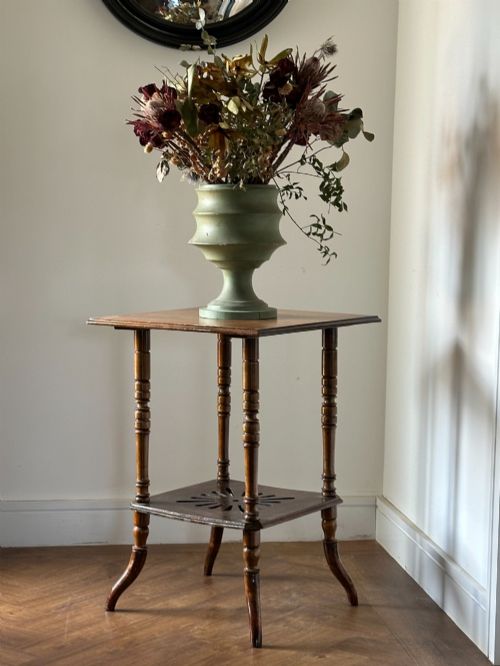
The selection also incorporates occasional tables and side tables from the Aesthetic Movement, showing how broadly the nineteenth-century taste embraced Japanese influence. Alongside these furniture forms, the core of the offering remains the ceramic and metal vase lamp.
How they were made
Makers utilised traditional Japanese techniques such as cloisonné enamel work, root carving, and hand-painted underglaze blue on porcelain. Workshops in Japan produced these high-relief or finely patterned vessels during the Meiji period, applying rich glazes and metallic pigments.
European or British metalworkers added mounts in brass, gilt bronze, or ormolu to transform the imported vases into stable lighting fixtures. Mahogany, rosewood, and other timbers were employed in related Aesthetic Movement occasional tables of the same era.
Brass, gilt bronze, and ormolu mounts appear frequently across ceramic bodies to secure the lamp fittings.
What varies in quality
The distinction between ordinary and exceptional pieces rests upon the crispness of the enamel work, the hand-painted detail of the porcelain, and the weight of the bronze or brass mounts. Finer ceramic examples display precise brushwork and vibrant glazes without blurring.
Structural integrity of the metal mounts and the retention of original gilding also determine the standing of a piece. Pairs matching in size, decoration, and proportion command greater attention than single converted vessels.
E.W Godwin
The 19th Century Japanese Lamps Glossary
- Meiji Period
- The era in Japanese history spanning from 1868 to 1912, characterised by extensive trade with the West. Most ceramic and metal items in this category date from this period.
- Cloisonné Enamel
- A metalwork technique where thin wire creates partitioned cells filled with enamel paste and fired. This method produced intricate floral and geometric patterns on vases.
- Kutani
- A style of Japanese coloured porcelain known for vibrant palettes, particularly reds and golds. These wares frequently appear converted into table lamps.
- Imari
- A traditional Japanese porcelain style featuring blue underglaze and iron-red overglaze, often highlighted with gilt. These decorative patterns suited nineteenth-century European interiors.
- Aesthetic Movement
- A late nineteenth-century design style that embraced the motto art for art's sake. It drew heavily on Japanese motifs and forms in furniture and decorative arts.
19th Century Japanese Lamps: Frequently Asked Questions
Are these lamps converted from old vases?
Many examples on this page started as Japanese vases or vessels created during the nineteenth century and were subsequently adapted for electrical wiring.
This method of conversion was common in nineteenth-century interiors where imported Eastern ceramics were repurposed for domestic illumination.
What is the Aesthetic Movement connection?
The Aesthetic Movement influenced British interior design in the late nineteenth century by promoting Japanese artistic traditions. Furniture and decorative objects from this time embraced asymmetrical designs and oriental motifs.
Pieces associated with this style sit alongside imported ceramic and bronze lamps to reflect the period's taste.
Do these lamps come as pairs?
A significant portion of the porcelain and bronze pieces are offered as matched pairs, particularly the Kutani, Imari, and cloisonné examples. Single lamps also appear within the selection.
Pairs offer symmetry for sideboards and tables, making them sought after for balanced interior decoration schemes.