



19th Century Italian Box
A 19th century Italian box brings the rich decorative arts of the Mediterranean into your home, offering miniature mosaics, inlaid woods and polished hardstones for your desk or dressing table.
19th Century Italian Box
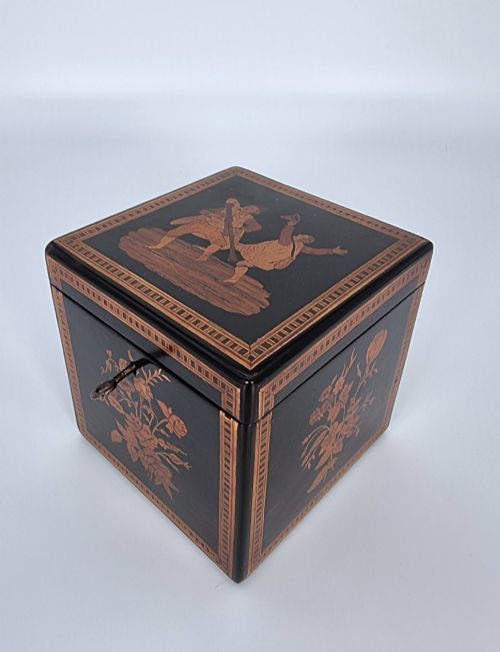
The pieces you encounter most frequently on this page range from olive wood Sorrento boxes inlaid with geometric patterns to ebonised wood caskets mounted with pietra dura plaques. Alongside traditional boxes, the selection occasionally includes related forms such as porcelain table caskets, inkstands and decorative book-shaped boxes.
Originating during the Victorian era and the broader nineteenth century, these objects reflect distinct regional specialisms, from Florentine stone inlay to Neapolitan micromosaics. Each piece captures the artisan skills of Italian workshops catering to an international clientele of collectors.
How they were made
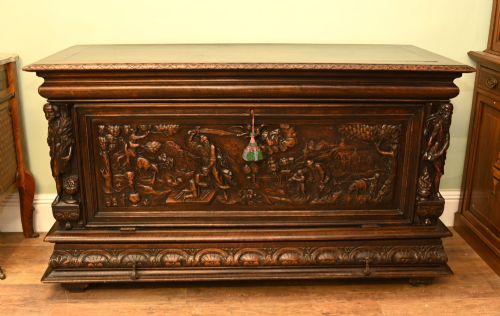
Craftsmen utilised a diverse palette of primary woods such as walnut, ebonised wood and olive wood, often enhanced by bone inlay, fruitwood or marquetry veneers. Structural elements frequently incorporated metals like brass and ormolu for mounts, hinges and secure closures.
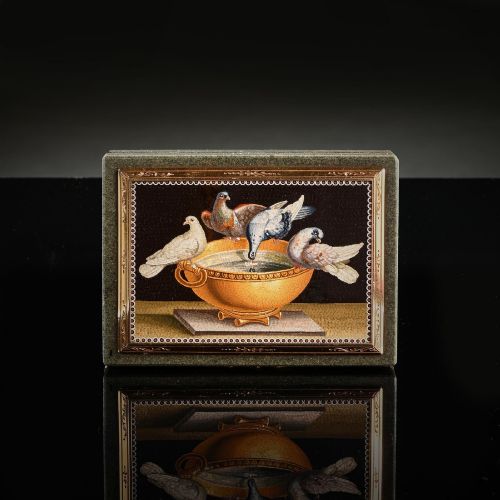
Surface ornamentation relied on meticulous specialist techniques including pietra dura, where hardstones are precision-cut and fitted together to form pictorial designs, and micro mosaic work using tiny glass tesserae. Artisans also employed hand-carved marble, porcelain and gilt metal mountings to finish the exterior.
19th Century Italian Box Retail Price Guide 2026
Typical asking prices for 19th century italian box among the pieces listed under this phrase on Sellingantiques today, from the lower quarter to the upper quarter. They describe what is for sale here now, not the wider market.
Grand Tour travellers could purchase a complete inkstand set made from green Prato marble and decorated with carved lava portrait cameos.
What varies in quality
The standard of a 19th century Italian box is largely determined by the precision and fineness of its surface decoration, whether that lies in the microscopic detail of glass tesserae or the tight fit of individual wood veneers in Sorrento marquetry. Superior examples exhibit exceptional artistic control and crispness in carved stone or metal mounts.
Materials also dictate the tier of the piece, with genuine hardstone pietra dura panels, heavy ormolu fittings and signed micro mosaic plaques representing the higher end of craftsmanship compared to simpler painted or printed decoration.
Gioacchino Barberi
The 19th Century Italian Box Glossary
- Pietra dura
- An Italian term for the artistic technique of using cut and fitted, highly polished coloured stones to create images. This painstaking craft produces smooth, durable tabletops and box lids decorated with floral or geometric motifs.
- Micro mosaic
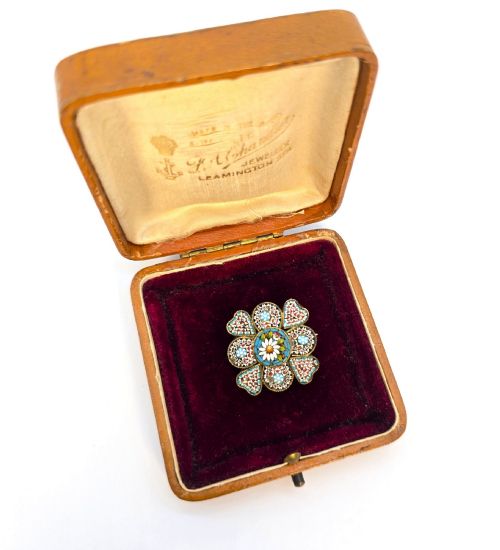
- A genre of mosaic utilising incredibly minute glass tesserae, often numbering in the thousands per square inch, to depict detailed architectural views or wildlife. These tiny pictures were typically set into the lids of gold snuff boxes and brooches.
- Sorrento ware
- Woodwork decorated with marquetry and inlay, produced in the coastal town of Sorrento near Naples. Artisans used various native woods to create intricate geometric and pictorial designs on caskets and small boxes.
- Grand Tour
- A traditional trip of Europe undertaken by upper-class European young men of sufficient means in the eighteenth and nineteenth centuries. Souvenirs purchased along the route included micro mosaic boxes, intaglios and carved marble inkstands.
- Ormolu
- Gilding technique of applying a finely ground high-carat gold-mercury amalgam to a bronze or brass object. It provides a rich, warm metallic finish for decorative mounts on nineteenth-century caskets.
19th Century Italian Box: Frequently Asked Questions
What materials are used in these boxes?
Nineteenth-century Italian boxes are constructed from a wide range of materials, combining wooden carcasses of walnut, olive wood or ebonised timber with decorative surfaces.
Artisans frequently applied pietra dura hardstone panels, micro mosaic plaques, porcelain, brass mounts and bone inlay to achieve their ornate finishes.
How were these boxes originally used?
These decorative receptacles served multiple functions in the nineteenth-century household, often acting as secure containers for jewellery, correspondence or snuff.
Many were also created specifically as souvenirs for travellers on the Grand Tour, designed to display foreign craftsmanship on a mantelpiece or writing desk.
What is Sorrento ware?
Sorrento ware refers to decorative wooden items, particularly boxes and caskets, produced in the Italian coastal town of Sorrento during the nineteenth century.
These pieces are characterised by intricate marquetry and mosaic woodwork, utilising contrasting timbers to create geometric patterns and pictorial scenes.
How do I care for a pietra dura box?
Protect the polished hardstone inlay and wooden surfaces by keeping the box away from direct sunlight and sudden changes in ambient temperature or humidity.
Dust the exterior gently with a dry, soft cloth and avoid applying liquid polishes or chemical cleaners to the delicate stone and metal mounts.