

19th Century Inlay Seating
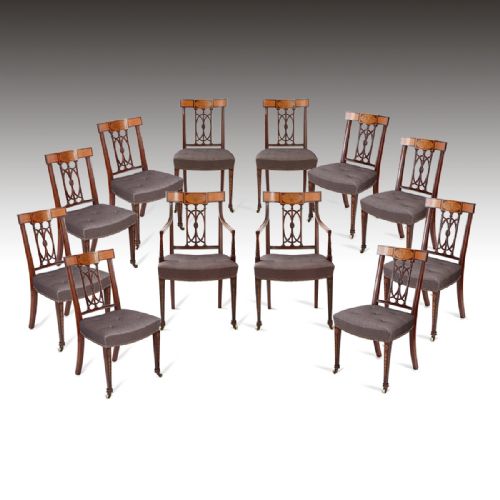
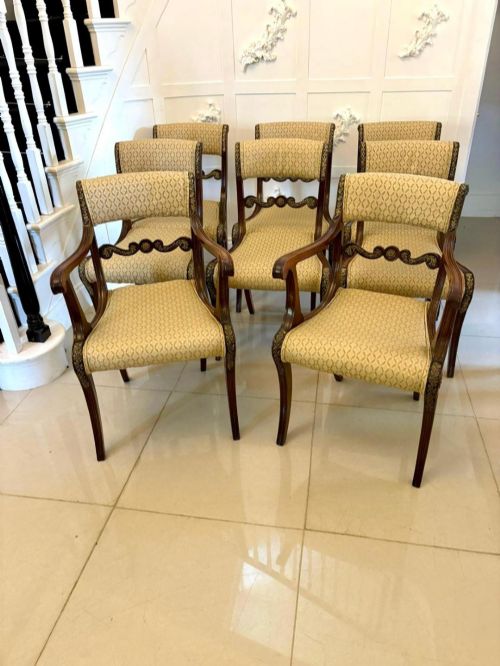
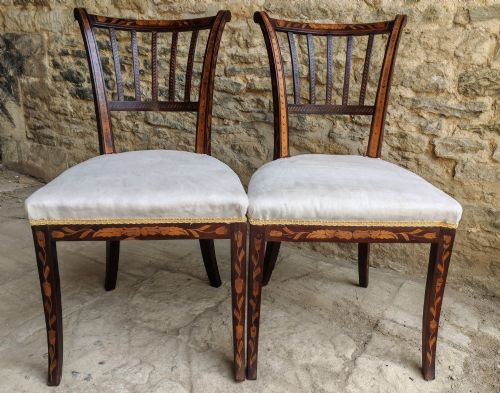
These pieces of 19th century inlay seating bring together precise cabinetwork and period forms to anchor a room.
19th Century Inlay Seating
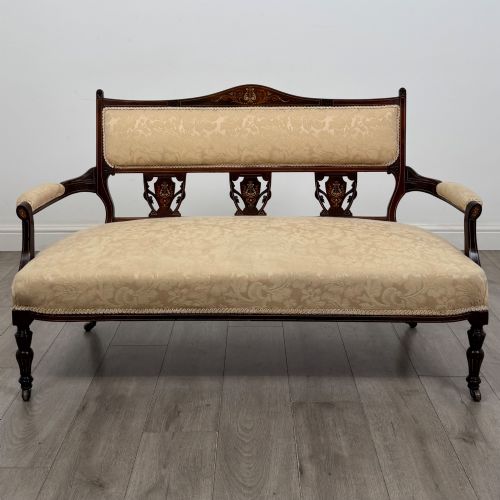
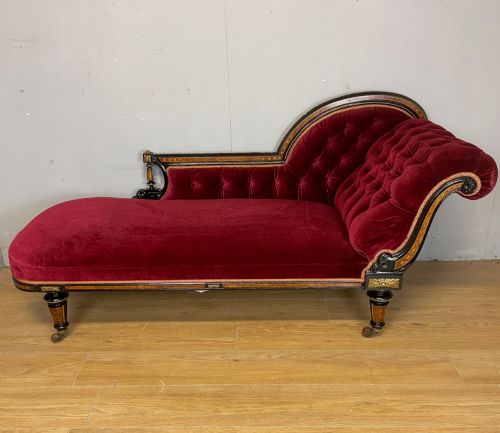
When you search for 19th century inlay seating, you encounter a varied selection of chairs, dining sets, settees and chaise longues spanning the Georgian, Regency and Victorian eras. These items serve functional seating roles while displaying decorative surface patterns that mark them out from plain timber furniture.
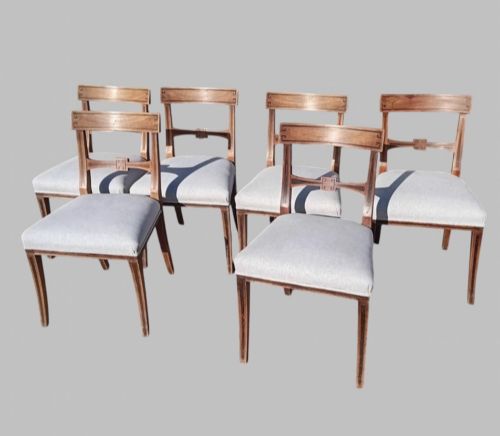
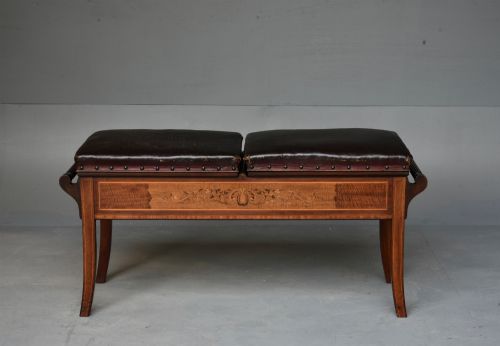
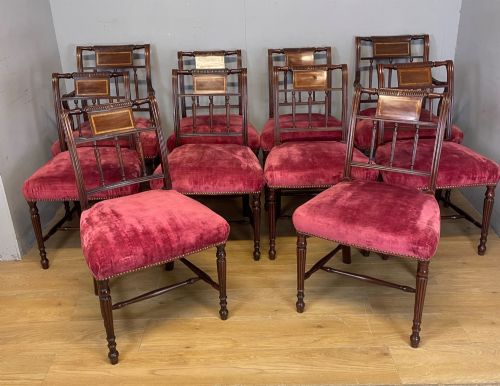
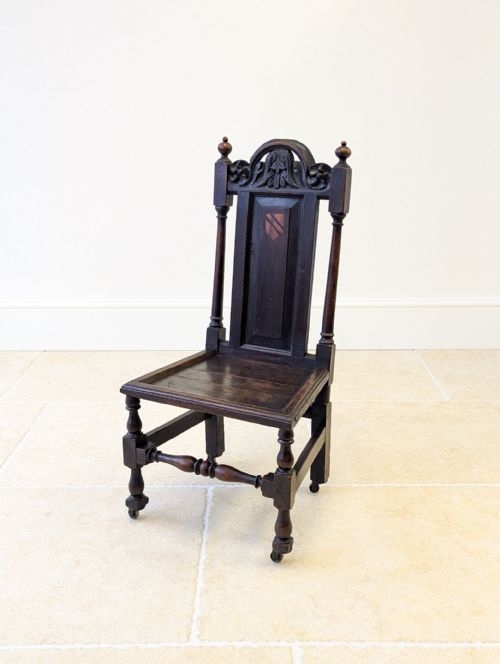
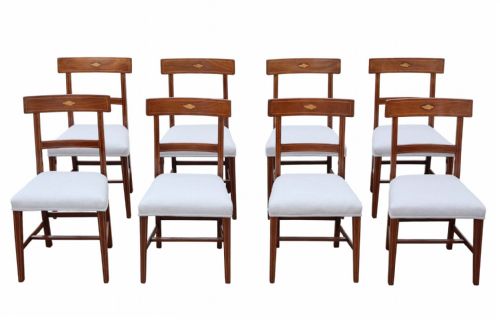
The assortment on this page ranges from single hall chairs and armchairs to matched dining sets of six or eight pieces. Alongside standard seating, the listings include specialised forms such as musical chairs, folding camp chairs and piano stools.
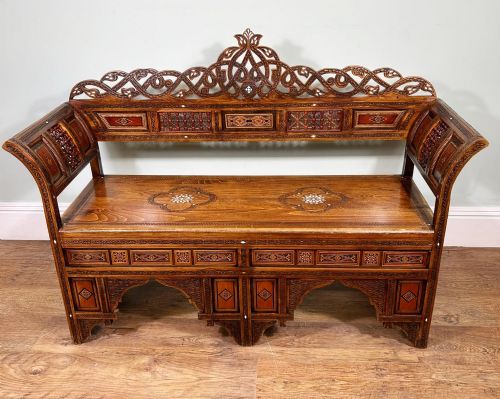
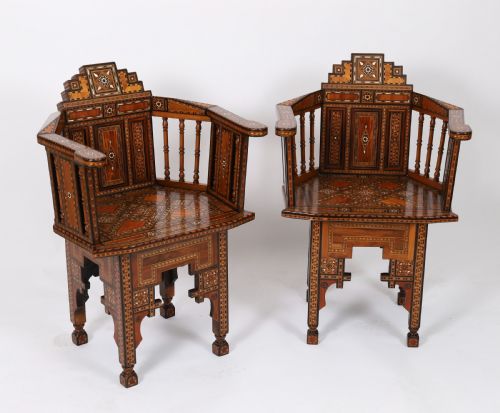
Geographic and stylistic influences stretch far beyond standard British cabinetmaking, incorporating Levantine parquetry, Swiss marquetry, Chinese Qing dynasty work and Anglo-Indian designs. Walnut, mahogany and rosewood form the primary structural timbers for these varied regional interpretations.
Materials and construction
Makers utilised dense timbers including mahogany, walnut and rosewood as the structural foundation for intricate surface decoration. These cabinet woods provide the stability required to support delicate decorative work without warping over time.
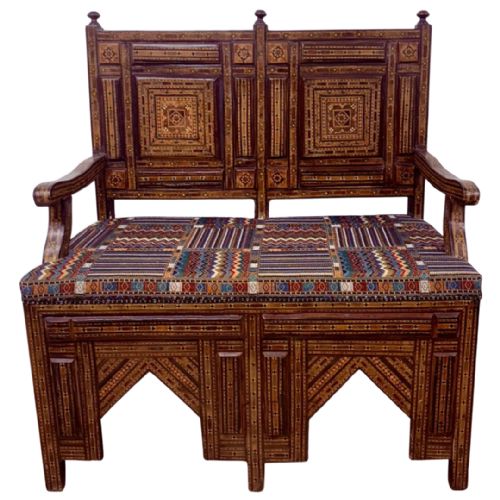
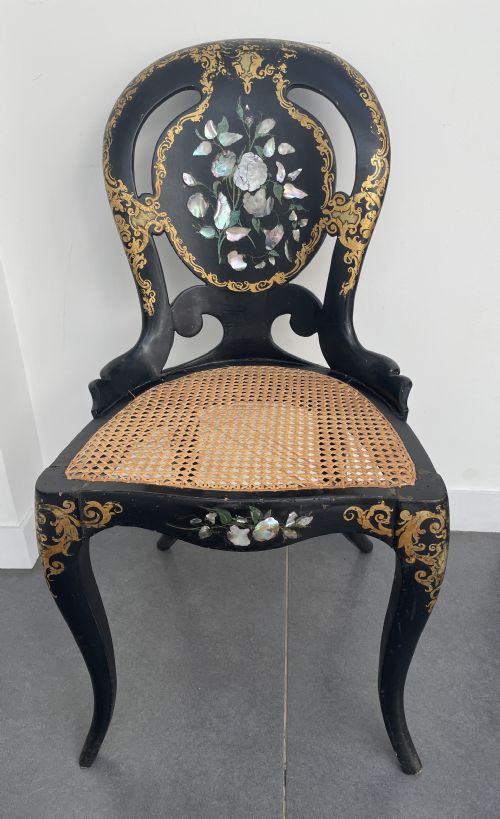
Contrasting materials provide the visual detail, with brass wire, mother-of-pearl, bone and fruitwood veneers set flush into the primary timber ground. In pieces such as Levantine and Syrian examples, geometric parquetry and nacre-shell segments are meticulously arranged across the wooden frame.
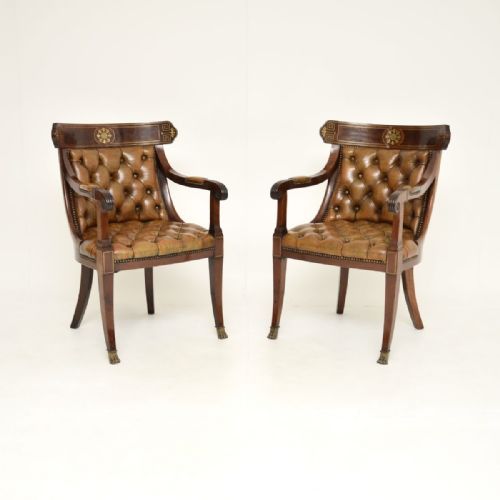
Upholstery and secondary elements complete the construction, with leather, velvet and woven fabric inserts applied to seats and back panels. Structural joinery relies on traditional methods, occasionally supplemented by ormolu mounts and carved wooden details.
19th Century Inlay Seating Retail Price Guide 2026
Typical asking prices for 19th century inlay seating among the pieces listed under this phrase on Sellingantiques today, from the lower quarter to the upper quarter. They describe what is for sale here now, not the wider market.
Object types range from standard dining sets and hall chairs to specialised folding campaign chairs and musical furniture.
Design integrity and execution
The distinction between standard output and finer examples rests upon the precision of the cabinetwork and the integration of the inlay into the timber ground. Superior pieces maintain tight joints and flush surface decoration where contrasting materials sit level with the surrounding wood.
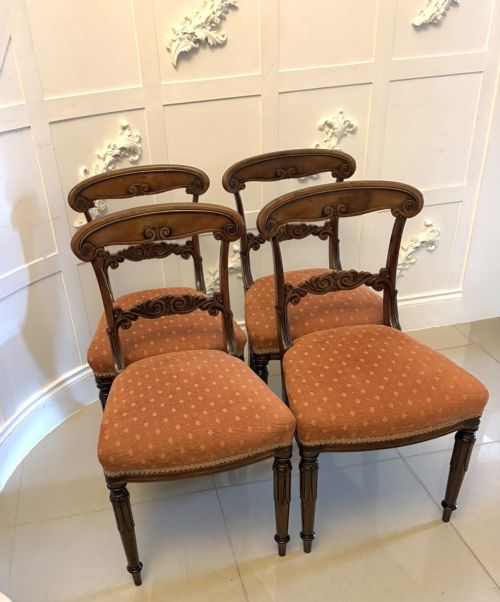
Design cohesion also dictates merit, separating workshops that merely applied surface motifs from those where the inlay follows the natural contours of the chair frame. The crispness of carved elements, such as scroll backs and pierced crest rails, further separates workshop standards.
Henry Maxwell
The 19th Century Inlay Seating Glossary
- Marquetry
- A technique of forming decorative patterns by fitting together veneers of different woods, metals or shells onto a structural carcass.
- Parquetry
- Geometric mosaic woodwork formed by small pieces of timber arranged in repeating patterns such as triangles or cubes.
- Ormolu
- Gilt bronze ornamentation applied to furniture, popular in Regency and nineteenth-century decorative schemes.
- Carver chair
- An armchair, traditionally placed at the head of a dining table, sharing stylistic traits with the matching side chairs.
- X-frame
- A form of seating construction where intersecting diagonal legs create a distinctive crossing support structure.
19th Century Inlay Seating: Frequently Asked Questions
How do I identify Regency inlay chairs?
Regency pieces often combine dark timbers like mahogany or rosewood with bright brass inlay in geometric or classical motifs. The silhouettes tend to draw on Grecian and Roman forms, featuring saber legs or curved top rails.
Proportions remain clean and restrained compared to later Victorian iterations. Brass stringing inlaid into the wood surface serves as a primary indicator of this period.
What is the difference between marquetry and parquetry?
Marquetry involves cutting and assembling various veneers to create pictorial or floral scenes across a flat surface. Parquetry relies strictly on geometric blocks to form repeating abstract patterns.
Both techniques appear frequently on nineteenth-century seating panels and backs. Marquetry tends to provide curves and pictorial depth, while parquetry offers angular precision.
Can I use these antique chairs for daily dining?
Many nineteenth-century dining chairs were built for heavy daily use and remain structurally robust today. Checking the joinery and checking that the frame is stable ensures they handle regular sitting.
Care should be taken with delicate mother-of-pearl or bone inlays during everyday use. Period upholstery may also require modern reinforcement if used constantly.
How do I care for inlaid wood surfaces?
Inlaid surfaces benefit from stable room temperatures and protection from direct sunlight to prevent timber shrinkage. Natural wax polish applied sparingly helps nourish the wood and protects the contrasting inlay materials.
Harsh chemical cleaners should be avoided as they can loosen the adhesive holding brass, bone or shell in place. Soft cloths remove dust without abrading the flush surface.