



19th Century Ikat
These nineteenth century ikat textiles bring vibrant Central Asian colour and pattern into a room through rich hand-woven panels and garments.
19th Century Ikat
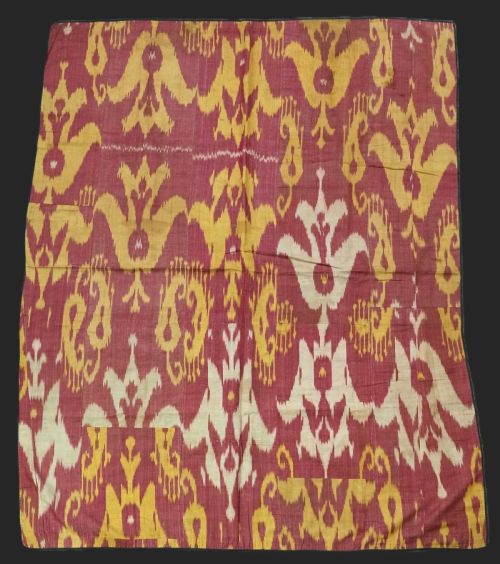
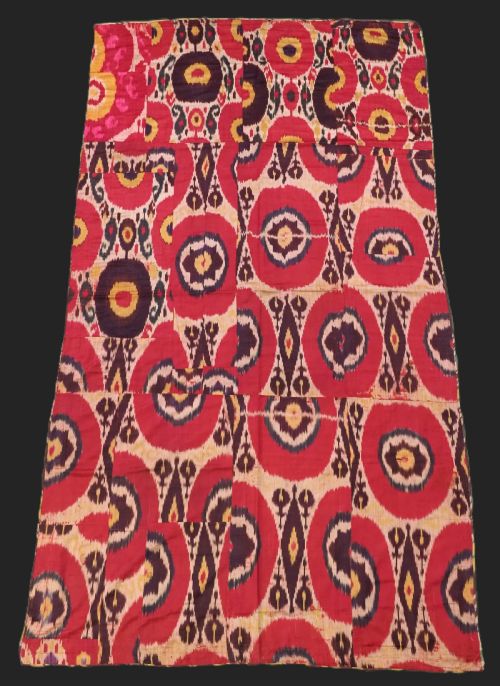
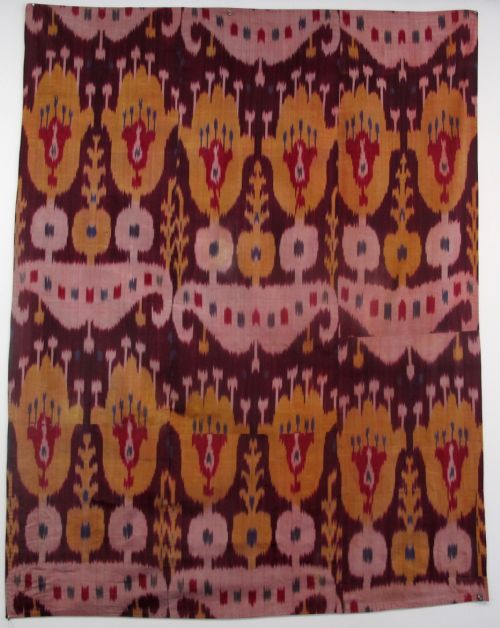
When you search for 19th century ikat, you encounter striking Central Asian textiles created through a meticulous resist-dyeing process on the threads before weaving. The pieces on this page span the 1880s to 1900, originating largely from Uzbekistan and Turkmen regions.
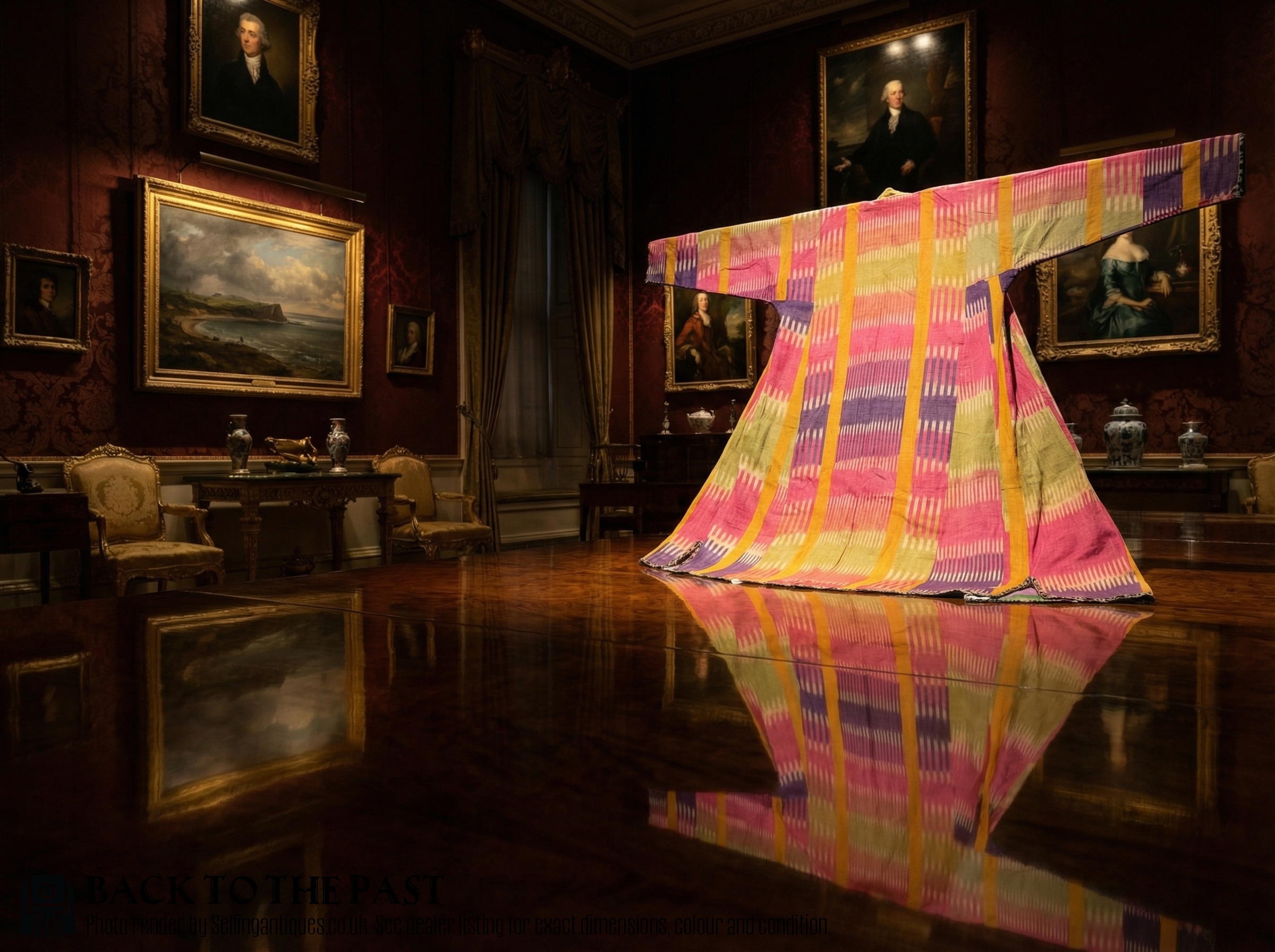
You will find fabric panels, wall hangings, and traditional garments such as gentleman coats known as khalats or chapan. Turkmen tribal pieces also appear, including torbas and chuval faces incorporating ikat designs.
The aesthetic is defined by bold, blurred geometric and floral motifs born from the unique technique of binding and dyeing yarn clusters. These textiles served both practical functions in daily life and ceremonial roles in weddings and household decoration.
How they were made
Weavers constructed these textiles using silk, cotton, wool, and hand-spun wool, frequently combining silk and cotton in semi-silk adras fabrics. Artisans tied bundles of warp or weft threads tightly with cotton thread to resist dye penetration before immersing them in vats of natural dyes.
Unlocking complex patterns required repeating this binding and dyeing cycle for each distinct colour added to the design. Once the dyeing concluded, the threads were arranged on the loom and woven, causing the characteristic bleeding along the edges of the pattern.
Current listings feature textiles constructed from silk, cotton, and hand-spun wool, utilising natural dyes across items dated between 1880 and 1900.
What varies in quality
Quality rests heavily upon the complexity of the pattern and the clarity of the dye work. Pieces demonstrating intricate multi-colour compositions require greater precision in the initial thread binding.
The choice of material elevates a piece, with pure silk panels and finely quilted winter coats representing high levels of maker skill. Preservation of the natural dyes and the integrity of the hand-woven structure also determine the standing of each textile.
The 19th Century Ikat Glossary
- Ikat
- A dyeing technique where yarn bundles are tightly wrapped and dyed prior to weaving to create blurred pattern edges. This method demands immense foresight from the weaver.
- Adras
- A traditional fabric woven with a silk warp and a cotton weft. This hybrid material provided both lustre and durability.
- Khalat
- A long, loose-fitting gentleman coat worn across Central Asia. These garments were often padded and quilted for warmth.
- Torba
- A small Turkmen bag face used for storage inside a yurt. They frequently display tribal motifs alongside ikat elements.
- Natural dyes
- Colourants derived from plants, minerals, and insects used before synthetic alternatives became widespread. These materials yield rich, complex tones that age gracefully.
19th Century Ikat: Frequently Asked Questions
How were ikat coats worn?
Gentlemen wore garments like the khalat or chapan as outer robes over everyday clothing. They provided practical warmth, especially when quilted and padded for winter use.
These coats also signalled social standing through the quality of the silk and the complexity of the dyed patterns.
Where did these textiles originate?
The pieces hail primarily from Central Asia, with specific regional centres like Bukhara and Samarkand producing notable work. Turkmen and Uzbek makers dominated this production.
Different tribes and cities developed distinct palettes and motif preferences, allowing specialists to trace origins.
How do I care for an antique ikat?
Protect fragile silk and cotton fibres from direct sunlight to prevent natural dye fading. Display panels away from direct heat sources and handle them minimally.
Mounting textiles flat on a padded support helps distribute weight evenly if hung on a wall.
What is a Beshir Turkmen piece?
Beshir items originate from Turkmen weavers living along the Amu Darya basin. They are known for incorporating ikat designs into traditional dowry rugs and torbas.
These pieces bridge tribal weaving traditions with the vibrant aesthetic of Central Asian urban workshops.