
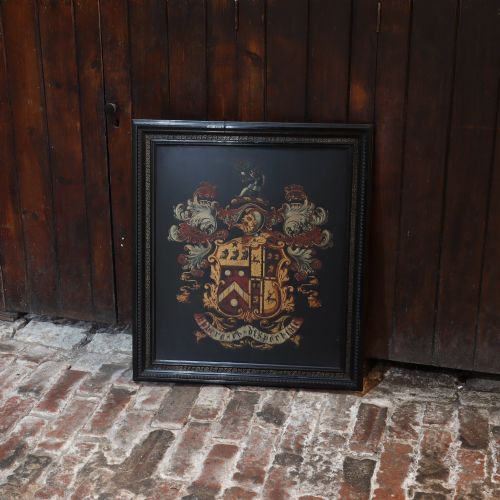
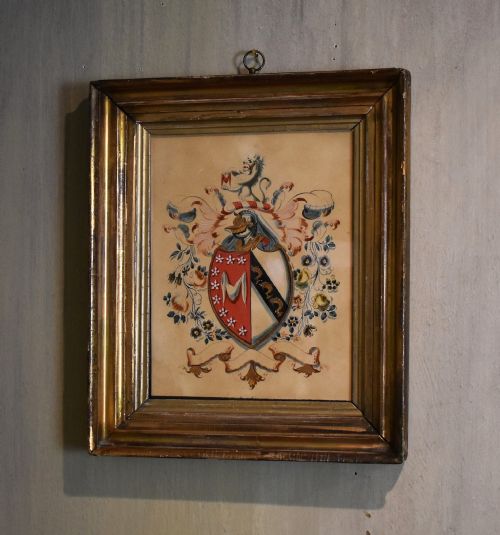


19th Century Heraldic Painting
These 19th century heraldic painting pieces bring historic coats of arms into interiors through detailed pigment work on panels, porcelain, and glass.
19th Century Heraldic Painting
A 19th century heraldic painting records family lineage, civic identity, and military allegiance through traditional coats of arms applied to surfaces like wood panels, porcelain plates, and glass goblets.
The objects bearing these armorial devices range from large painted wood panels and framed watercolours to decorative ceramics, glassware, and functional items like fire buckets.
Most examples date across the Victorian and Georgian eras, reflecting a widespread nineteenth-century enthusiasm for historicism and genealogy.
Materials and construction
Makers applied oil, watercolour, and enamel paints onto diverse grounds including oak and mahogany panels, soft leather, porcelain, plaster, and glass.
Gilding with gold leaf frequently highlights the intricate details of crests, mantling, and shields, adding a reflective quality to the painted surfaces.
Materials in these listings include paint, porcelain, enamel, brass, oak, gold leaf, wood, and mahogany across the 19th century.
Judging the work
The precision of the brushwork defines the standard, with superior pieces showing crisp linework in the charges and tinctures of the coat of arms rather than hasty execution.
The integrity of the original support, whether a porcelain body or a wooden panel, influences the overall preservation and visual impact of the armorial design.
Chamberlain Worcester·Barr Flight And Barr·Minton·Samson Of Paris
The 19th Century Heraldic Painting Glossary
- Coat of arms
- The principal part of a system of hereditary symbols tracing family lineage and status. It forms the central motif of these painted works.
- Armorial
- An adjective describing an object decorated with a coat of arms or heraldic device. These include plates, panels, and glassware.
- Crest
- The specific component of a heraldic display situated above the helmet and shield. It often appears independently in these painted or enamelled designs.
- Historismus
- A nineteenth-century artistic style drawing inspiration from historical periods and past aesthetic traditions. This movement heavily influenced revival heraldry.
- Tincture
- The traditional term for the metals, colours, and furs used in heraldry. Painters rendered these strictly according to heraldic rules.
19th Century Heraldic Painting: Frequently Asked Questions
What is a 19th century heraldic painting?
It is a decorative or commemorative artwork depicting a family coat of arms, crest, or armorial bearing created during the eighteen-hundreds.
These pieces appear on various mediums, including wood panels, canvas, porcelain, and glass, often serving as statements of lineage.
How were heraldic items used?
Families displayed armorial panels in country houses and halls to establish ancestry and status. Functional items bearing crests were used daily in prominent households.
Porcelain plates and glassware with armorials featured during formal dining, while painted buckets served practical fire safety roles in large estates.
How do I date a piece?
Dating relies on the style of the mounting, the composition of the porcelain body, and the specific characteristics of the pigment and framing. Nineteenth-century pieces often reflect Georgian or Victorian revival aesthetics.
Comparative analysis of documented factory marks on porcelain or timber construction methods helps narrow the decade of production.
How do I care for them?
Keep painted panels and leather objects away from direct sunlight and excessive humidity to prevent pigment fading and material degradation. Handle porcelain and glass armorials with care, avoiding abrasive cleaning agents that could damage the enamel or gilding.