





Hand Painted Coat of Arms
A hand painted coat of arms carries centuries of heraldic tradition onto porcelain, glass, wood, and panel.
Hand Painted Coat of Arms
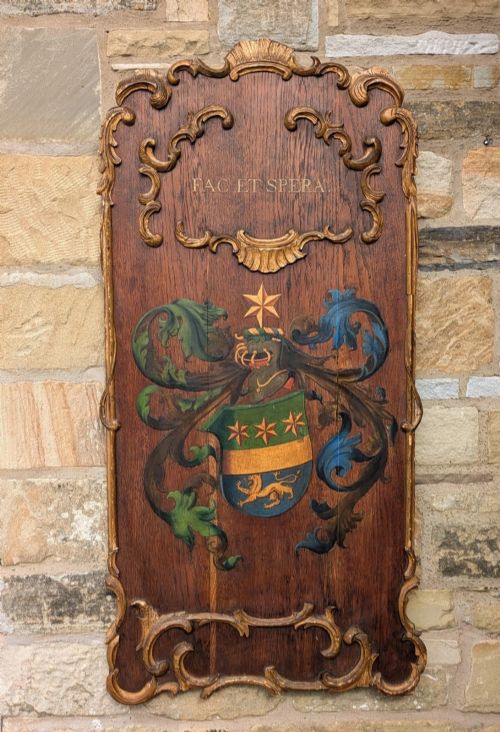
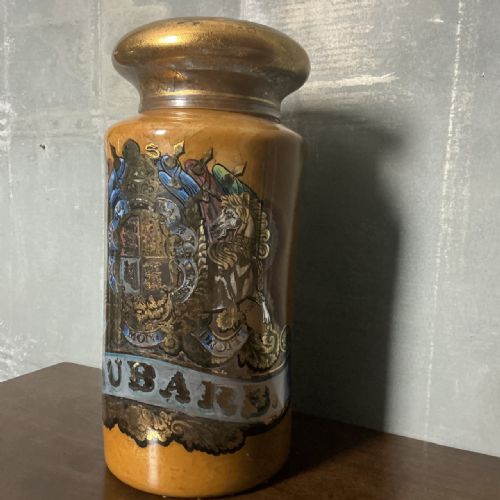
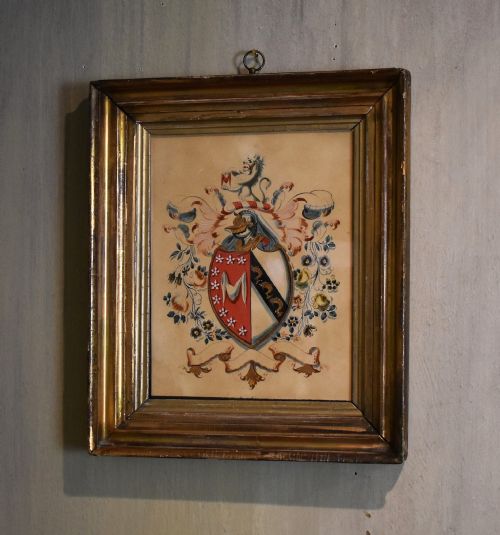
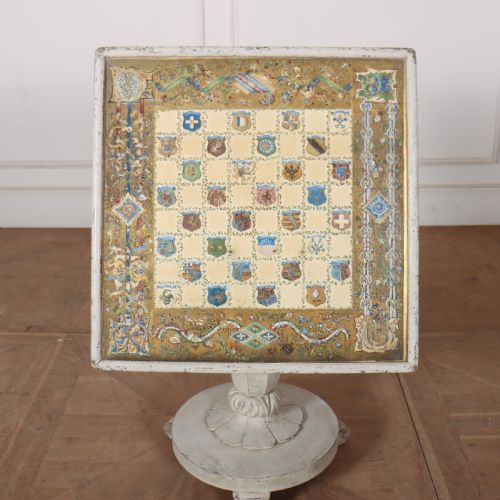
A hand painted coat of arms brings official heraldry into domestic interiors through plates, plaques, wall panels, and stained glass windows. These pieces span the eighteenth and nineteenth centuries, including Georgian and Victorian periods alongside Chinese Export porcelain and French faience.
You will most frequently meet cabinet plates, armorial porcelain, and decorative wall art carrying familial or royal insignia. The selection moves from English factories like Worcester and Minton to export wares and carved wooden crests.
Materials and construction
Artisans applied enamel paint, gold leaf, and pigments directly onto porcelain surfaces, glass windows, leather fire buckets, and wooden panels. Many items incorporate gesso modelling or heavy glazed pottery bases to support intricate armorial details.
Porcelain pieces rely on high-temperature firing before the application of overglaze hand painting, while windows use leaded glass techniques. Wood and leather objects utilise polychrome paint layers to render charges and crests with precision.
Hand Painted Coat of Arms Retail Price Guide 2026
Typical asking prices for hand painted coat of arms among the pieces listed under this phrase on Sellingantiques today, from the lower quarter to the upper quarter. They describe what is for sale here now, not the wider market.
A leather fire bucket painted with a royal coat of arms proves that seventeenth-century emergency equipment deserved a touch of heraldic dignity.
Assessing quality and execution
Quality rests upon the precision of the brushwork and the accuracy of the heraldic painting. Superior examples display crisp lines in the charges, accomplished use of gold leaf, and well-preserved enamel colours.
The distinction between standard decorative items and finer works also lies in the origin of the piece, such as established porcelain houses versus provincial workshops, and the original context of the armorial display.
Barr Flight And Barr·Minton·Samson Of Paris
The Hand Painted Coat of Arms Glossary
- Armorial
- Relating to heraldic arms or a coat of arms. Pieces marked in this manner often denote specific families or royal lineages.
- Faience
- Tin-glazed earthenware produced in Europe, particularly France. This medium provides an opaque white ground suitable for painted armorial designs.
- Famille rose
- A Chinese porcelain palette characterised by pink enamel colours, prominent in eighteenth-century export armorial wares. It allowed complex heraldic crests to be rendered for Western markets.
- Gesso
- A plaster-like mixture applied to wood or panels as a base for paint and gold leaf. It creates a raised surface for detailed carved elements.
- Polychrome
- Decorated in several colours. This describes painted coats of arms utilising a full palette of pigments rather than monochrome ink.
Hand Painted Coat of Arms: Frequently Asked Questions
How do I identify a genuine period piece?
Examine the material wear, the composition of the paint layers, and any factory marks on the reverse of porcelain or ceramics. Period items show consistent ageing appropriate to the eighteenth or nineteenth century.
Compare the heraldic style with known period conventions. Authentic armorials often correspond to recorded family lineages or institutional commissions.
Were these items meant for daily use?
Most armorial plates and cabinet porcelain served as display items rather than utilitarian tableware. They demonstrated lineage, status, and wealth in formal rooms.
Larger objects like fire buckets, coach panels, and wall plaques fulfilled specific decorative or functional roles within grand estates.
How should I care for painted surfaces?
Keep these pieces away from direct sunlight and damp environments to protect fragile enamels, gold leaf, and painted wood. Dust gently with a dry, soft cloth.
Avoid chemical cleaning agents on painted leather, glass, or ceramic surfaces. Professional framing or stable mounting preserves vulnerable panels and windows.
What is the difference between export and domestic armorials?
Export armorials, such as Chinese Export porcelain, were commissioned in Europe and manufactured abroad before being shipped back. Domestic pieces were produced entirely within European factories.
Export wares often exhibit distinct paste textures and specific enamel characteristics typical of eighteenth-century kilns.