
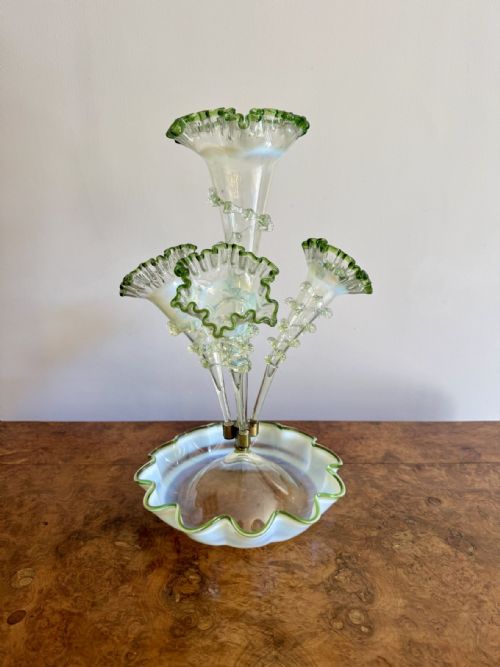
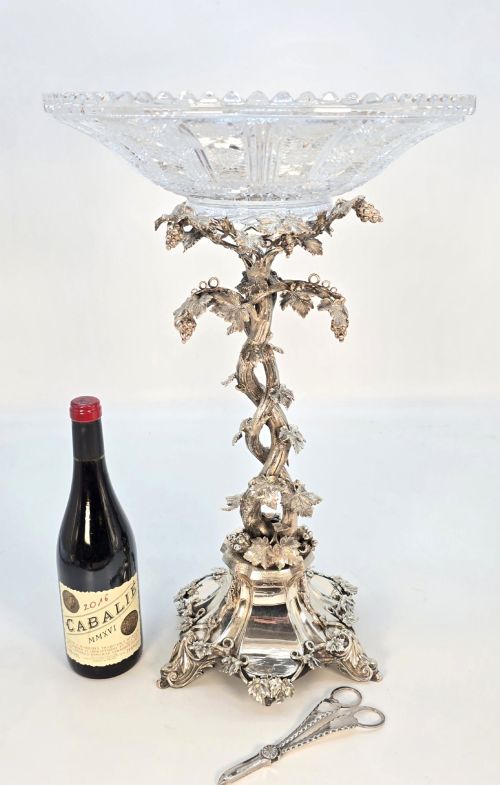


19th Century Glass Epergne
A 19th century glass epergne brings height and dramatic sparkle to a table, combining blown or moulded glass flutes with elaborate frames.
19th Century Glass Epergne
These multi-vessel table centrepieces stand as the architectural centre of nineteenth-century dining, designed to hold fruit, flowers, and sweetmeats during formal meals. When you browse a selection of a 19th century glass epergne, you will encounter grand Victorian centrepieces featuring detachable trumpets and hanging baskets.
The forms span from sturdy table centrepieces to delicate cranberry glass trumpet vases held within supportive frames. Most examples integrate central bowls with branching arms or insert sockets designed for removable glass inserts.
Origins represented in these items include English workshops and continental European ateliers, spanning from the Regency period through the late Victorian era. The most common survivals pair brightly coloured glass with plated metal or carved wooden bases.
Materials and construction
Makers combined heavy glass-blowing techniques with metalworking and wood carving, fusing vibrant cranberry or opaline glass with cut crystal and clear glass components. Metal structures utilise silver plate and Old Sheffield Plate alongside gilt bronze mounts.
Supportive elements often feature carved Black Forest wood or cast metal frames, engineered to secure heavy glass bowls and slender trumpets safely. The integration of Baccarat crystal and precision-cut glass demonstrates high levels of nineteenth-century glass-cutting skill.
Some Victorian dining companions spent hours marvelling at towering crystal trumpets that threatened to obscure the person sitting opposite them.
Distinguishing quality
Quality rests upon the crispness of the glass cutting, the depth of the crystal clarity, and the visual harmony between the glass vessels and their supporting frames. Superior pieces display flawless colour saturation in cranberry or opaline sections and substantial metal plating thickness.
The sophistication of the framework dictates the grade of the piece, where intricately carved wooden mounts or finely cast gilt bronze elevate simple glass bowls into sculptural works of art. Maker attribution, such as work associated with James Dixon or Baccarat, further separates standard production from exceptional examples.
Baccarat·James Dixon
The 19th Century Glass Epergne Glossary
- Epergne
- A large ornamental table centrepiece featuring multiple tiers or branching holders for fruit and flowers. These pieces dominated formal nineteenth-century dining tables.
- Cranberry glass
- A rich red-pink transparent glass created by adding gold chloride to the molten batch. It gained immense popularity during the Victorian era.
- Old Sheffield Plate
- A composite material made by fusing a thin sheet of silver to a thicker copper base. This technique was largely superseded by electroplating in the mid-nineteenth century.
- Opaline glass
- An opaque or translucent pale glass developed in France. It provides a smooth, porcelain-like appearance suited to decorative vases.
- Baccarat
- A renowned French crystal manufacturer famous for high-clarity glass and heavy cut designs. Their output frequently paired with luxury metal mounts.
19th Century Glass Epergne: Frequently Asked Questions
What was an epergne used for?
These tall structures served as the focal point of formal nineteenth-century dinner tables, holding displays of fruit, sweetmeats, or fresh flowers.
Hosts used them to elevate portions of the meal above the table surface, creating both a decorative spectacle and a practical way to share provisions among guests.
How do I clean a glass epergne?
Careful hand washing in lukewarm water with mild soap is essential for preserving both the glass and any delicate metal frames.
Removable trumpets and bowls should be detached and washed individually to prevent accidental impact between heavy crystal or glass sections.
Are all the glass pieces removable?
Most traditional examples feature loose trumpets, bowls, and baskets that lift directly out of metal sockets or resting rings on the main frame.
This modular design allowed nineteenth-century servants to transport and wash individual sections safely without moving the heavy base.
How do I identify Victorian glass?
Victorian pieces often rely on striking colours like deep cranberry, rich blues, and opaque opaline, frequently combined with elaborate cut patterns or applied glass trails.
Examining the pontil mark on the underside of blown elements helps determine the period and manufacturing method used.