

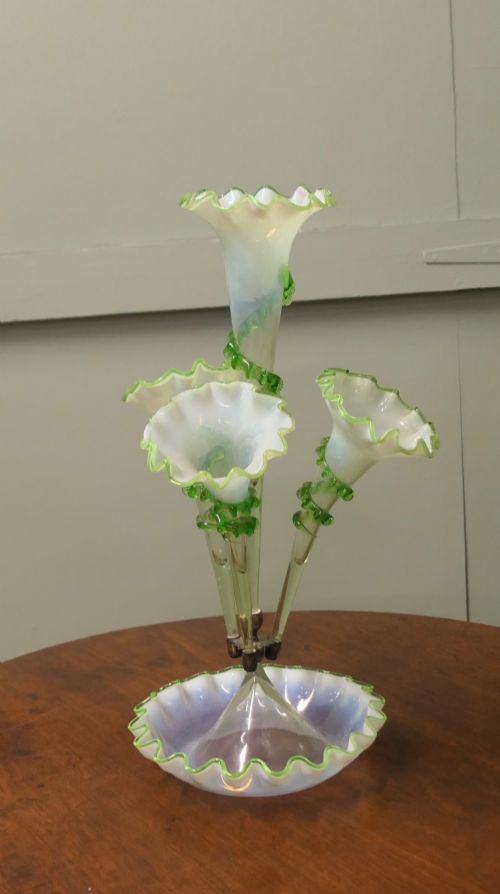
4 Trumpet Glass Epergne
A 4 trumpet glass epergne brings height and colour to a dining table through its central bowl and branching flutes.
4 Trumpet Glass Epergne
A 4 trumpet glass epergne stands as a dramatic table centrepiece, combining a main dish or bowl with several upward-reaching flutes or vases designed to hold floral displays. These branching vessels dominate dining arrangements from the nineteenth and early twentieth centuries, with Victorian examples appearing most frequently.
The form spans periods from the Victorian era into Edwardian and Art Deco designs, drawing on styles such as Art Nouveau and Black Forest work. Alongside complete epergnes, listings include individual trumpet vases and paired display pieces that share the same blown glass construction.
How they were made
Makers shaped these vessels using hand-blown glass techniques, producing cranberry glass, uranium glass, opalescent glass, and cased glass variants that catch the light. Metal elements such as brass, bronze, silver plate, and white metal frequently support the glass flutes or form the decorative bases.
Some elaborate centrepieces incorporate carved wood, notably in Black Forest pieces, or combine crystal elements with gilt bronze mounts. The combination of blown glass trumpets fitted into central bowls required precise thermal control during shaping and cooling.
4 Trumpet Glass Epergne Retail Price Guide 2026
Typical asking prices for 4 trumpet glass epergne among the pieces listed under this phrase on Sellingantiques today, from the lower quarter to the upper quarter. They describe what is for sale here now, not the wider market.
What varies in quality
Quality reveals itself in the depth and saturation of the glass colour, whether in rich cranberry tones or glowing uranium green. The complexity of the hand-blown form, particularly in fluted trumpet shapes and ruffled bowl rims, dictates the refinement of the piece.
The integration of supporting materials distinguishes standard examples from exceptional ones, such as pieces combining detailed bronze mounts, sterling silver bases, or carved wooden stands with crystal.
The 4 Trumpet Glass Epergne Glossary
- Epergne
- A large table centrepiece featuring multiple branching dishes or vases used for fruit, sweetmeats, or flowers.
- Cranberry glass
- A transparent pinkish-red glass created by adding gold chloride to the molten batch during the nineteenth century.
- Uranium glass
- Glass containing trace amounts of uranium oxide, which glows bright green under ultraviolet light.
- Cased glass
- Glass composed of two or more distinct layers of different colours fused together while molten.
- Posy vase
- A small standalone vase designed to hold a compact bunch of short-stemmed flowers.
4 Trumpet Glass Epergne: Frequently Asked Questions
How do I clean an epergne?
Wash each glass trumpet and bowl separately in warm soapy water using a soft cloth, avoiding harsh abrasive brushes that might scratch the surface.
Allow every component to dry completely before reassembling the pieces to prevent moisture trapping between fitted mounts.
Can I use real flowers in an epergne?
Fill the trumpets with fresh water and flowers just as Victorian dining hosts did, ensuring the stems fit comfortably within the narrow glass channels.
Empty and rinse the vessels regularly to prevent water staining on antique glass interiors.
How do I date a glass epergne?
Examine the manufacturing technique and colour palette, as rich cranberry and uranium glass pieces typically point to the nineteenth century and Victorian production.
Look for hallmarks on accompanying silver mounts or check the style of any bronze, brass, or carved wooden bases for period markers.
Where should I display an epergne?
Place the centrepiece on a sturdy dining table, sideboard, or entrance hall surface where natural light can pass through the coloured glass trumpets.
Keep the display away from busy household traffic areas to protect the tall, branching flutes from accidental knocks.