




French Hand Blown Glass
French hand blown glass brings organic form and luminous colour to a room, offering the charm of traditional craftsmanship.
French Hand Blown Glass
French hand blown glass encompasses a range of functional and decorative vessels shaped by hand in France across several centuries. When you search for French hand blown glass, you encounter items shaped by traditional glassblowing techniques that leave subtle traces of their creation on every surface.
The pieces on this page span several distinct periods, reaching from the eighteenth century through the Victorian era and into the Art Deco period of the 1920s and 1930s. Domestic utility wares sit alongside decorative showpieces, reflecting how glass was used in French homes over generations.
You are most likely to meet utilitarian storage jars, demijohns, and cider decanters alongside ornate Victorian epergnes and mantel clock domes. Each object demonstrates the practical application of blown glass adapted to everyday French life.
How they were made
Makers shaped these items by gathering molten glass on a blowpipe and inflating it by lung power, often utilising metal pontil rods to hold the vessel during shaping. This process created the characteristic uneven walls and soft contours visible in hand-blown glass.
Certain pieces incorporate specialised glass recipes, such as uranium glass which reacts under ultraviolet light, or opalescent glass that shifts in tone depending on the light source. Metal components like brass and ormolu mountings frequently complement the glass bodies, particularly on nineteenth-century items.
Finishing techniques varied from simple fire-polished rims on utility bottles to intricate hand-cut facets on Art Deco champagne ice buckets. The combination of blown vessel bodies and applied decorative elements defines the technical repertoire of these French workshops.
French Hand Blown Glass Retail Price Guide 2026
Typical asking prices for french hand blown glass among the pieces listed under this phrase on Sellingantiques today, from the lower quarter to the upper quarter. They describe what is for sale here now, not the wider market.
The listings span from the eighteenth century to the 1930s, incorporating materials such as uranium glass, opalescent glass, brass, and cut crystal.
What varies in quality
Quality in these pieces rests upon the purity of the metal and the dexterity shown in the blowing process. Heavier vessels with balanced walls demonstrate greater control by the glassblower at the furnace.
The presence of integrated ormolu mounts and brass fittings marks a distinction between utilitarian storage items and high-status decorative pieces. Superior items maintain integrity between the glass body and any metal framework without looseness or mismatched proportions.
daum
The French Hand Blown Glass Glossary
- Epergne
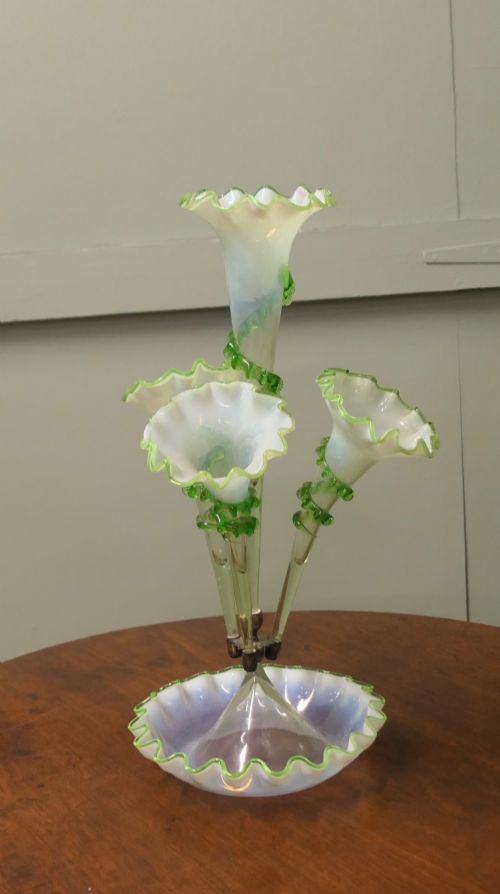
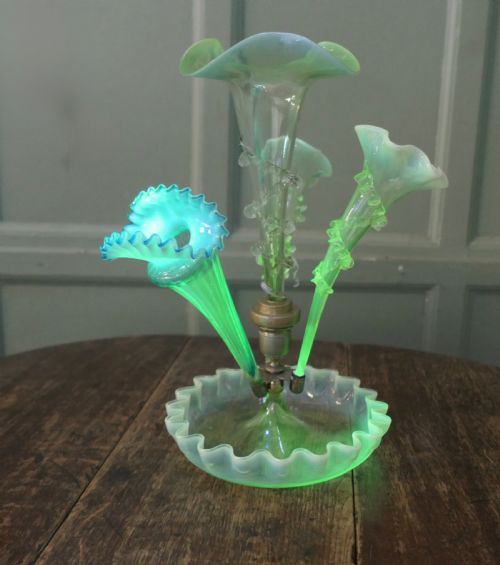
- A tabletop centrepiece featuring a central bowl with multiple detachable trumpets or arms used for holding fruit or flowers. Victorian examples in uranium glass show this form at its most elaborate.
- Demijohn
- A large, narrow-necked glass vessel enclosed in a wicker basket or left bare, used historically for storing wine or cider. These sturdy containers survive from the nineteenth and early twentieth centuries.
- Uranium glass
- Glass coloured with small amounts of uranium oxide, typically glowing bright green under ultraviolet light. Victorian makers utilised this formula for decorative tablewares.
- Pontil mark
- The rough scar left on the base of a blown glass vessel where the pontil rod was detached. Its presence helps confirm traditional hand-blowing methods.
- Cloche
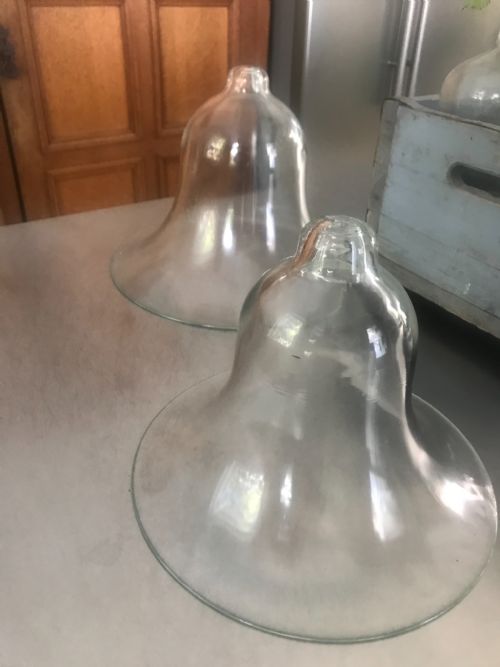
- A bell-shaped glass cover traditionally utilised in French gardens to protect seedlings from frost. Antique versions display the bubbles and thickness typical of early hand production.
French Hand Blown Glass: Frequently Asked Questions
What is french hand blown glass?
French hand blown glass refers to decorative and utilitarian vessels shaped by hand in French workshops using traditional glassblowing methods.
These items range from eighteenth-century pickling jars and cider bottles to twentieth-century art glass vases and ice buckets.
How do I identify uranium glass?
Uranium glass typically exhibits a distinctive yellowish-green hue under normal daylight and emits a vibrant green fluorescence when exposed to ultraviolet light.
Victorian makers frequently shaped this material into decorative epergnes and tabletop vessels.
Were glass cloches used indoors?
Antique glass cloches were primarily created for horticultural use in French gardens to shelter plants and seedlings from cold weather.
Today, collectors often repurpose these heavy hand-blown domes for interior display over decorative objects.
How should I clean antique glass?
Antique glass requires gentle cleaning with warm water and mild soap, avoiding harsh scrubbing that might damage fragile surfaces or historic pontil marks.
Metal components like ormolu mounts should be kept dry to prevent tarnishing and corrosion.
How can I tell the period of a piece?
The period of a piece is indicated by its form, the presence of specific manufacturing traits like pontil scars, and stylistic markers associated with eras such as Art Deco or the Victorian period.
Materials like ormolu mountings and uranium glass formulations also point towards specific nineteenth and twentieth-century manufacturing dates.